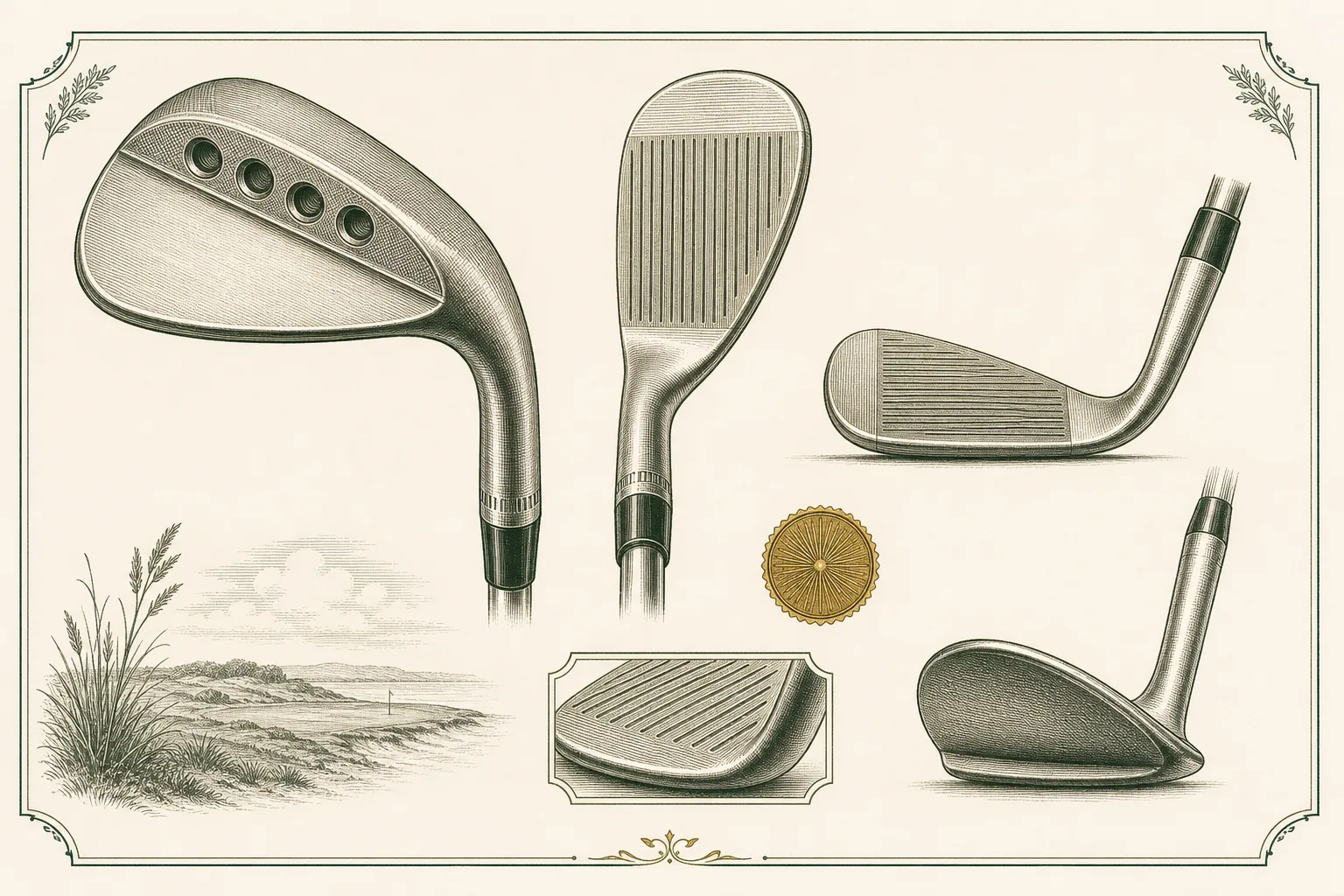
The 2015 Mack Daddy 3 (MD3) refined the line with milled Mack Daddy grooves layered with laser micro-grooves, tuning groove aggressiveness by loft — more bite in the higher, scoring lofts and slightly less spin-heavy grooves in the lower, fuller-swing lofts to keep trajectory controlled. It introduced a wider version of the Mack Daddy 2's S-Grind alongside a new W-Grind, adding a meaningful step of extra forgiveness and turf interaction without giving up the shot-shaping control the line was known for. Reviewers considered it a clear refinement rather than a reinvention of the MD2.
Reviewed favorably across Golfalot, GolfWRX and Golfmagic as an all-around premium wedge suited to a wide range of players, but its reputation is that of a solid mainstream generation in Callaway's regular refresh cycle rather than a wedge with independent cult standing — it was superseded by the Mack Daddy 4 within about two years.
Fits mid-to-low handicap players who want loft-specific groove tuning and grind choice (S, C, W) across a full wedge set, and who value the extra sole forgiveness over the MD2 while keeping a compact, better-player look. Not the pick for a high-handicapper wanting maximum bail-out forgiveness, or a bargain buyer — at roughly £109 new it was priced as a premium wedge, not a budget one.
Competed against Titleist's Vokey SM6 and Cleveland's RTX 2.0 in the mid-2010s premium wedge market. It replaced the Mack Daddy 2 and was replaced in turn by the Mack Daddy 4 (2017), continuing the franchise's steady iteration toward what would eventually become the JAWS-branded grooves.
The wider S-Grind and new W-Grind sole options gave the MD3 a genuine forgiveness bump over the MD2 in turf interaction and versatility from different lies, though it remains a compact forged head rather than a cavity-back design — reviewers noted the extra sole width added margin 'without losing control or feel,' but mis-hits on the thin topline still cost more than they would on a true game-improvement wedge.
Calibrated across the whole catalog — a tour blade scores low here on purpose; it means control, not ease.
2026 private-party pricing runs roughly $25-$70 depending on condition (2nd Swing listings show a range from about $24.99 for poor-condition examples up to $60-70 for cleaner ones), down from an original retail near $130-140 — typical depreciation for a decade-old mainstream forged wedge with several newer generations since released.
Reading is one thing — hitting is another. Book a bay and see the numbers for yourself before you buy anywhere.
The 2015 Mack Daddy 3 (MD3) refined the line with milled Mack Daddy grooves layered with laser micro-grooves, tuning groove aggressiveness by loft — more bite in the higher, scoring lofts and slightly less spin-heavy grooves in the lower, fuller-swing lofts to keep trajectory controlled. It introduced a wider version of the Mack Daddy 2's S-Grind alongside a new W-Grind, adding a meaningful step of extra forgiveness and turf interaction without giving up the shot-shaping control the line was known for. Reviewers considered it a clear refinement rather than a reinvention of the MD2.
Reviewed favorably across Golfalot, GolfWRX and Golfmagic as an all-around premium wedge suited to a wide range of players, but its reputation is that of a solid mainstream generation in Callaway's regular refresh cycle rather than a wedge with independent cult standing — it was superseded by the Mack Daddy 4 within about two years.
Fits mid-to-low handicap players who want loft-specific groove tuning and grind choice (S, C, W) across a full wedge set, and who value the extra sole forgiveness over the MD2 while keeping a compact, better-player look. Not the pick for a high-handicapper wanting maximum bail-out forgiveness, or a bargain buyer — at roughly £109 new it was priced as a premium wedge, not a budget one.
Competed against Titleist's Vokey SM6 and Cleveland's RTX 2.0 in the mid-2010s premium wedge market. It replaced the Mack Daddy 2 and was replaced in turn by the Mack Daddy 4 (2017), continuing the franchise's steady iteration toward what would eventually become the JAWS-branded grooves.
The wider S-Grind and new W-Grind sole options gave the MD3 a genuine forgiveness bump over the MD2 in turf interaction and versatility from different lies, though it remains a compact forged head rather than a cavity-back design — reviewers noted the extra sole width added margin 'without losing control or feel,' but mis-hits on the thin topline still cost more than they would on a true game-improvement wedge.
Calibrated across the whole catalog — a tour blade scores low here on purpose; it means control, not ease.
2026 private-party pricing runs roughly $25-$70 depending on condition (2nd Swing listings show a range from about $24.99 for poor-condition examples up to $60-70 for cleaner ones), down from an original retail near $130-140 — typical depreciation for a decade-old mainstream forged wedge with several newer generations since released.
Reading is one thing — hitting is another. Book a bay and see the numbers for yourself before you buy anywhere.