“Refines the RM-11 with an H-Sole (essentially a C-grind) on everything but the lob, which loves being opened up without lifting the leading edge. Milled trapezoidal grooves add roughly 15% spin over the old M-28. Buy it if you work the face and want maximum greenside versatility.”
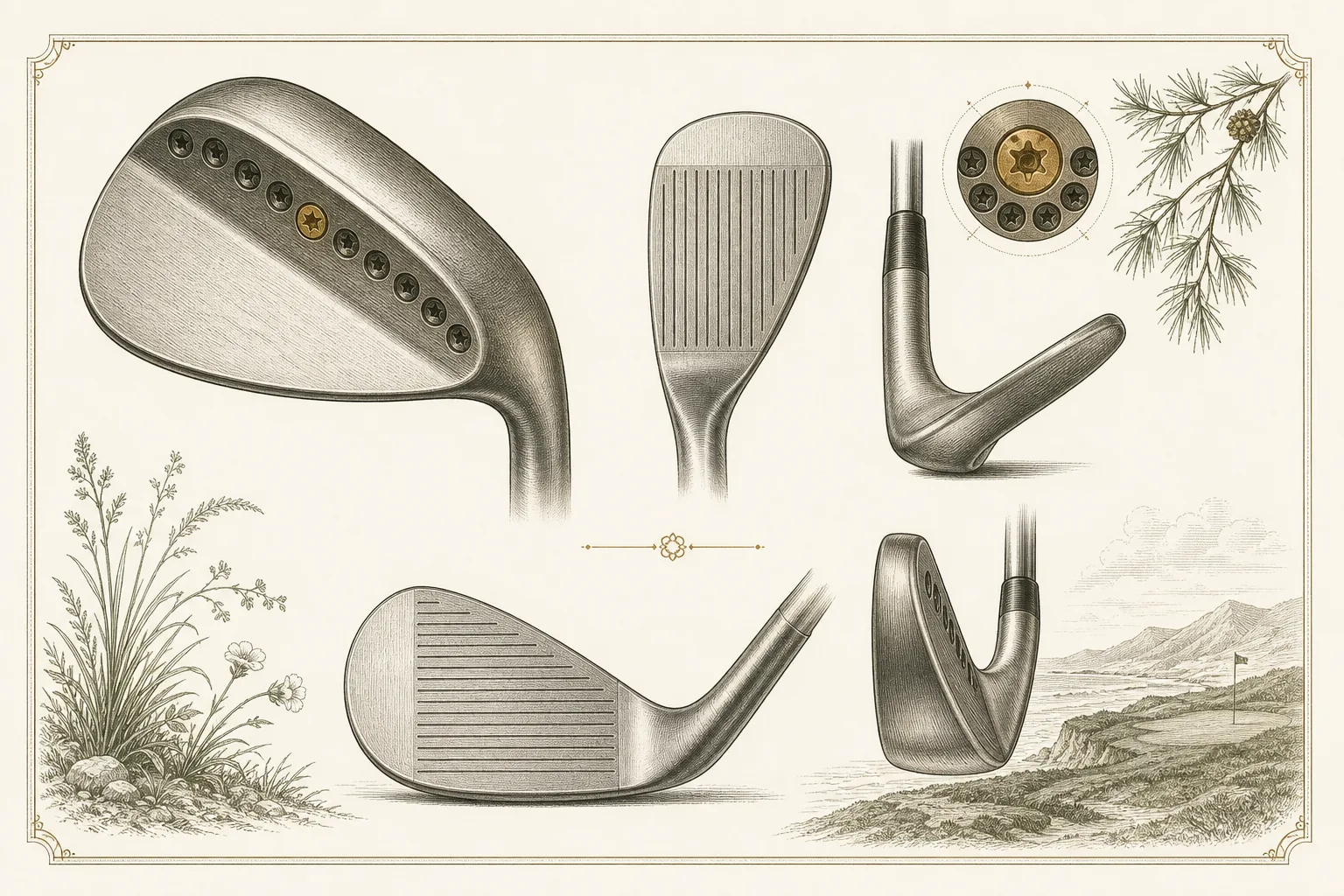
The RM-12 refined the award-winning RM-11 rather than reinventing it. Fourteen rounded the toe and heel based on tour feedback and cut away a section of the trailing sole to create the 'H-Sole' (functionally a C-grind) on every loft but the 60-degree, which kept a ridge-through-the-middle 'T-Sole' instead. The forging stayed nickel-chrome-molybdenum with a mirror-milling process on the trapezoidal grooves that Fourteen said takes twice as long as standard milling for tighter, more consistent groove edges in wet and dry conditions alike. The result plays a touch higher off full and three-quarter shots than the RM-11 and lets a skilled player open the face aggressively around greens without the leading edge lifting — a genuinely useful, incremental upgrade rather than a marketing refresh.
It carries real substance — reviewers call the fit and finish 'world-class' and note tour pros favored it — but it lacks the RM-11's independently documented award sweep or the RM-22's later spin-praise threads. It is respected within the small JDM-wedge-enthusiast community without having the specific, sourced flashpoint (an award sweep, a rules controversy, a signature tour moment) that would earn it sleeper or cult-classic status here.
Players who already work the face open/closed around the green and want a sole that rewards it, plus anyone who values a soft forged feel over raw distance control. Not the pick for a golfer who wants one bounce/grind to do everything without thinking about it — the H-Sole's versatility is a skill amplifier, not a mistake-eraser.
Arrived as Titleist was refining Vokey SM5 grinds and Cleveland was pushing its RTX rotex face milling — RM-12's mirror-milled grooves and dedicated H-Sole were Fourteen's answer to the same 'give better players more sole options' trend. It sat between the RM-11 it replaced and the RM-21 (2016) that gapped the line down to 42 degrees for set-bridging.
The H-Sole/C-grind relief in the heel, toe and trailing edge makes it notably more versatile around the green than a flat-soled blade wedge — you can open the face without the leading edge riding up — but the reverse-muscle weighting is tuned for full and three-quarter shots played by a repeatable striker, not for bailing out thin or fat contact. Mid-of-the-road for a tour-style wedge, not for a game-improvement one.
Calibrated across the whole catalog — a tour blade scores low here on purpose; it means control, not ease.
Clean single RM-12 wedges typically run $50-90 used, similar to the RM-11 band it sits just above; premium-shaft configurations (Modus3, N.S. Pro) trend toward the top of that range. As with the rest of the RM line, this is a thin, enthusiast-driven secondary market rather than a liquid one — expect to wait longer for the right buyer than with a mainstream-brand wedge of similar age.
Reading is one thing — hitting is another. Book a bay and see the numbers for yourself before you buy anywhere.
“Refines the RM-11 with an H-Sole (essentially a C-grind) on everything but the lob, which loves being opened up without lifting the leading edge. Milled trapezoidal grooves add roughly 15% spin over the old M-28. Buy it if you work the face and want maximum greenside versatility.”
The RM-12 refined the award-winning RM-11 rather than reinventing it. Fourteen rounded the toe and heel based on tour feedback and cut away a section of the trailing sole to create the 'H-Sole' (functionally a C-grind) on every loft but the 60-degree, which kept a ridge-through-the-middle 'T-Sole' instead. The forging stayed nickel-chrome-molybdenum with a mirror-milling process on the trapezoidal grooves that Fourteen said takes twice as long as standard milling for tighter, more consistent groove edges in wet and dry conditions alike. The result plays a touch higher off full and three-quarter shots than the RM-11 and lets a skilled player open the face aggressively around greens without the leading edge lifting — a genuinely useful, incremental upgrade rather than a marketing refresh.
It carries real substance — reviewers call the fit and finish 'world-class' and note tour pros favored it — but it lacks the RM-11's independently documented award sweep or the RM-22's later spin-praise threads. It is respected within the small JDM-wedge-enthusiast community without having the specific, sourced flashpoint (an award sweep, a rules controversy, a signature tour moment) that would earn it sleeper or cult-classic status here.
Players who already work the face open/closed around the green and want a sole that rewards it, plus anyone who values a soft forged feel over raw distance control. Not the pick for a golfer who wants one bounce/grind to do everything without thinking about it — the H-Sole's versatility is a skill amplifier, not a mistake-eraser.
Arrived as Titleist was refining Vokey SM5 grinds and Cleveland was pushing its RTX rotex face milling — RM-12's mirror-milled grooves and dedicated H-Sole were Fourteen's answer to the same 'give better players more sole options' trend. It sat between the RM-11 it replaced and the RM-21 (2016) that gapped the line down to 42 degrees for set-bridging.
The H-Sole/C-grind relief in the heel, toe and trailing edge makes it notably more versatile around the green than a flat-soled blade wedge — you can open the face without the leading edge riding up — but the reverse-muscle weighting is tuned for full and three-quarter shots played by a repeatable striker, not for bailing out thin or fat contact. Mid-of-the-road for a tour-style wedge, not for a game-improvement one.
Calibrated across the whole catalog — a tour blade scores low here on purpose; it means control, not ease.
Clean single RM-12 wedges typically run $50-90 used, similar to the RM-11 band it sits just above; premium-shaft configurations (Modus3, N.S. Pro) trend toward the top of that range. As with the rest of the RM line, this is a thin, enthusiast-driven secondary market rather than a liquid one — expect to wait longer for the right buyer than with a mainstream-brand wedge of similar age.
Reading is one thing — hitting is another. Book a bay and see the numbers for yourself before you buy anywhere.