“The flagship 1957 wedge is Miura's premium short-game statement, forged and hand-finished in Himeji for the player who wants the best feel money can buy. Holds value like few other wedges on the used market.”
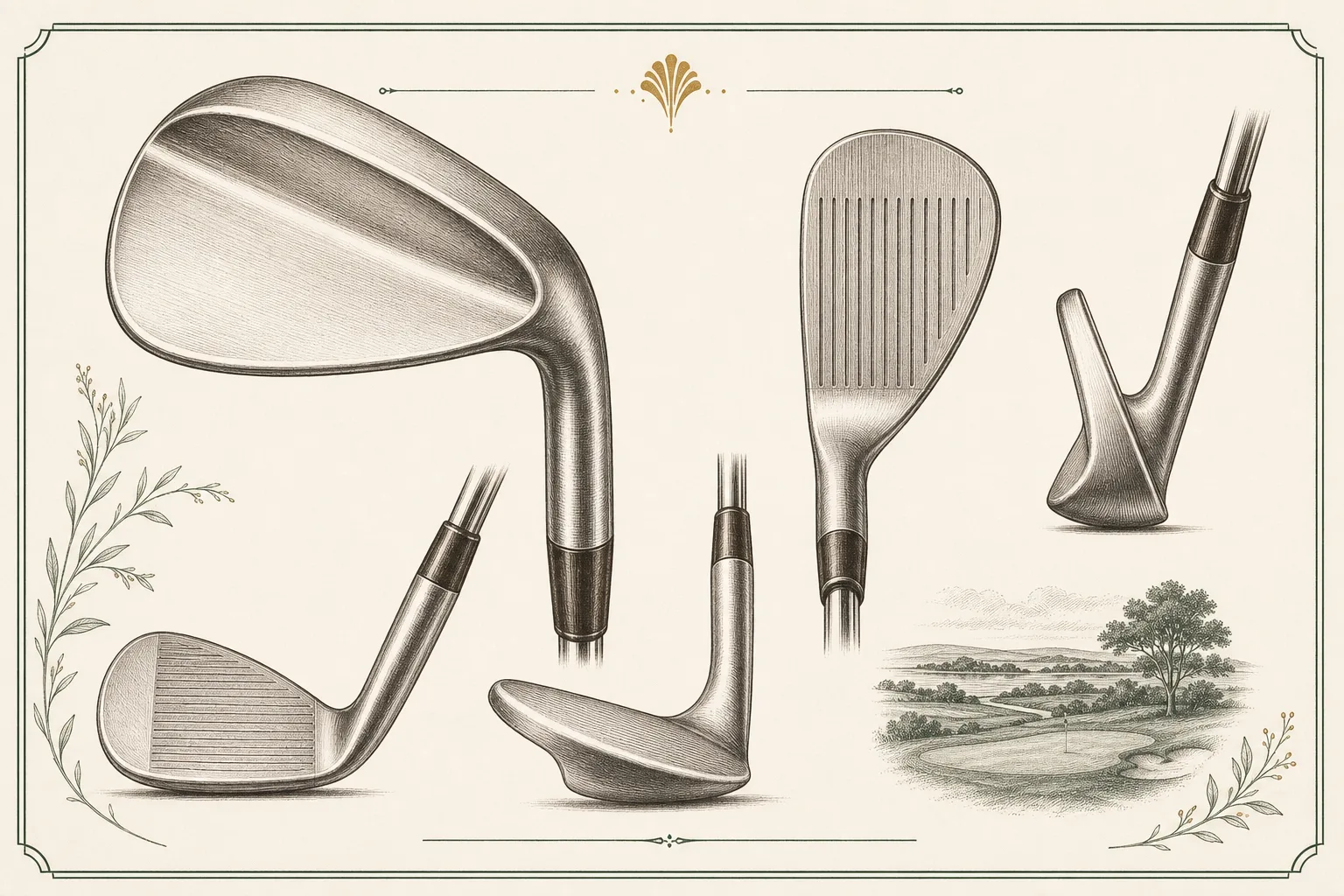
Miura's flagship short-game statement, forged from mild carbon steel and hand-finished in Himeji as a family of three distinct grinds rather than a single head. The Y-Grind fills the gap-wedge role (49/51/53 degrees) with subtle heel-and-toe relief; the C-Grind covers sand and lob (55/57/59) with more pronounced heel-toe relief for shot versatility; and the most distinctive of the three, the K-Grind, carries a 'fluted' sole design. Each is offered in a single bounce per loft and, in this 1957 form, right-hand only. The appeal is exactly what Miura built its name on: the dense, soft forged feel of a hand-ground wedge for the player who wants the best feel money can buy around the greens.
A boutique, glowingly-reviewed premium wedge (MyGolfSpy ran an 'ultimate review,' with additional coverage from GolfWRX and grind-specific writeups) that holds value unusually well for a wedge. But wedges are consumables and this is a respected craftsman product rather than a scarcity-driven or legend-driven collectible, so 'notable' is the honest call; the C-Grind and K-Grind are the ones enthusiasts single out.
For the accomplished short-game player who wants premium forged feel and grind options matched to their turf and technique, and who can take advantage of heel-toe relief and the fluted K-Grind. Fitting matters because each loft has only one bounce. Higher-handicap players who need a forgiving wide-sole, high-bounce wedge or left-handed options should look at other Miura wedges or a mainstream brand (the 1957 series is right-hand only).
The Series 1957 wedge line has been part of Miura's range since roughly 2010 and carried forward through the mid-2010s (dated here to 2017), competing at the boutique/tour tier with Titleist Vokey, Cleveland RTX, and Japanese forged wedges. Within Miura it is the flagship 1957 short-game piece alongside the irons of the same badge, and the grind concepts feed later lines like the K-Grind 2.0. A modern equivalent is the Miura K-Grind 2.0 or a hand-ground Vokey WedgeWorks.
Scored on the wedge axis, where forgiveness means turf interaction and versatility more than face MOI. The grind-specific reliefs (heel-toe on the Y and C grinds, the fluted K-Grind sole) let a skilled player open the face and manipulate contact, which is forgiving in the hands of a good short-game player but offers little help to a poor striker. Single-bounce-per-loft and hand-ground soles reward technique. A 5 reflects a mid-pack, technique-dependent tour wedge, neither a wide-sole beginner wedge nor a razor one-grind.
Calibrated across the whole catalog — a tour blade scores low here on purpose; it means control, not ease.
Miura wedges hold value better than most because of the brand's feel reputation, but they are still consumables. Realistic private-party value in 2026 is roughly $100-200 per clean wedge depending on grind, groove wear and shaft, with sharp grooves and the sought-after C/K grinds at the top. Boutique reconditioned listings run higher than private-party; original retail was in the ~$300+ per-wedge range.
Reading is one thing — hitting is another. Book a bay and see the numbers for yourself before you buy anywhere.
“The flagship 1957 wedge is Miura's premium short-game statement, forged and hand-finished in Himeji for the player who wants the best feel money can buy. Holds value like few other wedges on the used market.”
Miura's flagship short-game statement, forged from mild carbon steel and hand-finished in Himeji as a family of three distinct grinds rather than a single head. The Y-Grind fills the gap-wedge role (49/51/53 degrees) with subtle heel-and-toe relief; the C-Grind covers sand and lob (55/57/59) with more pronounced heel-toe relief for shot versatility; and the most distinctive of the three, the K-Grind, carries a 'fluted' sole design. Each is offered in a single bounce per loft and, in this 1957 form, right-hand only. The appeal is exactly what Miura built its name on: the dense, soft forged feel of a hand-ground wedge for the player who wants the best feel money can buy around the greens.
A boutique, glowingly-reviewed premium wedge (MyGolfSpy ran an 'ultimate review,' with additional coverage from GolfWRX and grind-specific writeups) that holds value unusually well for a wedge. But wedges are consumables and this is a respected craftsman product rather than a scarcity-driven or legend-driven collectible, so 'notable' is the honest call; the C-Grind and K-Grind are the ones enthusiasts single out.
For the accomplished short-game player who wants premium forged feel and grind options matched to their turf and technique, and who can take advantage of heel-toe relief and the fluted K-Grind. Fitting matters because each loft has only one bounce. Higher-handicap players who need a forgiving wide-sole, high-bounce wedge or left-handed options should look at other Miura wedges or a mainstream brand (the 1957 series is right-hand only).
The Series 1957 wedge line has been part of Miura's range since roughly 2010 and carried forward through the mid-2010s (dated here to 2017), competing at the boutique/tour tier with Titleist Vokey, Cleveland RTX, and Japanese forged wedges. Within Miura it is the flagship 1957 short-game piece alongside the irons of the same badge, and the grind concepts feed later lines like the K-Grind 2.0. A modern equivalent is the Miura K-Grind 2.0 or a hand-ground Vokey WedgeWorks.
Scored on the wedge axis, where forgiveness means turf interaction and versatility more than face MOI. The grind-specific reliefs (heel-toe on the Y and C grinds, the fluted K-Grind sole) let a skilled player open the face and manipulate contact, which is forgiving in the hands of a good short-game player but offers little help to a poor striker. Single-bounce-per-loft and hand-ground soles reward technique. A 5 reflects a mid-pack, technique-dependent tour wedge, neither a wide-sole beginner wedge nor a razor one-grind.
Calibrated across the whole catalog — a tour blade scores low here on purpose; it means control, not ease.
Miura wedges hold value better than most because of the brand's feel reputation, but they are still consumables. Realistic private-party value in 2026 is roughly $100-200 per clean wedge depending on grind, groove wear and shaft, with sharp grooves and the sought-after C/K grinds at the top. Boutique reconditioned listings run higher than private-party; original retail was in the ~$300+ per-wedge range.
Reading is one thing — hitting is another. Book a bay and see the numbers for yourself before you buy anywhere.