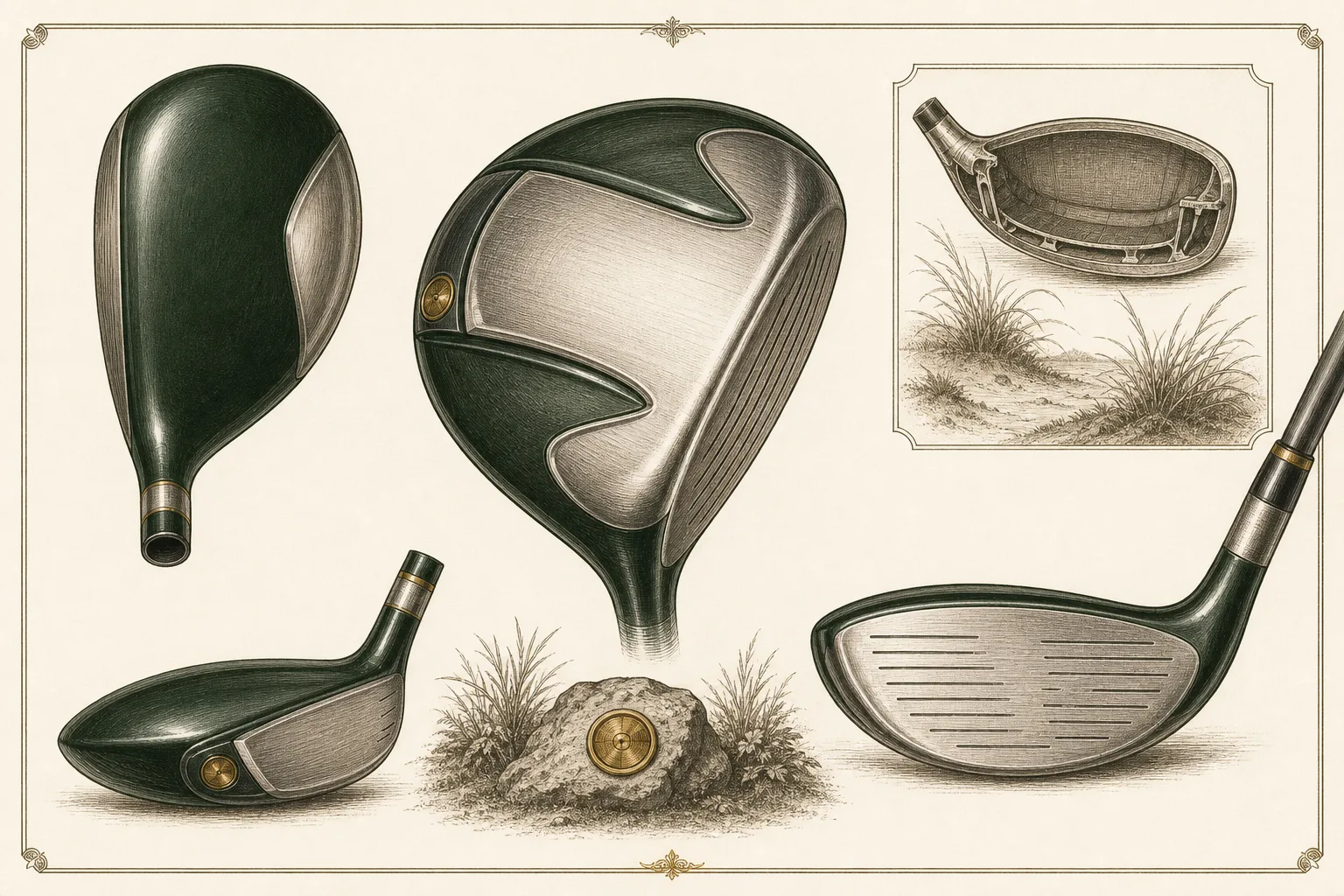
“A budget, wide-sole super-game-improvement design built for easy launch and turf relief - the sort of club sold through catalog/department stores. Forgiving for beginners, with essentially no resale value.”
Lynx built its 'Predator' name recognition in the 1990s on iron sets during the brand's John Zurn-era heyday, but the Predator HYBRID specifically is a modern, budget-tier rescue club — reviewed by Today's Golfer (last-updated April 2017) as a low-cost 3H/4H replacement with a steel head, graphite shaft, and 'funky' colour-coordinated crown graphics. It was pitched purely as an inexpensive iron-replacement option (roughly £70/club) rather than a technology showcase, riding on Lynx's legacy brand recognition into the budget end of the hybrid category once hybrids became a mainstream club type in the 2000s-2010s.
No cult status: it is explicitly a budget, no-branded-component hybrid built to a price, described by testers as generating slower ball speed and shorter carry than the best hybrids tested — it is a value play trading on Lynx's old iron-line name recognition, not a club anyone seeks out for its own merits.
Budget-conscious, high-handicap golfers who want an easy, forgiving 3-iron/4-iron replacement for very little money and don't need premium ball speed or looks. Any golfer wanting current-generation distance or refined aesthetics should look at a mainstream brand's hybrid instead — this is explicitly a shoestring-budget option.
Reviewed and tested by Today's Golfer as part of its 2017 hybrid roundup, where it 'came close to breaking into the Top 10' primarily on value. A modern equivalent is any current budget hybrid (e.g., Wilson, US Kids, or off-brand rescue clubs) that trades premium materials for a low price point.
A wide-sole, low-profile head design with colour-coded alignment aids gives it real forgiveness for mis-hits and off-center contact, in keeping with its super-game-improvement brief, but budget construction means it gives up ball speed and carry distance versus premium hybrids — testers measured it roughly 5 mph slower in ball speed and about 10 yards shorter than the best hybrids in a comparative test.
Calibrated across the whole catalog — a tour blade scores low here on purpose; it means control, not ease.
As a bottom-tier budget hybrid with no collector interest, expect very low resale value: realistic 2026 eBay/private-party pricing is roughly $15-$30 per club, reflecting both its low original price and lack of any brand-value premium for a hybrid-category product (versus Lynx's more collectible vintage 1990s forged irons).
Reading is one thing — hitting is another. Book a bay and see the numbers for yourself before you buy anywhere.
“A budget, wide-sole super-game-improvement design built for easy launch and turf relief - the sort of club sold through catalog/department stores. Forgiving for beginners, with essentially no resale value.”
Lynx built its 'Predator' name recognition in the 1990s on iron sets during the brand's John Zurn-era heyday, but the Predator HYBRID specifically is a modern, budget-tier rescue club — reviewed by Today's Golfer (last-updated April 2017) as a low-cost 3H/4H replacement with a steel head, graphite shaft, and 'funky' colour-coordinated crown graphics. It was pitched purely as an inexpensive iron-replacement option (roughly £70/club) rather than a technology showcase, riding on Lynx's legacy brand recognition into the budget end of the hybrid category once hybrids became a mainstream club type in the 2000s-2010s.
No cult status: it is explicitly a budget, no-branded-component hybrid built to a price, described by testers as generating slower ball speed and shorter carry than the best hybrids tested — it is a value play trading on Lynx's old iron-line name recognition, not a club anyone seeks out for its own merits.
Budget-conscious, high-handicap golfers who want an easy, forgiving 3-iron/4-iron replacement for very little money and don't need premium ball speed or looks. Any golfer wanting current-generation distance or refined aesthetics should look at a mainstream brand's hybrid instead — this is explicitly a shoestring-budget option.
Reviewed and tested by Today's Golfer as part of its 2017 hybrid roundup, where it 'came close to breaking into the Top 10' primarily on value. A modern equivalent is any current budget hybrid (e.g., Wilson, US Kids, or off-brand rescue clubs) that trades premium materials for a low price point.
A wide-sole, low-profile head design with colour-coded alignment aids gives it real forgiveness for mis-hits and off-center contact, in keeping with its super-game-improvement brief, but budget construction means it gives up ball speed and carry distance versus premium hybrids — testers measured it roughly 5 mph slower in ball speed and about 10 yards shorter than the best hybrids in a comparative test.
Calibrated across the whole catalog — a tour blade scores low here on purpose; it means control, not ease.
As a bottom-tier budget hybrid with no collector interest, expect very low resale value: realistic 2026 eBay/private-party pricing is roughly $15-$30 per club, reflecting both its low original price and lack of any brand-value premium for a hybrid-category product (versus Lynx's more collectible vintage 1990s forged irons).
Reading is one thing — hitting is another. Book a bay and see the numbers for yourself before you buy anywhere.