“The low-handicap sibling to the I-701, a compact player's shape with soft feel and a penetrating flight for accomplished ball strikers. A tour-grade classic aimed squarely at the shotmaker.”
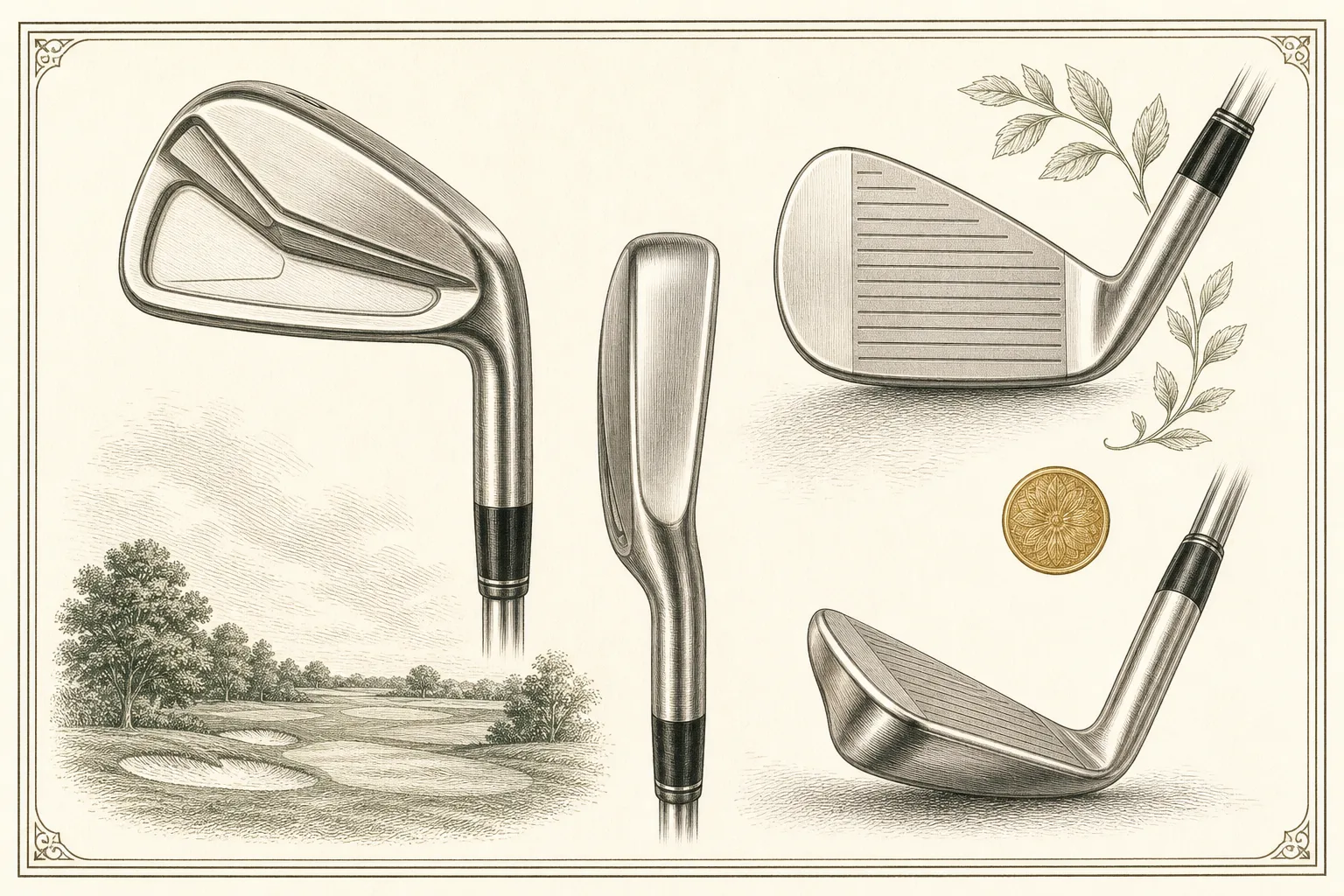
The compact half of Srixon's August 2007 I-701 launch, the I-701 Tour shares its sibling's two-piece forged construction (1025 carbon steel body, soft 1020 carbon steel face) but sets its CG slightly higher for a more penetrating flight aimed at players who work the ball. Its signature feature is Face Press Milling, a treatment credited with the workability and soft feel that let reviewers compare it favorably to Mizuno and Nike's players irons of the day, backed by engraved U-grooves for spin in variable conditions and heel/toe sole cuts to reduce turf drag. It was developed with tour-player input and Tim Clark carried it on the PGA Tour, giving Srixon's still-young US iron program real on-course credibility.
It never built a GolfWRX-style cult following or collector market, but it earned quiet, substantive respect: Tim Clark gamed it on the PGA Tour, and reviewers at the time said it could 'easily compete with other top brands such as Mizuno and Nike' — high praise for a brand still proving itself in US irons. That combination of real tour validation and reviewer respect, without matching market buzz, is the classic sleeper pattern.
Low-to-mid handicap shotmakers who want a compact forged players' iron with tour pedigree and the ability to shape shots into pins. Not a fit for high handicappers or anyone prioritizing forgiveness over feel and control — the standard I-701 or a modern GI iron serves that need better.
Launched alongside the I-701 in August 2007, competing with Titleist's 695.MB/CB, Mizuno's MP-60/MP-32, and TaylorMade's tour-forged irons of the period. Tim Clark's use of it on tour was a meaningful credibility marker for Srixon, which was still a newer name in US iron sales compared to its established golf-ball business.
A compact players' shape with a higher CG than the standard I-701, built for penetrating ball flight and workability rather than forgiveness. Reviews describe 'a small amount of forgiveness' — real, but secondary to feel and shot-shaping control. Thin or toe strikes are punished more than on the standard I-701.
Calibrated across the whole catalog — a tour blade scores low here on purpose; it means control, not ease.
Full sets list from roughly $150-285 in current eBay/2nd Swing asking prices (a Dunlop-badged Japan-market 8-club set was seen listed at $285), but realistic private-party sold prices for a clean 4-PW or 3-PW steel set run closer to $100-220 depending on shaft (stock Dynamic Gold vs. upgraded steel like KBS Tour) and condition — asking prices on this model run noticeably hotter than what typically closes.
Reading is one thing — hitting is another. Book a bay and see the numbers for yourself before you buy anywhere.