“A rung-2 players cavity from Bridgestone's return to premium forged in the mid-2000s. Soft 1020 feel with a touch of forgiveness, but plentiful and cheap used now. Fine for a decent player who wants classic looks without going full blade.”
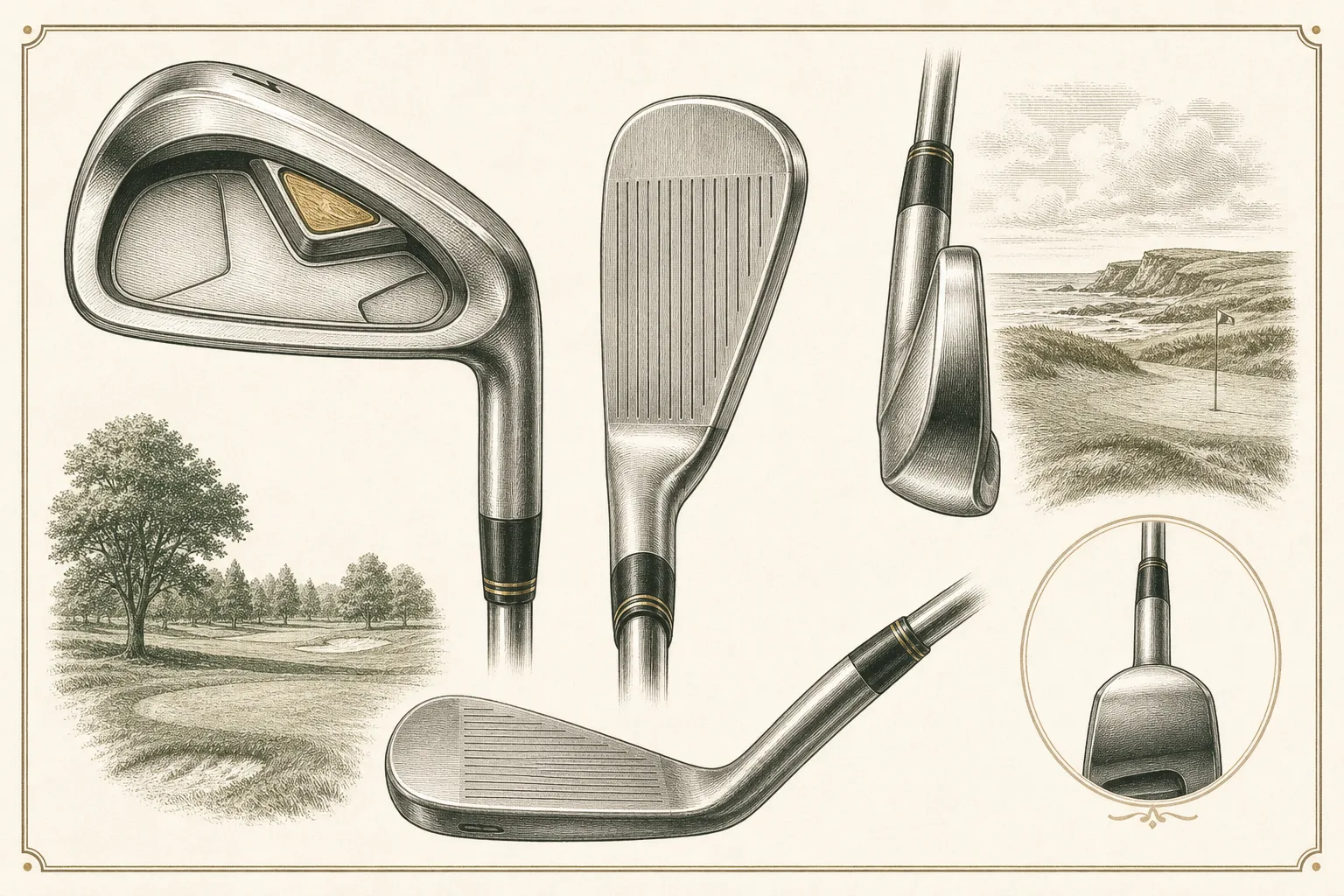
Bridgestone's mid-2000s forged comeback, the J33 Forged Cavity Back was developed with input from staff pros Fred Couples and Stuart Appleby and forged from 1020 mild carbon steel with a progressive muscle cavity: deeper offset and lower CG in the long irons, tighter and more stable in the short irons. It was the compact players-cavity option in a three-way 2005 J33 launch (Blade, Combo, Cavity Back) aimed at single-digit players wanting classic forged looks without full blade punishment. Contemporary reviewers liked the sound and finish but tested it as merely average for forgiveness — a good iron, not a great one, for the player it was built for.
One enthusiast review site (bladegolfirons.com) credits the original J33 Cavity with 'an ardent and cult following' for its looks and soft feel, but that claim stands alone — no forum reverence threads, no scarcity pricing, and period testing found it comparatively unforgiving with 'fairly average' overall performance. Its real credential is staff-pro input from Fred Couples and Stuart Appleby, and it went non-conforming for PGA Tour Condition-of-Competition play from January 1, 2010 — a fate shared industry-wide by pre-2010 box-groove irons, not unique to this model.
Best for single-digit handicaps who want a classic forged shape and don't mind giving up some margin for error. A mid-or-high handicapper will find the compact head and thin sole unforgiving next to a modern GI iron.
Launched 2005 as Bridgestone's forged comeback, competing with Mizuno's MP-30/MP-32, Titleist's 690.CB and Callaway's X-Tour cavities. Sat between the blade-profile J33B and the combo J33 in the same generation; superseded by the Endo-forged J36 Cavity in 2008.
A compact forged players cavity, not a game-improvement iron: progressive offset and a deeper CG in the long irons give a little more help launching than a pure blade, but the head stays small with a thin sole. Period reviews specifically flagged below-average forgiveness on mis-hits relative to rivals of its era.
Calibrated across the whole catalog — a tour blade scores low here on purpose; it means control, not ease.
Cheap and plentiful: complete used 3/4-PW sets typically sell for roughly $80-180 in 2026 depending on shaft (stock steel vs. upgraded Dynamic Gold/Project X) and condition. 2nd Swing's graded, warrantied listings run higher, but that reconditioned-retail price isn't representative of private-party sales. Original retail was about $899.
Reading is one thing — hitting is another. Book a bay and see the numbers for yourself before you buy anywhere.
“A rung-2 players cavity from Bridgestone's return to premium forged in the mid-2000s. Soft 1020 feel with a touch of forgiveness, but plentiful and cheap used now. Fine for a decent player who wants classic looks without going full blade.”
Bridgestone's mid-2000s forged comeback, the J33 Forged Cavity Back was developed with input from staff pros Fred Couples and Stuart Appleby and forged from 1020 mild carbon steel with a progressive muscle cavity: deeper offset and lower CG in the long irons, tighter and more stable in the short irons. It was the compact players-cavity option in a three-way 2005 J33 launch (Blade, Combo, Cavity Back) aimed at single-digit players wanting classic forged looks without full blade punishment. Contemporary reviewers liked the sound and finish but tested it as merely average for forgiveness — a good iron, not a great one, for the player it was built for.
One enthusiast review site (bladegolfirons.com) credits the original J33 Cavity with 'an ardent and cult following' for its looks and soft feel, but that claim stands alone — no forum reverence threads, no scarcity pricing, and period testing found it comparatively unforgiving with 'fairly average' overall performance. Its real credential is staff-pro input from Fred Couples and Stuart Appleby, and it went non-conforming for PGA Tour Condition-of-Competition play from January 1, 2010 — a fate shared industry-wide by pre-2010 box-groove irons, not unique to this model.
Best for single-digit handicaps who want a classic forged shape and don't mind giving up some margin for error. A mid-or-high handicapper will find the compact head and thin sole unforgiving next to a modern GI iron.
Launched 2005 as Bridgestone's forged comeback, competing with Mizuno's MP-30/MP-32, Titleist's 690.CB and Callaway's X-Tour cavities. Sat between the blade-profile J33B and the combo J33 in the same generation; superseded by the Endo-forged J36 Cavity in 2008.
A compact forged players cavity, not a game-improvement iron: progressive offset and a deeper CG in the long irons give a little more help launching than a pure blade, but the head stays small with a thin sole. Period reviews specifically flagged below-average forgiveness on mis-hits relative to rivals of its era.
Calibrated across the whole catalog — a tour blade scores low here on purpose; it means control, not ease.
Cheap and plentiful: complete used 3/4-PW sets typically sell for roughly $80-180 in 2026 depending on shaft (stock steel vs. upgraded Dynamic Gold/Project X) and condition. 2nd Swing's graded, warrantied listings run higher, but that reconditioned-retail price isn't representative of private-party sales. Original retail was about $899.
Reading is one thing — hitting is another. Book a bay and see the numbers for yourself before you buy anywhere.