“The XTD fairway extended the Speedline slot family with a hotter, deeper face. A standard-rung wood that leans on Adams' fairway pedigree for penetrating distance.”
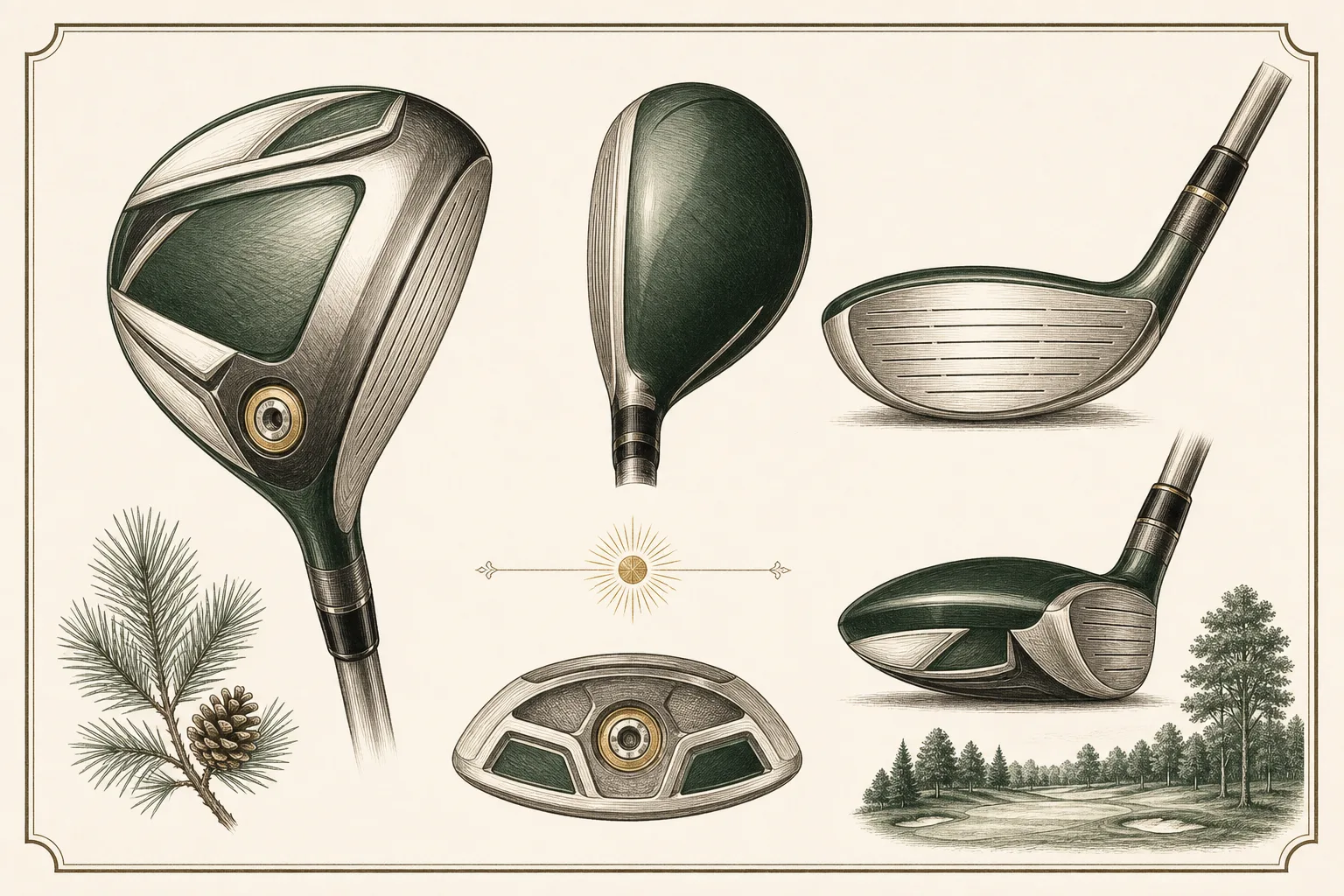
The Super XTD (also styled Super LS XTD) was Adams' 2012 attempt to make a fairway wood behave like a driver: a titanium body fused to an ultra-thin titanium crown, precision-milled tungsten weighting low in the sole, and Adams' signature Velocity Slot Technology channel cut into both crown and sole to let the face flex more freely at impact. Adams claimed the face was up to 36% hotter than a traditional fairway wood of the time. It arrived as one of two premium 2012 Speedline metalwoods (alongside the Super S) built to showcase multi-material construction just as Adams — independent since 1987 — was being acquired by TaylorMade in a deal that closed in 2012, making the Super XTD one of the last fairway woods engineered under Adams' own R&D before the brand became a TaylorMade subsidiary line.
A well-reviewed, technically ambitious product in its year — GolfWRX floated it for fairway/hybrid-of-the-year consideration — but it did not create lasting brand mythology or forum-hunting demand; the roster's own DB entry lists it under a later 2013 date, suggesting confusion with Adams' fast annual refresh cycle rather than any special longevity.
Good for mid-to-high handicappers wanting maximum ball speed and easy launch from a fairway wood, especially off the tee on tight par-4s. Better players who want more control and workability, or anyone prioritizing feel over raw speed, will find modern players'-fairway options (steel face, smaller footprint) a better fit; this is a distance-first tool.
Released in the same 2012 wave as the Super S fairway, competing against TaylorMade's RocketBallz, Callaway's RAZR Fit, and Titleist's 913F fairway woods. It was quickly followed by newer Speedline generations after TaylorMade's 2012 acquisition folded Adams' engineering into TaylorMade's own pipeline; a rough modern equivalent is a TaylorMade Stealth or Qi10 fairway wood.
The multi-material titanium construction and low sole-weighted CG make it easy to launch and reasonably tolerant of off-center strikes for a fairway wood, but the thin titanium face/crown combination trades some feel and low-strike stability for that extra speed — mis-hits low on the face lose more ball speed than a wider, more traditional steel-faced fairway wood.
Calibrated across the whole catalog — a tour blade scores low here on purpose; it means control, not ease.
As an orphaned pre-acquisition Adams model, used prices are modest: complete fairway woods in decent condition typically sell in the roughly $40-$90 range on eBay/2nd Swing-style marketplaces in 2026, reflecting both its age and Adams' diminished brand presence since being absorbed by TaylorMade.
Reading is one thing — hitting is another. Book a bay and see the numbers for yourself before you buy anywhere.
“The XTD fairway extended the Speedline slot family with a hotter, deeper face. A standard-rung wood that leans on Adams' fairway pedigree for penetrating distance.”
The Super XTD (also styled Super LS XTD) was Adams' 2012 attempt to make a fairway wood behave like a driver: a titanium body fused to an ultra-thin titanium crown, precision-milled tungsten weighting low in the sole, and Adams' signature Velocity Slot Technology channel cut into both crown and sole to let the face flex more freely at impact. Adams claimed the face was up to 36% hotter than a traditional fairway wood of the time. It arrived as one of two premium 2012 Speedline metalwoods (alongside the Super S) built to showcase multi-material construction just as Adams — independent since 1987 — was being acquired by TaylorMade in a deal that closed in 2012, making the Super XTD one of the last fairway woods engineered under Adams' own R&D before the brand became a TaylorMade subsidiary line.
A well-reviewed, technically ambitious product in its year — GolfWRX floated it for fairway/hybrid-of-the-year consideration — but it did not create lasting brand mythology or forum-hunting demand; the roster's own DB entry lists it under a later 2013 date, suggesting confusion with Adams' fast annual refresh cycle rather than any special longevity.
Good for mid-to-high handicappers wanting maximum ball speed and easy launch from a fairway wood, especially off the tee on tight par-4s. Better players who want more control and workability, or anyone prioritizing feel over raw speed, will find modern players'-fairway options (steel face, smaller footprint) a better fit; this is a distance-first tool.
Released in the same 2012 wave as the Super S fairway, competing against TaylorMade's RocketBallz, Callaway's RAZR Fit, and Titleist's 913F fairway woods. It was quickly followed by newer Speedline generations after TaylorMade's 2012 acquisition folded Adams' engineering into TaylorMade's own pipeline; a rough modern equivalent is a TaylorMade Stealth or Qi10 fairway wood.
The multi-material titanium construction and low sole-weighted CG make it easy to launch and reasonably tolerant of off-center strikes for a fairway wood, but the thin titanium face/crown combination trades some feel and low-strike stability for that extra speed — mis-hits low on the face lose more ball speed than a wider, more traditional steel-faced fairway wood.
Calibrated across the whole catalog — a tour blade scores low here on purpose; it means control, not ease.
As an orphaned pre-acquisition Adams model, used prices are modest: complete fairway woods in decent condition typically sell in the roughly $40-$90 range on eBay/2nd Swing-style marketplaces in 2026, reflecting both its age and Adams' diminished brand presence since being absorbed by TaylorMade.
Reading is one thing — hitting is another. Book a bay and see the numbers for yourself before you buy anywhere.