“A forged distance cavity with players' looks; among Adams' last iron designs. A reasonable rung-3 home for a good striker.”
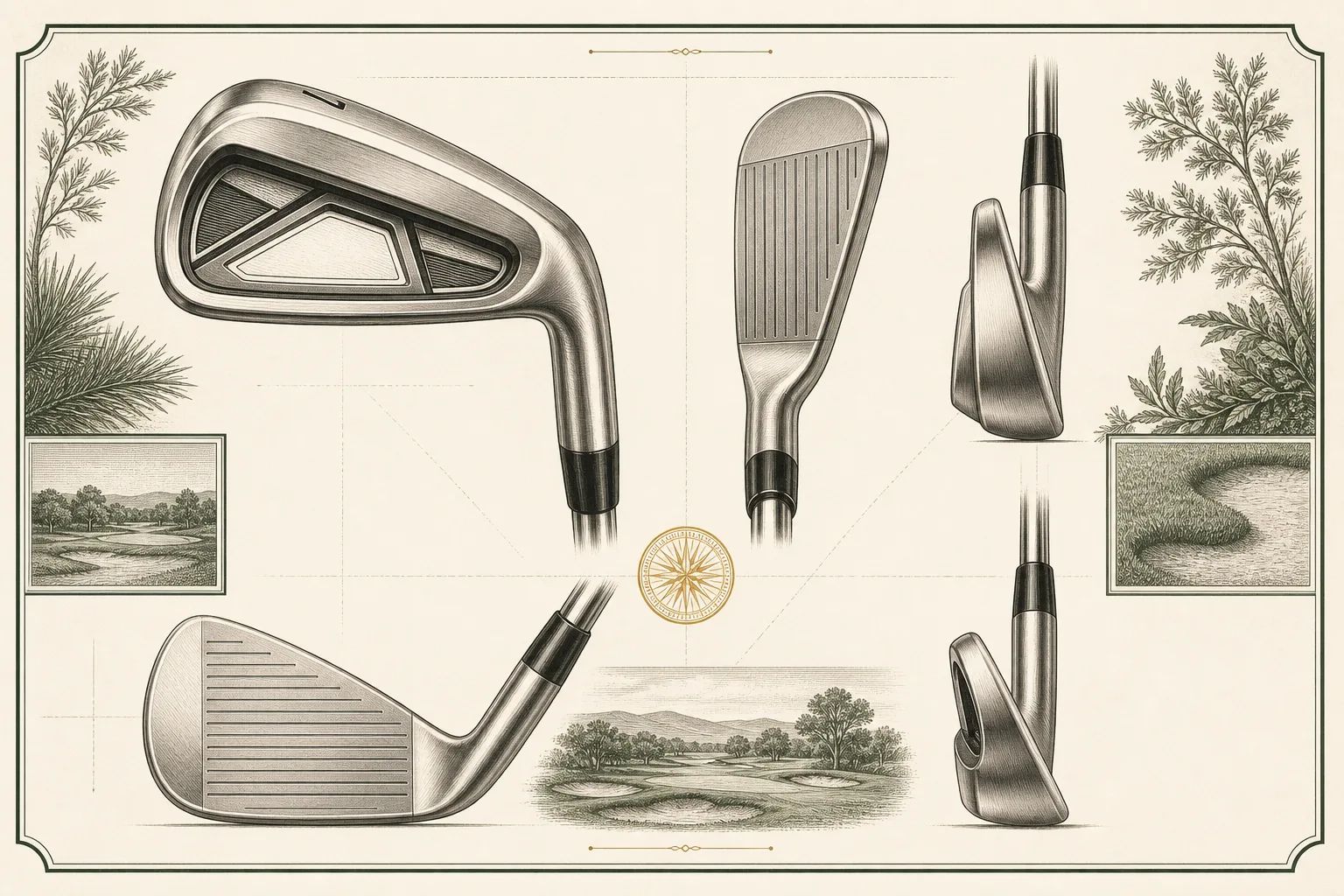
The XTD Forged was Adams' most ambitious iron in its final years of original engineering (TaylorMade had owned the brand since 2012): a 'cross-cavity' construction pairing a multi-piece forged body with a floating, hollow face section reinforced by Cut-Thru Slot technology and tungsten weighting low in the head. The goal was distance through engineering rather than strengthened lofts, while keeping the soft, forged feel Adams' better players wanted. Reviewers were surprised how forgiving a forged iron could be -- heel and toe misses on the long irons barely bled distance -- while it still felt notably softer than a cast game-improvement iron. It sat as Adams' top players'-distance offering, stock with KBS C-Taper shafts, in the cycle right before the brand was folded fully into TaylorMade.
Golf press (GolfWRX, Golf Monthly, Today's Golfer, Bunkers Paradise) covered it favorably as one of the better forged game-improvement irons of 2013, and some enthusiast praise for 'forgiveness in a forged shape' persists in forum threads, but it never built a sustained hunt-it-down following -- it was discontinued within Adams/TaylorMade's normal product cycle and rarely appears in modern best-of retrospectives.
Best for roughly 5-15 handicap players who want forgiveness without a chunky cast look, or a decent ball-striker seeking distance help specifically in the long irons. Not for a true beginner (still a forged, moderate-size cavity, not a max-GI iron) and not for a scratch player wanting full shot-shaping control.
Launched in 2013 at $1,099 (steel, stock KBS C-Taper) or $1,199 with Aldila RIP Tour 115g graphite, competing against TaylorMade's own SpeedBlade/RocketBladez, Callaway's X2 Hot Pro, and Titleist's AP2 for the better-player-distance segment. It arrived one product cycle before Adams' original engineering lineage was wound down inside TaylorMade (roughly 2016-2017).
Forgiving well beyond what a forged multi-piece iron typically delivers, thanks to the hollow floating face and low tungsten weighting -- reviewers specifically noted thin and toe strikes on long irons held distance unusually well. Still a notch below a full cast game-improvement iron (like the Callaway X-18) in absolute mis-hit tolerance, since the feel/workability balance is tuned slightly toward better strikers.
Calibrated across the whole catalog — a tour blade scores low here on purpose; it means control, not ease.
A complete steel set (4-PW) typically runs $150-$300 privately in 2026 depending on shaft and condition -- more than a mass-market GI iron of the same age (like a Callaway X-18) because it launched as a forged, higher-MSRP iron with genuine enthusiast praise, though nowhere near true collector pricing.
Reading is one thing — hitting is another. Book a bay and see the numbers for yourself before you buy anywhere.
“A forged distance cavity with players' looks; among Adams' last iron designs. A reasonable rung-3 home for a good striker.”
The XTD Forged was Adams' most ambitious iron in its final years of original engineering (TaylorMade had owned the brand since 2012): a 'cross-cavity' construction pairing a multi-piece forged body with a floating, hollow face section reinforced by Cut-Thru Slot technology and tungsten weighting low in the head. The goal was distance through engineering rather than strengthened lofts, while keeping the soft, forged feel Adams' better players wanted. Reviewers were surprised how forgiving a forged iron could be -- heel and toe misses on the long irons barely bled distance -- while it still felt notably softer than a cast game-improvement iron. It sat as Adams' top players'-distance offering, stock with KBS C-Taper shafts, in the cycle right before the brand was folded fully into TaylorMade.
Golf press (GolfWRX, Golf Monthly, Today's Golfer, Bunkers Paradise) covered it favorably as one of the better forged game-improvement irons of 2013, and some enthusiast praise for 'forgiveness in a forged shape' persists in forum threads, but it never built a sustained hunt-it-down following -- it was discontinued within Adams/TaylorMade's normal product cycle and rarely appears in modern best-of retrospectives.
Best for roughly 5-15 handicap players who want forgiveness without a chunky cast look, or a decent ball-striker seeking distance help specifically in the long irons. Not for a true beginner (still a forged, moderate-size cavity, not a max-GI iron) and not for a scratch player wanting full shot-shaping control.
Launched in 2013 at $1,099 (steel, stock KBS C-Taper) or $1,199 with Aldila RIP Tour 115g graphite, competing against TaylorMade's own SpeedBlade/RocketBladez, Callaway's X2 Hot Pro, and Titleist's AP2 for the better-player-distance segment. It arrived one product cycle before Adams' original engineering lineage was wound down inside TaylorMade (roughly 2016-2017).
Forgiving well beyond what a forged multi-piece iron typically delivers, thanks to the hollow floating face and low tungsten weighting -- reviewers specifically noted thin and toe strikes on long irons held distance unusually well. Still a notch below a full cast game-improvement iron (like the Callaway X-18) in absolute mis-hit tolerance, since the feel/workability balance is tuned slightly toward better strikers.
Calibrated across the whole catalog — a tour blade scores low here on purpose; it means control, not ease.
A complete steel set (4-PW) typically runs $150-$300 privately in 2026 depending on shaft and condition -- more than a mass-market GI iron of the same age (like a Callaway X-18) because it launched as a forged, higher-MSRP iron with genuine enthusiast praise, though nowhere near true collector pricing.
Reading is one thing — hitting is another. Book a bay and see the numbers for yourself before you buy anywhere.