“A rung-2 combo blending forgiving dual-pocket long irons with the compact CB short irons for control where it counts. A savvy build for the better player. Hard to find used but worth it if you like the concept.”
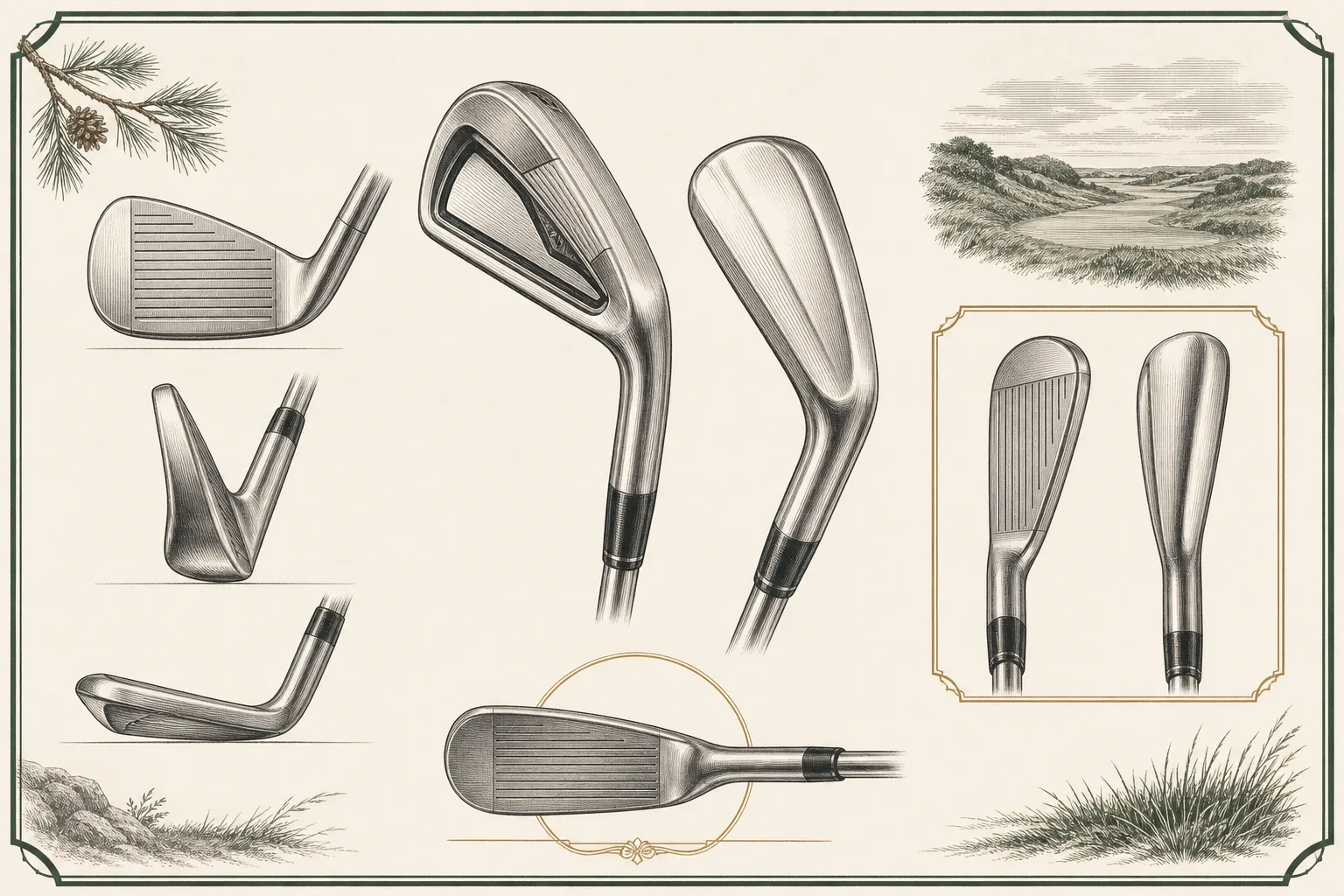
The J40 Combo was Bridgestone Golf's 2011 answer to the combo-set trend: it paired the wide, forgiving Dual Pocket Cavity design (3-iron through 6-iron) with the more compact, tour-oriented Cavity Back heads (7-iron through PW) in one set, letting a golfer get long-iron forgiveness and short-iron control from a single 1020-carbon-steel forged family. A distinctive trapezoid sole — raised in the center relative to the leading and trailing edges — was engineered to work for both diggers and pickers, and the set shipped stock with a Project X flighted shaft and roughly 50 aftermarket shaft options, reflecting Bridgestone's tour-department fitting pedigree (the same department that built clubs for Tiger Woods in this era).
It earned genuinely strong, repeated praise in golf media at launch — Hooked on Golf Blog, Golftips, Independent Golf Reviews, and Golfmagic all reviewed the J40 CB/Combo family favorably, with several outlets calling the J40 CB among the best players'-cavity irons on the market that year — but that praise stayed within its own product cycle; there's no evidence of lasting forum-driven scarcity or collector demand a decade-plus later the way there is for a true cult classic.
Fits mid-to-low handicappers who want extra help in the hard-to-hit long irons without giving up a compact, workable look and feel in the scoring clubs — a classic 'combo set' buyer. Not the right pick for a high handicapper who needs forgiveness all the way through the set (the short irons here are tour-compact, not game-improvement-wide), nor for a purist wanting one uniform head shape top to bottom.
Released in Bridgestone's 2011 iron lineup alongside the standalone J40 CB (cavity-back only) and J40 DPC (dual-pocket-cavity only) models, competing with combo-set contemporaries like Titleist's 712 AP2/CB combos and Mizuno's MP-59/MP-69 pairings. It predates Bridgestone's later 'Tour B' rebrand (from 2017 onward, e.g. the Tour B X-Blade/X-CB/X-CBP family), which superseded the J-series naming entirely.
Genuinely a step up in forgiveness versus a pure players' iron: the Dual Pocket Cavity long irons move discretionary weight to the perimeter and reviewers described the set as 'much more forgiving and longer than expected' with a soft, buttery feel even on slightly off-center hits, while the compact 7-PW cavity backs trade some of that margin for tour-level control and workability — a genuine combo-set compromise, not a max-forgiveness iron.
Calibrated across the whole catalog — a tour blade scores low here on purpose; it means control, not ease.
Complete used J40 CB/Combo sets from this era commonly trade in the $150-$300 range on the secondary market (2nd Swing, eBay) as of 2026, reflecting steady but unremarkable depreciation typical of a well-regarded but non-cult mid-market forged iron now 15 years old.
Reading is one thing — hitting is another. Book a bay and see the numbers for yourself before you buy anywhere.
“A rung-2 combo blending forgiving dual-pocket long irons with the compact CB short irons for control where it counts. A savvy build for the better player. Hard to find used but worth it if you like the concept.”
The J40 Combo was Bridgestone Golf's 2011 answer to the combo-set trend: it paired the wide, forgiving Dual Pocket Cavity design (3-iron through 6-iron) with the more compact, tour-oriented Cavity Back heads (7-iron through PW) in one set, letting a golfer get long-iron forgiveness and short-iron control from a single 1020-carbon-steel forged family. A distinctive trapezoid sole — raised in the center relative to the leading and trailing edges — was engineered to work for both diggers and pickers, and the set shipped stock with a Project X flighted shaft and roughly 50 aftermarket shaft options, reflecting Bridgestone's tour-department fitting pedigree (the same department that built clubs for Tiger Woods in this era).
It earned genuinely strong, repeated praise in golf media at launch — Hooked on Golf Blog, Golftips, Independent Golf Reviews, and Golfmagic all reviewed the J40 CB/Combo family favorably, with several outlets calling the J40 CB among the best players'-cavity irons on the market that year — but that praise stayed within its own product cycle; there's no evidence of lasting forum-driven scarcity or collector demand a decade-plus later the way there is for a true cult classic.
Fits mid-to-low handicappers who want extra help in the hard-to-hit long irons without giving up a compact, workable look and feel in the scoring clubs — a classic 'combo set' buyer. Not the right pick for a high handicapper who needs forgiveness all the way through the set (the short irons here are tour-compact, not game-improvement-wide), nor for a purist wanting one uniform head shape top to bottom.
Released in Bridgestone's 2011 iron lineup alongside the standalone J40 CB (cavity-back only) and J40 DPC (dual-pocket-cavity only) models, competing with combo-set contemporaries like Titleist's 712 AP2/CB combos and Mizuno's MP-59/MP-69 pairings. It predates Bridgestone's later 'Tour B' rebrand (from 2017 onward, e.g. the Tour B X-Blade/X-CB/X-CBP family), which superseded the J-series naming entirely.
Genuinely a step up in forgiveness versus a pure players' iron: the Dual Pocket Cavity long irons move discretionary weight to the perimeter and reviewers described the set as 'much more forgiving and longer than expected' with a soft, buttery feel even on slightly off-center hits, while the compact 7-PW cavity backs trade some of that margin for tour-level control and workability — a genuine combo-set compromise, not a max-forgiveness iron.
Calibrated across the whole catalog — a tour blade scores low here on purpose; it means control, not ease.
Complete used J40 CB/Combo sets from this era commonly trade in the $150-$300 range on the secondary market (2nd Swing, eBay) as of 2026, reflecting steady but unremarkable depreciation typical of a well-regarded but non-cult mid-market forged iron now 15 years old.
Reading is one thing — hitting is another. Book a bay and see the numbers for yourself before you buy anywhere.