“Added a 360 Face Cup to the forged Apex for more speed. A rung-3 set blending feel and distance; a strong long-term home and used value.”
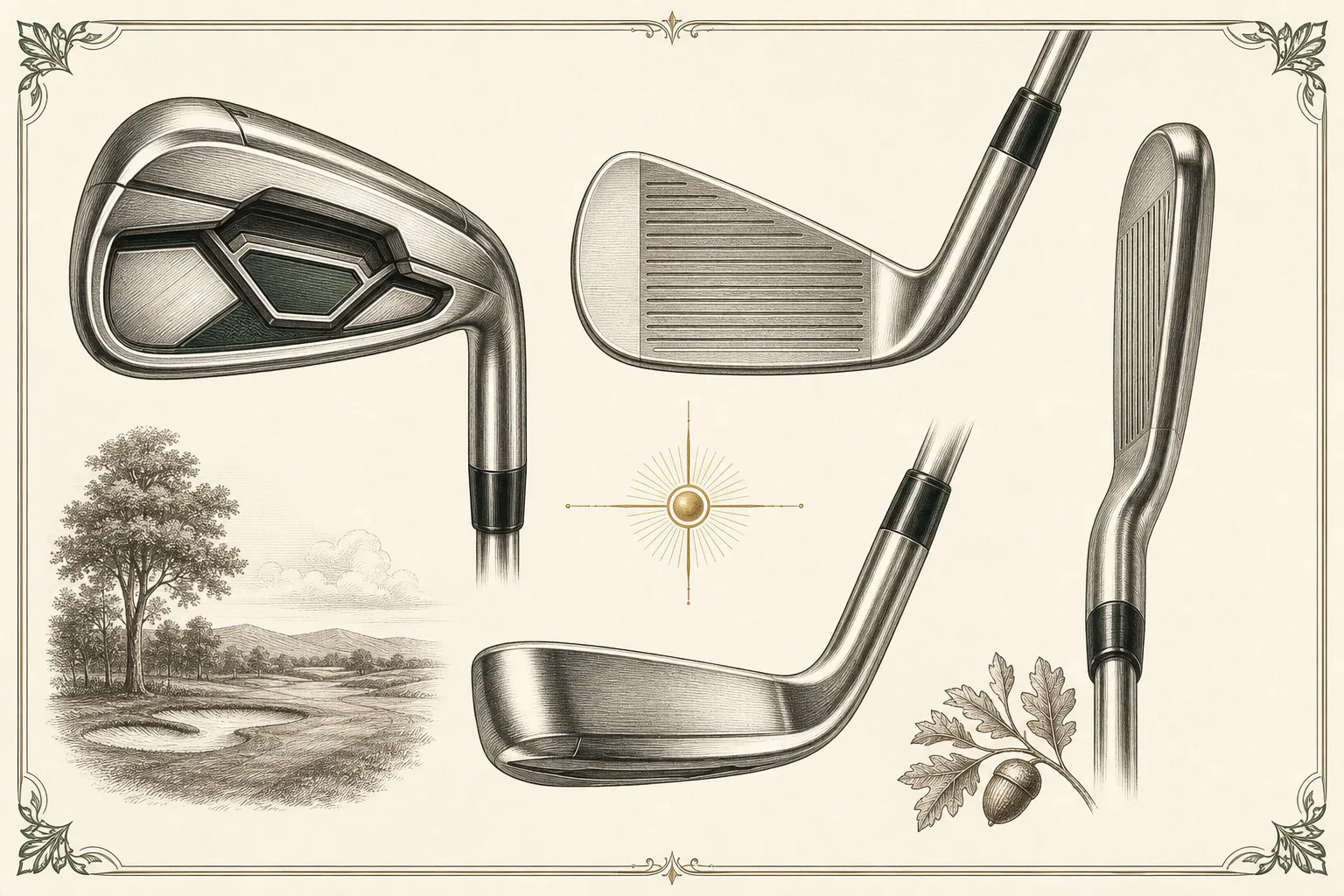
Callaway's 2016 answer to a simple ask: keep the Apex name's tour-forged pedigree but make it hit like a players-distance iron. The CF16 borrowed the 360 Cup Face from Callaway's metalwoods and built it into the 3-7 irons, married to a six-piece head (1025E forged carbon steel body, 17-4 stainless face, TPU/TPE/aluminum inserts) so the face could flex more freely at impact. The result launched higher and longer than the tour-blade Apex Pro 16 sold alongside it, while keeping a compact, mostly clean look at address -- Callaway buried the tech rather than advertising it with a big cavity. It was the 'distance' half of the 2016 two-iron Apex family and was retired when the line moved to the 2019 Apex/Apex Pro three-way split.
No cult following, but genuinely well-regarded in its moment: it carried a 4.9/5 average across hundreds of reviews on Callaway Golf Pre-Owned and similarly high scores on Global Golf and Golfsmith at the time. That is typical of a well-executed mainstream release, not a mark of lasting cult status -- it isn't discussed today the way the MP-32 or Apex TCB are; it was simply a good iron that did its job and moved on.
Single-digit to mid-handicap players who want a forged look and feel without giving up ball speed on a mis-hit -- a 'players-distance' iron before that category had the name. Not the pick for a tour blade purist (the Apex Pro 16 or Apex MB fit that bag better) and not enough raw forgiveness for a high-handicapper who needs a true game-improvement iron like the later Apex DCB.
Launched alongside the more compact Apex Pro 16 as Callaway's 2016 two-tier Apex family, competing against TaylorMade's M2/PSi irons, Titleist's AP2/AP1, and Mizuno's JPX-850. The 360 Cup Face concept it introduced became a recurring Callaway iron technology, reappearing (evolved into A.I.-designed Flash Face) in the 2021 Apex DCB. A modern equivalent in Callaway's own line is the Apex Pro or Apex DCB, which inherited the face-flex idea with newer materials.
The Cup Face and undercut cavity give real forgiveness for a forged, players-oriented head: ball speed holds up well on toe and low strikes, especially in the long irons where the face is thinnest and most active. It is meaningfully more forgiving than the blade-style Apex MB or compact Apex Pro 16 from the same era, but a true cavity-back or the deeper Apex DCB that came later moves more mass to the perimeter and forgives further off-center strikes better.
Calibrated across the whole catalog — a tour blade scores low here on purpose; it means control, not ease.
$1,199 new in 2016; realistic 2026 private-party value for a clean steel 4-PW+AW set runs roughly $180-$320, with graded/reconditioned retailers (2nd Swing, Global Golf) pricing comparable sets $250-$450 higher because that price includes a warranty and cosmetic grading. Ten-year-old forged Callaway sets are plentiful, so condition and shaft matter more than scarcity.
Reading is one thing — hitting is another. Book a bay and see the numbers for yourself before you buy anywhere.
“Added a 360 Face Cup to the forged Apex for more speed. A rung-3 set blending feel and distance; a strong long-term home and used value.”
Callaway's 2016 answer to a simple ask: keep the Apex name's tour-forged pedigree but make it hit like a players-distance iron. The CF16 borrowed the 360 Cup Face from Callaway's metalwoods and built it into the 3-7 irons, married to a six-piece head (1025E forged carbon steel body, 17-4 stainless face, TPU/TPE/aluminum inserts) so the face could flex more freely at impact. The result launched higher and longer than the tour-blade Apex Pro 16 sold alongside it, while keeping a compact, mostly clean look at address -- Callaway buried the tech rather than advertising it with a big cavity. It was the 'distance' half of the 2016 two-iron Apex family and was retired when the line moved to the 2019 Apex/Apex Pro three-way split.
No cult following, but genuinely well-regarded in its moment: it carried a 4.9/5 average across hundreds of reviews on Callaway Golf Pre-Owned and similarly high scores on Global Golf and Golfsmith at the time. That is typical of a well-executed mainstream release, not a mark of lasting cult status -- it isn't discussed today the way the MP-32 or Apex TCB are; it was simply a good iron that did its job and moved on.
Single-digit to mid-handicap players who want a forged look and feel without giving up ball speed on a mis-hit -- a 'players-distance' iron before that category had the name. Not the pick for a tour blade purist (the Apex Pro 16 or Apex MB fit that bag better) and not enough raw forgiveness for a high-handicapper who needs a true game-improvement iron like the later Apex DCB.
Launched alongside the more compact Apex Pro 16 as Callaway's 2016 two-tier Apex family, competing against TaylorMade's M2/PSi irons, Titleist's AP2/AP1, and Mizuno's JPX-850. The 360 Cup Face concept it introduced became a recurring Callaway iron technology, reappearing (evolved into A.I.-designed Flash Face) in the 2021 Apex DCB. A modern equivalent in Callaway's own line is the Apex Pro or Apex DCB, which inherited the face-flex idea with newer materials.
The Cup Face and undercut cavity give real forgiveness for a forged, players-oriented head: ball speed holds up well on toe and low strikes, especially in the long irons where the face is thinnest and most active. It is meaningfully more forgiving than the blade-style Apex MB or compact Apex Pro 16 from the same era, but a true cavity-back or the deeper Apex DCB that came later moves more mass to the perimeter and forgives further off-center strikes better.
Calibrated across the whole catalog — a tour blade scores low here on purpose; it means control, not ease.
$1,199 new in 2016; realistic 2026 private-party value for a clean steel 4-PW+AW set runs roughly $180-$320, with graded/reconditioned retailers (2nd Swing, Global Golf) pricing comparable sets $250-$450 higher because that price includes a warranty and cosmetic grading. Ten-year-old forged Callaway sets are plentiful, so condition and shaft matter more than scarcity.
Reading is one thing — hitting is another. Book a bay and see the numbers for yourself before you buy anywhere.