“A standard, versatile hybrid - rung-2 neutral flight for a repeating swing and a solid gap-filler between driver and irons. Old but honest; buy on price, not hype.”
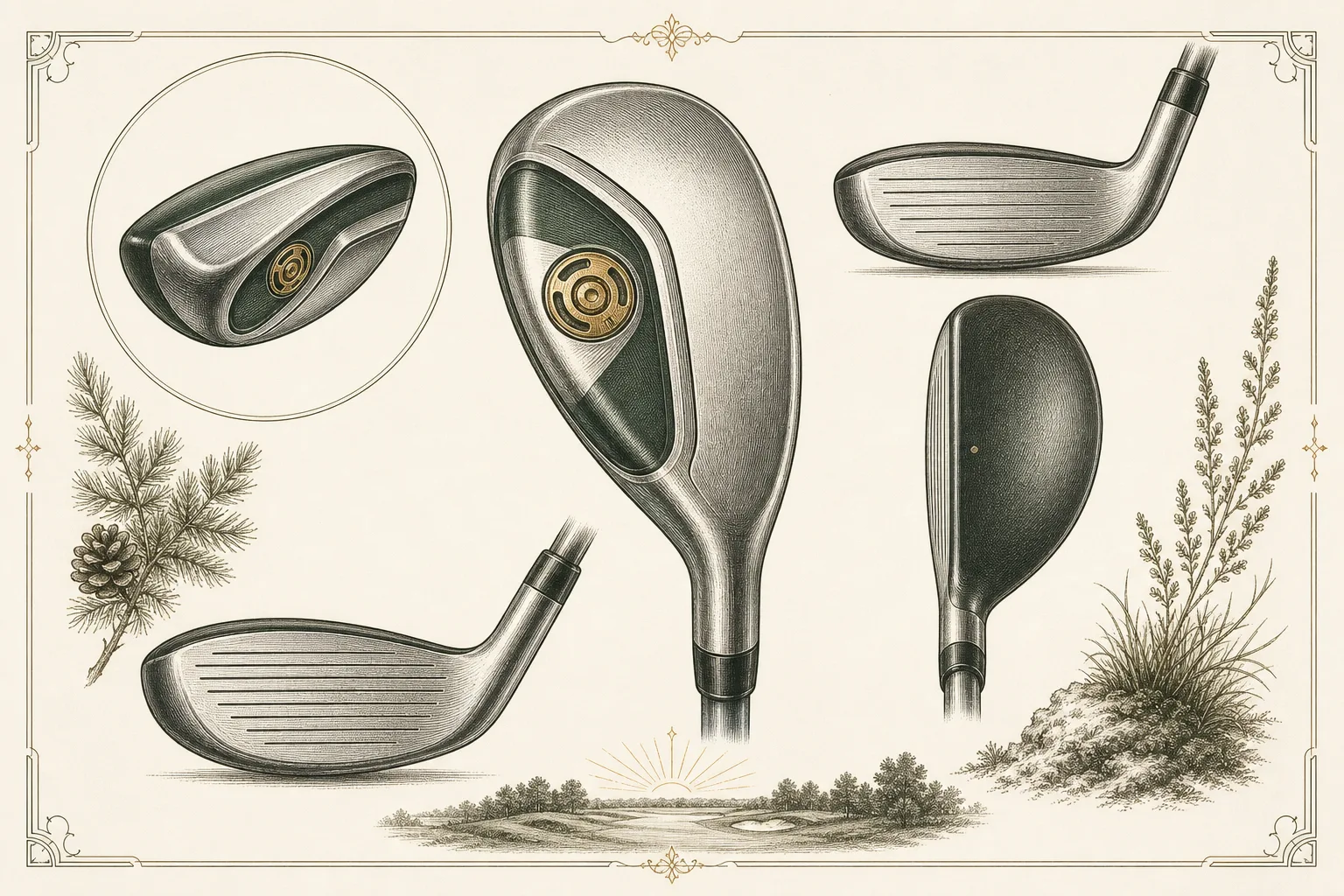
Ping normally reserves the Anser name for its blade putters, so putting it on a utility club in 2012 was a deliberate signal: this was meant to read as a feel-and-control hybrid rather than another mass-market game-improvement rescue. It shipped in 17-4 stainless steel across four lofts (17, 20, 23 and 27 degrees), with the center of gravity progressively repositioned through the run, and Ping's TFC 800H graphite as the stock shaft. Ping explicitly chose not to give it an adjustable hosel, reasoning that 0.5-degree loft increments wouldn't move the needle enough on a hybrid-sized head to be worth the added cost and moving parts - a notable departure from the fully adjustable fairway woods and drivers Ping was already selling by then. Reviewers described it as sitting between Ping's game-improvement G-series and its more compact i-series, with a head 5% larger and a face 3% larger than the contemporary i20 hybrid.
It earned genuinely strong, independent reviews across multiple UK golf outlets calling it 'up there with the very best hybrids' of its day, and non-staff tour players were reported gaming it - real, sourced praise rather than borrowed hype. It never became a collectible or a forum-chase item, but it is a legitimately well-regarded club within its short two-year run.
Better ball-strikers who want a hybrid that feels and addresses like a players' club rather than a bulky rescue - a 3- or 4-iron replacement for someone who still wants some workability. A high-handicapper chasing maximum forgiveness in a rescue club would likely be better served by Ping's mainstream G-series hybrid of the same period.
Released in 2012 alongside Ping's i20 and G20 platforms, it was positioned as the feel-oriented alternative to those mainstream lines - the same bridging role the Anser Forged irons played versus Ping's cast S-series irons in the same period. It sat only briefly in the catalog before Ping's next hybrid generation absorbed its role.
The larger head and face versus Ping's own i20 hybrid, combined with a traditional shape and progressive CG placement through the loft range, made it noticeably more tolerant of off-center strikes than a pure blade-style utility club, while still launching a high, penetrating flight - reviewers specifically praised its turf interaction out of rough and first cut.
Calibrated across the whole catalog — a tour blade scores low here on purpose; it means control, not ease.
Used examples typically sell in the roughly $47-$80 range today, ordinary pricing for a well-liked but short-lived early-2010s hybrid with no scarcity premium.
Reading is one thing — hitting is another. Book a bay and see the numbers for yourself before you buy anywhere.
“A standard, versatile hybrid - rung-2 neutral flight for a repeating swing and a solid gap-filler between driver and irons. Old but honest; buy on price, not hype.”
Ping normally reserves the Anser name for its blade putters, so putting it on a utility club in 2012 was a deliberate signal: this was meant to read as a feel-and-control hybrid rather than another mass-market game-improvement rescue. It shipped in 17-4 stainless steel across four lofts (17, 20, 23 and 27 degrees), with the center of gravity progressively repositioned through the run, and Ping's TFC 800H graphite as the stock shaft. Ping explicitly chose not to give it an adjustable hosel, reasoning that 0.5-degree loft increments wouldn't move the needle enough on a hybrid-sized head to be worth the added cost and moving parts - a notable departure from the fully adjustable fairway woods and drivers Ping was already selling by then. Reviewers described it as sitting between Ping's game-improvement G-series and its more compact i-series, with a head 5% larger and a face 3% larger than the contemporary i20 hybrid.
It earned genuinely strong, independent reviews across multiple UK golf outlets calling it 'up there with the very best hybrids' of its day, and non-staff tour players were reported gaming it - real, sourced praise rather than borrowed hype. It never became a collectible or a forum-chase item, but it is a legitimately well-regarded club within its short two-year run.
Better ball-strikers who want a hybrid that feels and addresses like a players' club rather than a bulky rescue - a 3- or 4-iron replacement for someone who still wants some workability. A high-handicapper chasing maximum forgiveness in a rescue club would likely be better served by Ping's mainstream G-series hybrid of the same period.
Released in 2012 alongside Ping's i20 and G20 platforms, it was positioned as the feel-oriented alternative to those mainstream lines - the same bridging role the Anser Forged irons played versus Ping's cast S-series irons in the same period. It sat only briefly in the catalog before Ping's next hybrid generation absorbed its role.
The larger head and face versus Ping's own i20 hybrid, combined with a traditional shape and progressive CG placement through the loft range, made it noticeably more tolerant of off-center strikes than a pure blade-style utility club, while still launching a high, penetrating flight - reviewers specifically praised its turf interaction out of rough and first cut.
Calibrated across the whole catalog — a tour blade scores low here on purpose; it means control, not ease.
Used examples typically sell in the roughly $47-$80 range today, ordinary pricing for a well-liked but short-lived early-2010s hybrid with no scarcity premium.
Reading is one thing — hitting is another. Book a bay and see the numbers for yourself before you buy anywhere.