“A standard, versatile hybrid - rung-2 neutral flight for a repeating swing and a solid gap-filler between driver and irons. Old but honest; buy on price, not hype.”
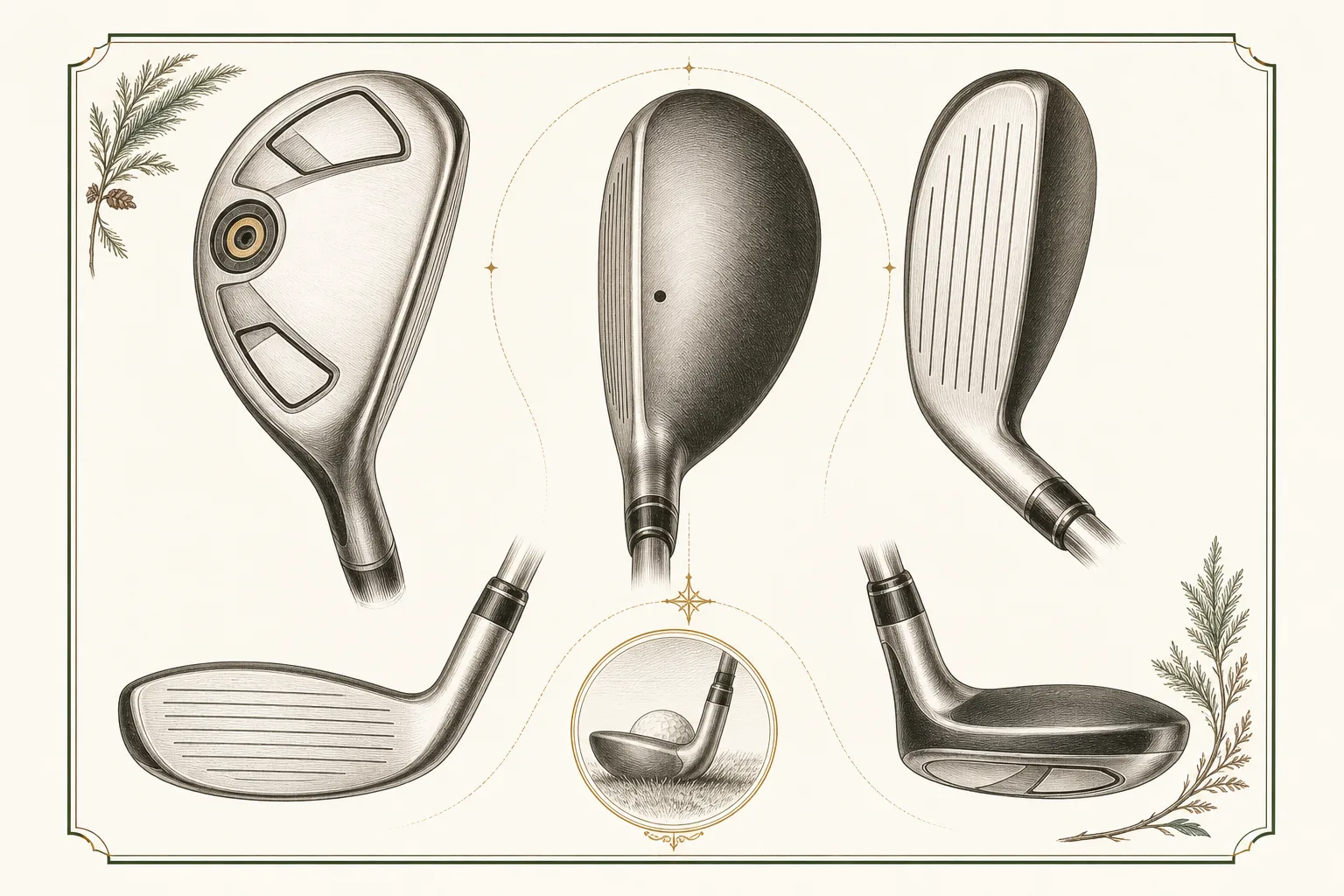
Ping's 2012 i20 hybrid paired a small, compact head with the same matte black finish as its fairway-wood sibling, aiming CG down and forward to produce a piercing, lower-spin flight and a squared leading edge for easier aiming. It came in 17, 20 and 23 degree lofts with a choice of TFC 707H graphite (lower, more penetrating flight) or True Temper Project X Black (higher-launching, medium spin) shaft. It earned a Golf Digest Hot List Gold Medal in 2012 and above-average tester scores - the strongest objective marker this otherwise ordinary i-series gap-filler has.
No lasting cult following, but genuine, sourced third-party recognition lifts it above a pure commodity verdict: a Golf Digest Hot List Gold Medal in 2012 plus consistently positive coverage across MyGolfSpy, Today's Golfer, The Sand Trap and GolfWRX. That is real critical staying power for a hybrid, even though nobody today specifically hunts down a used i20 hybrid the way they would an MP-32.
Players who want a small, neutral-setting hybrid that launches high with reduced spin and can replace a difficult long iron. A golfer who struggles to get long clubs airborne and wants the roundest, most forgiving rescue shape possible should look at a bigger, more wood-like hybrid instead.
Launched alongside the i20 driver, fairway and irons as Ping's 2012 players-performance family, opposite the more forgiving G20 hybrid. It replaced the i15 hybrid and was itself replaced by the more iron-shaped i25 hybrid in 2014, which shrank the head further and squared off the toe.
Hybrids as a category are inherently more forgiving than the long irons they replace, and reviewers specifically praised solid impact and consistent distance/accuracy even on off-center hits. It is not a max-forgiveness rescue club, though - the compact, iron-adjacent head shape trades a little of a rounder wood-like hybrid's ease for a more workable, players-oriented profile.
Calibrated across the whole catalog — a tour blade scores low here on purpose; it means control, not ease.
$35-65 for a clean single hybrid in 2026 on the private-party market - ordinary depreciation for a 14-year-old hybrid, with no collectible angle despite the strong contemporary reviews; buyers shop it purely on price against newer Ping and rival hybrids.
Reading is one thing — hitting is another. Book a bay and see the numbers for yourself before you buy anywhere.
“A standard, versatile hybrid - rung-2 neutral flight for a repeating swing and a solid gap-filler between driver and irons. Old but honest; buy on price, not hype.”
Ping's 2012 i20 hybrid paired a small, compact head with the same matte black finish as its fairway-wood sibling, aiming CG down and forward to produce a piercing, lower-spin flight and a squared leading edge for easier aiming. It came in 17, 20 and 23 degree lofts with a choice of TFC 707H graphite (lower, more penetrating flight) or True Temper Project X Black (higher-launching, medium spin) shaft. It earned a Golf Digest Hot List Gold Medal in 2012 and above-average tester scores - the strongest objective marker this otherwise ordinary i-series gap-filler has.
No lasting cult following, but genuine, sourced third-party recognition lifts it above a pure commodity verdict: a Golf Digest Hot List Gold Medal in 2012 plus consistently positive coverage across MyGolfSpy, Today's Golfer, The Sand Trap and GolfWRX. That is real critical staying power for a hybrid, even though nobody today specifically hunts down a used i20 hybrid the way they would an MP-32.
Players who want a small, neutral-setting hybrid that launches high with reduced spin and can replace a difficult long iron. A golfer who struggles to get long clubs airborne and wants the roundest, most forgiving rescue shape possible should look at a bigger, more wood-like hybrid instead.
Launched alongside the i20 driver, fairway and irons as Ping's 2012 players-performance family, opposite the more forgiving G20 hybrid. It replaced the i15 hybrid and was itself replaced by the more iron-shaped i25 hybrid in 2014, which shrank the head further and squared off the toe.
Hybrids as a category are inherently more forgiving than the long irons they replace, and reviewers specifically praised solid impact and consistent distance/accuracy even on off-center hits. It is not a max-forgiveness rescue club, though - the compact, iron-adjacent head shape trades a little of a rounder wood-like hybrid's ease for a more workable, players-oriented profile.
Calibrated across the whole catalog — a tour blade scores low here on purpose; it means control, not ease.
$35-65 for a clean single hybrid in 2026 on the private-party market - ordinary depreciation for a 14-year-old hybrid, with no collectible angle despite the strong contemporary reviews; buyers shop it purely on price against newer Ping and rival hybrids.
Reading is one thing — hitting is another. Book a bay and see the numbers for yourself before you buy anywhere.