“Forged 8620 carbon-steel Glide for a softer, more compact players' feel. Steel-dominant identity club for the better ball-striker.”
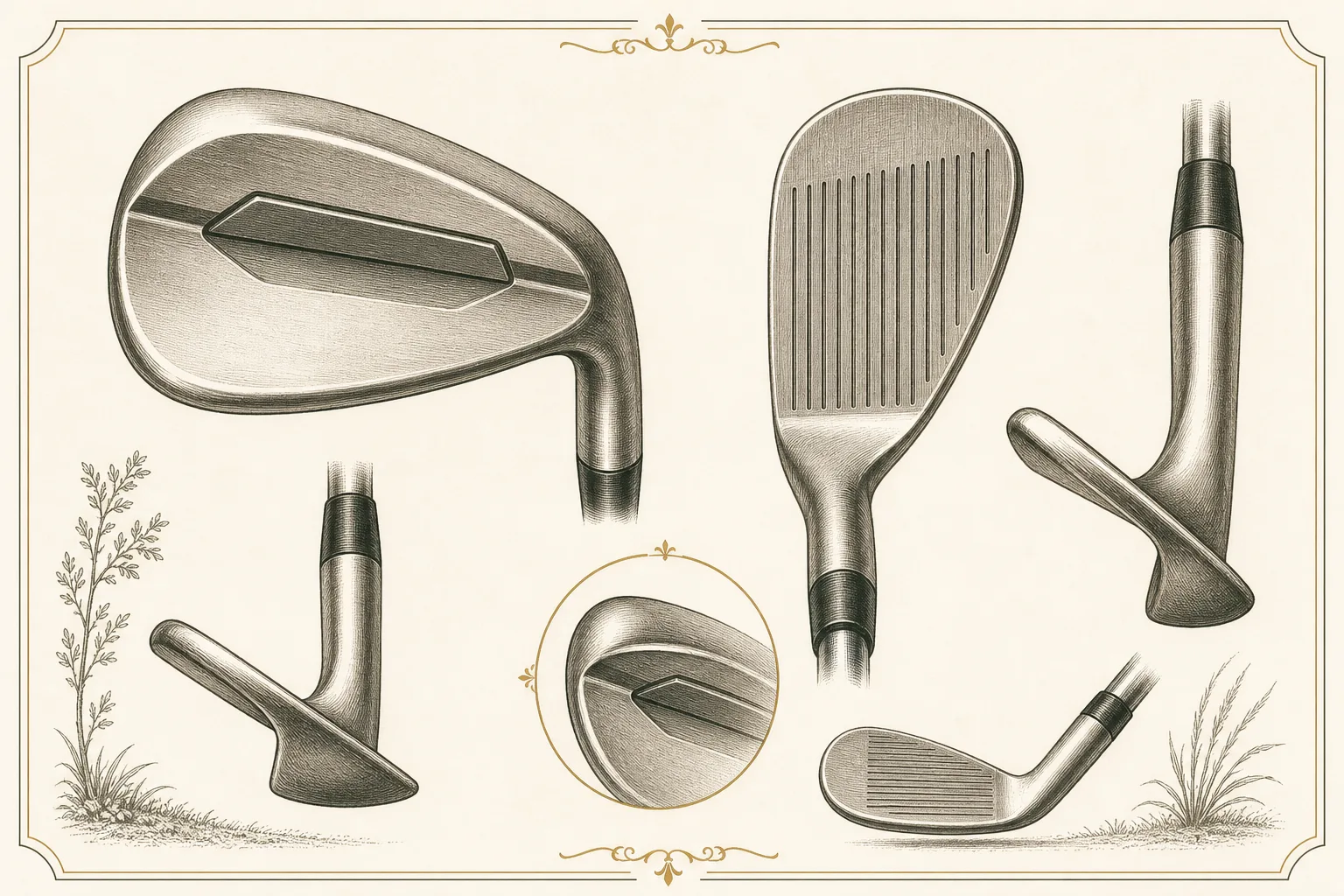
The Glide Forged took Ping's Glide wedge shape and groove tech and rebuilt it in soft 8620 carbon steel, forged rather than cast, chasing a tour-style soft feel and 'click' sound the stainless Glide wedges don't replicate. Ping added a small tungsten weight low in the toe specifically to offset the forgiveness a pure forged blade wedge normally sacrifices, and used its 'patented, precision-milled, wheel-cut' grooves for spin. Independent testing reported spin in roughly the 5,000-15,000 rpm range depending on swing and lie, with steeper attack angles producing more greenside 'zip.' It put Ping in the same forged-wedge conversation as Titleist's Vokey and Mizuno's T-series, aimed at better ball-strikers wanting Glide-level spin in a softer, more tour-familiar material.
A well-reviewed, competently executed forged wedge within Ping's broader Glide platform, but it carries no independent cult status -- coverage treats it as Ping's forged answer to Vokey/Mizuno rather than as a wedge with its own legend, and it was followed by the Glide Forged Pro without generating lasting scarcity or collector demand for the original.
Better ball-strikers and low handicaps who prioritize soft forged feel, tour-familiar shaping, and high spin from clean, center-face contact. A mid-to-high handicapper who miss-hits wedges frequently will get more consistency from a cast, wider-sole Glide 2.0 ES/WS grind or a dedicated game-improvement wedge -- the Glide Forged is not built to bail out a mis-hit the way those are.
Launched into the same 2018 forged-wedge conversation as Mizuno's T7 and Titleist's Vokey SM7, all competing on soft carbon-steel feel for better players. Ping later added the Glide Forged Pro as a more compact, tour-spec sibling, continuing the forged sub-line alongside the mainstream cast Glide wedges.
A forged, players-oriented wedge shape is inherently less forgiving than a cast game-improvement wedge, and the Glide Forged leans into that tour-style, compact profile for feel and workability. The toe-tungsten weighting is a real, specific forgiveness assist -- Ping added it explicitly to counter what a pure forged blade wedge would otherwise sacrifice -- which lifts it modestly above a raw blade wedge, landing it at 4 rather than 2-3.
Calibrated across the whole catalog — a tour blade scores low here on purpose; it means control, not ease.
Slightly above the mainline cast Glide wedges given its forged construction and better-player positioning: individual Glide Forged wedges typically sell for roughly $45-75 on eBay/SidelineSwap depending on loft, shaft and wear, comparable to contemporaneous Vokey/Mizuno forged wedges in the used market rather than commanding any special premium of its own.
Reading is one thing — hitting is another. Book a bay and see the numbers for yourself before you buy anywhere.
“Forged 8620 carbon-steel Glide for a softer, more compact players' feel. Steel-dominant identity club for the better ball-striker.”
The Glide Forged took Ping's Glide wedge shape and groove tech and rebuilt it in soft 8620 carbon steel, forged rather than cast, chasing a tour-style soft feel and 'click' sound the stainless Glide wedges don't replicate. Ping added a small tungsten weight low in the toe specifically to offset the forgiveness a pure forged blade wedge normally sacrifices, and used its 'patented, precision-milled, wheel-cut' grooves for spin. Independent testing reported spin in roughly the 5,000-15,000 rpm range depending on swing and lie, with steeper attack angles producing more greenside 'zip.' It put Ping in the same forged-wedge conversation as Titleist's Vokey and Mizuno's T-series, aimed at better ball-strikers wanting Glide-level spin in a softer, more tour-familiar material.
A well-reviewed, competently executed forged wedge within Ping's broader Glide platform, but it carries no independent cult status -- coverage treats it as Ping's forged answer to Vokey/Mizuno rather than as a wedge with its own legend, and it was followed by the Glide Forged Pro without generating lasting scarcity or collector demand for the original.
Better ball-strikers and low handicaps who prioritize soft forged feel, tour-familiar shaping, and high spin from clean, center-face contact. A mid-to-high handicapper who miss-hits wedges frequently will get more consistency from a cast, wider-sole Glide 2.0 ES/WS grind or a dedicated game-improvement wedge -- the Glide Forged is not built to bail out a mis-hit the way those are.
Launched into the same 2018 forged-wedge conversation as Mizuno's T7 and Titleist's Vokey SM7, all competing on soft carbon-steel feel for better players. Ping later added the Glide Forged Pro as a more compact, tour-spec sibling, continuing the forged sub-line alongside the mainstream cast Glide wedges.
A forged, players-oriented wedge shape is inherently less forgiving than a cast game-improvement wedge, and the Glide Forged leans into that tour-style, compact profile for feel and workability. The toe-tungsten weighting is a real, specific forgiveness assist -- Ping added it explicitly to counter what a pure forged blade wedge would otherwise sacrifice -- which lifts it modestly above a raw blade wedge, landing it at 4 rather than 2-3.
Calibrated across the whole catalog — a tour blade scores low here on purpose; it means control, not ease.
Slightly above the mainline cast Glide wedges given its forged construction and better-player positioning: individual Glide Forged wedges typically sell for roughly $45-75 on eBay/SidelineSwap depending on loft, shaft and wear, comparable to contemporaneous Vokey/Mizuno forged wedges in the used market rather than commanding any special premium of its own.
Reading is one thing — hitting is another. Book a bay and see the numbers for yourself before you buy anywhere.