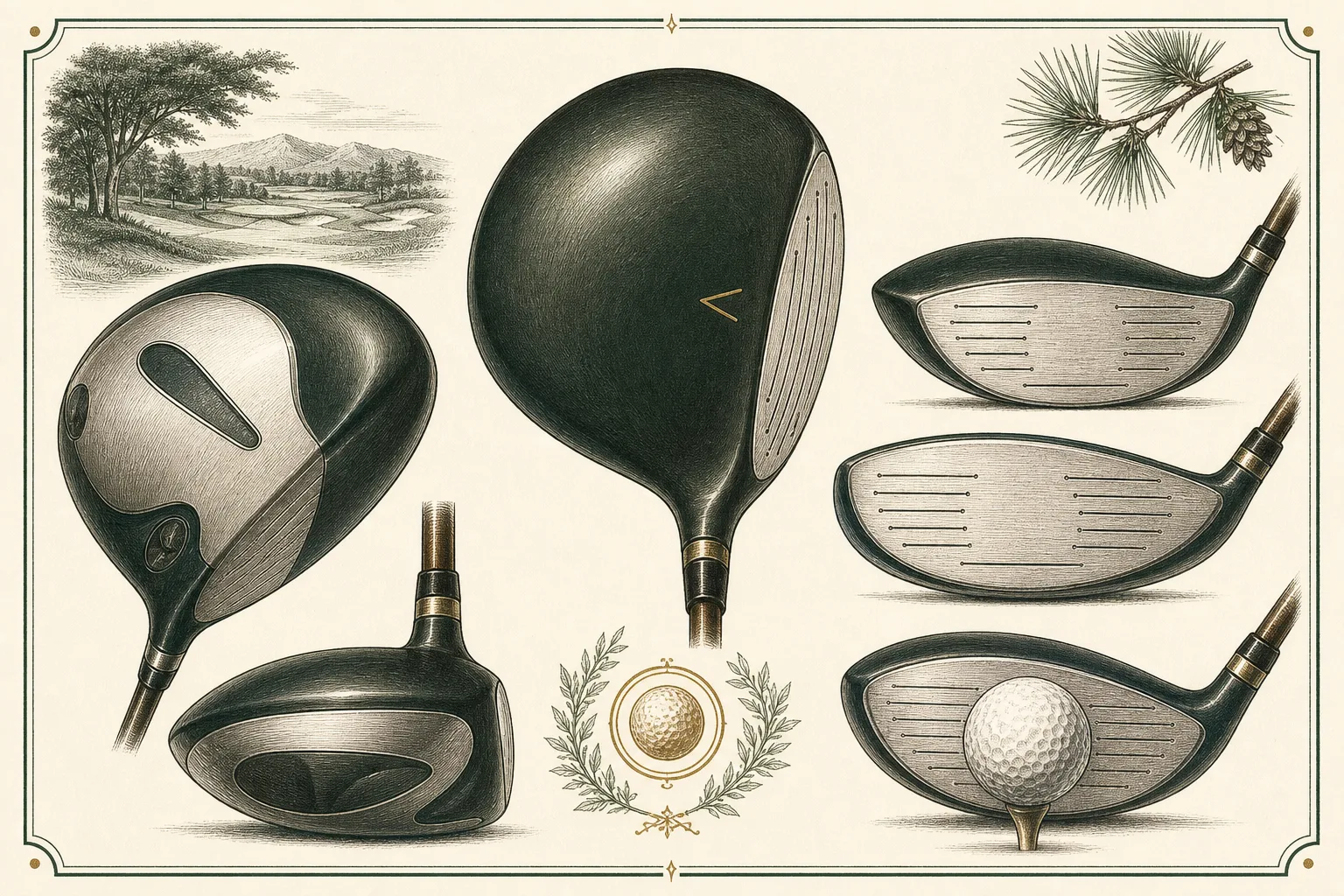
“The sculpted War Bird soleplate added perimeter weighting and MOI to the steel Bertha. Nostalgic and forgiving for its day; a giveaway-priced curiosity now.”
The War Bird was Callaway's first upgrade to the original 1991 Big Bertha, arriving in 1994 as a stainless-steel driver just slightly larger (195cc vs. 190cc) but built around a patented War Bird soleplate that pushed weight to the perimeter and lowered the center of gravity. That combination delivered a notably higher, more forgiving ball flight than the original Big Bertha, and it landed at the height of the oversized-metalwood boom Callaway itself had ignited three years earlier — cementing perimeter-weighted, high-MOI design as the template the rest of the industry would chase through the 1990s.
Widely referenced in golf-equipment retrospectives as one of the best-selling and most influential metal drivers of the 1990s, directly following the category-creating original Big Bertha; enthusiast sites and forums (SirShanksAlot, GolfWRX, TheSandTrap) still discuss and compare it against modern drivers decades later, though hard sales figures are not independently documented in the sources reviewed.
A collector or nostalgia buyer wanting a piece of the Big Bertha lineage that defined 1990s driver design; not a realistic primary gamer today given how far forgiveness and distance have advanced in three decades of subsequent titanium drivers.
Directly followed the category-defining 1991 original Big Bertha and preceded the Great Big Bertha (1995) and titanium Great Big Bertha II/War Bird Titanium models that followed; it sits at the pivot point between steel and titanium-era Callaway drivers.
Extreme (for 1994) perimeter weighting via the War Bird soleplate genuinely stabilized the head on mis-hits and was marketed as best-in-class forgiveness at launch, but a ~195cc stainless steel head is tiny by today's 460cc titanium standards, so absolute forgiveness lags far behind any modern game-improvement driver.
Calibrated across the whole catalog — a tour blade scores low here on purpose; it means control, not ease.
Realistic 2026 private-party/eBay pricing is nominal, typically under $50 for a playable example, reflecting its age and steel-era construction; value here is nostalgic/collector-driven rather than performance-driven.
Reading is one thing — hitting is another. Book a bay and see the numbers for yourself before you buy anywhere.
“The sculpted War Bird soleplate added perimeter weighting and MOI to the steel Bertha. Nostalgic and forgiving for its day; a giveaway-priced curiosity now.”
The War Bird was Callaway's first upgrade to the original 1991 Big Bertha, arriving in 1994 as a stainless-steel driver just slightly larger (195cc vs. 190cc) but built around a patented War Bird soleplate that pushed weight to the perimeter and lowered the center of gravity. That combination delivered a notably higher, more forgiving ball flight than the original Big Bertha, and it landed at the height of the oversized-metalwood boom Callaway itself had ignited three years earlier — cementing perimeter-weighted, high-MOI design as the template the rest of the industry would chase through the 1990s.
Widely referenced in golf-equipment retrospectives as one of the best-selling and most influential metal drivers of the 1990s, directly following the category-creating original Big Bertha; enthusiast sites and forums (SirShanksAlot, GolfWRX, TheSandTrap) still discuss and compare it against modern drivers decades later, though hard sales figures are not independently documented in the sources reviewed.
A collector or nostalgia buyer wanting a piece of the Big Bertha lineage that defined 1990s driver design; not a realistic primary gamer today given how far forgiveness and distance have advanced in three decades of subsequent titanium drivers.
Directly followed the category-defining 1991 original Big Bertha and preceded the Great Big Bertha (1995) and titanium Great Big Bertha II/War Bird Titanium models that followed; it sits at the pivot point between steel and titanium-era Callaway drivers.
Extreme (for 1994) perimeter weighting via the War Bird soleplate genuinely stabilized the head on mis-hits and was marketed as best-in-class forgiveness at launch, but a ~195cc stainless steel head is tiny by today's 460cc titanium standards, so absolute forgiveness lags far behind any modern game-improvement driver.
Calibrated across the whole catalog — a tour blade scores low here on purpose; it means control, not ease.
Realistic 2026 private-party/eBay pricing is nominal, typically under $50 for a playable example, reflecting its age and steel-era construction; value here is nostalgic/collector-driven rather than performance-driven.
Reading is one thing — hitting is another. Book a bay and see the numbers for yourself before you buy anywhere.