“Multi-material FT with ~80% perimeter weighting but a thinner topline, higher toe and less offset than typical GI irons, so it appeals to better players wanting forgiveness in a cleaner look.”
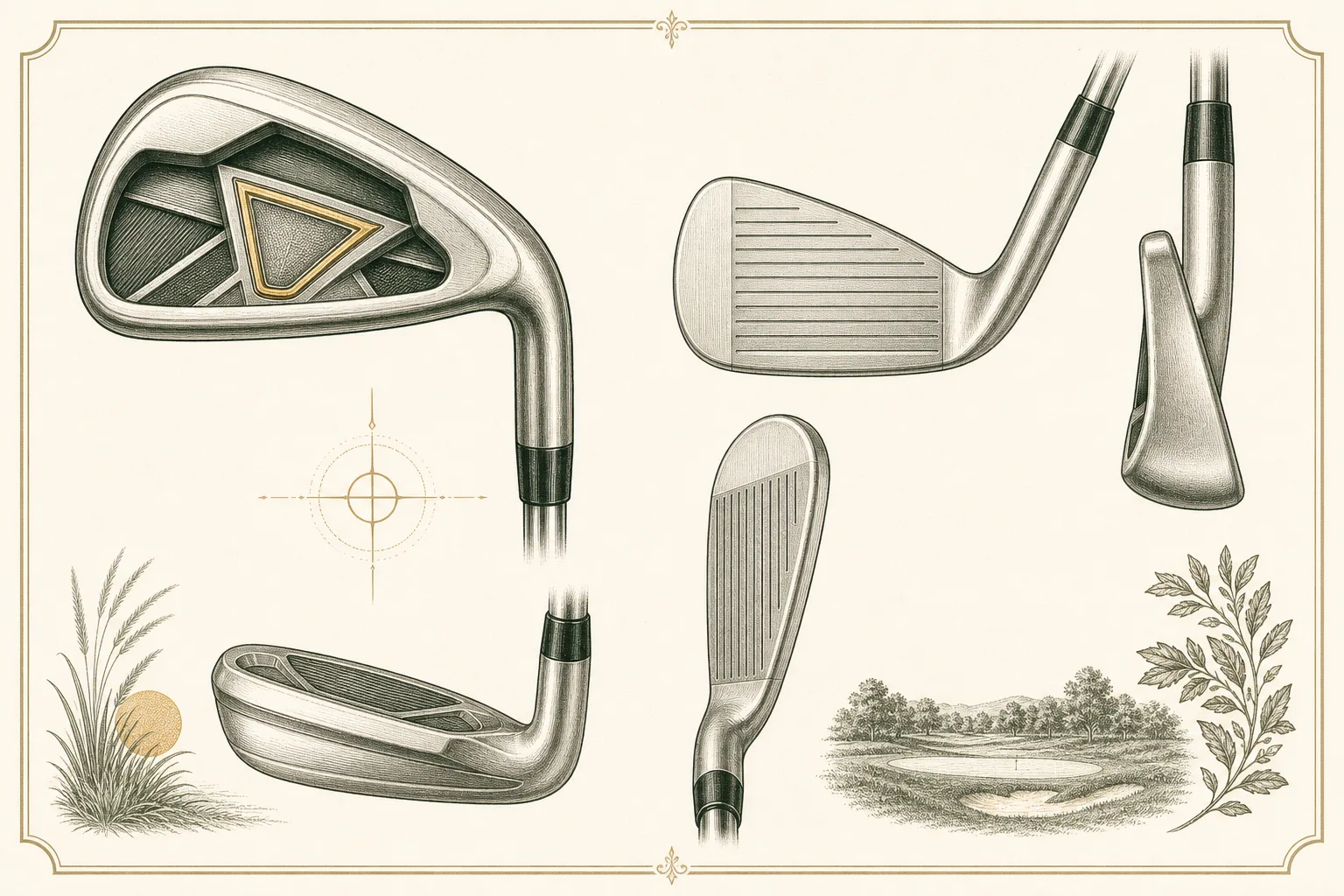
The 2008 FT Irons redesigned Callaway's Fusion Technology iron for a slightly better player than earlier FT-family sets, thinning the topline and sole and raising the toe for a more traditional look, while keeping roughly 80% of the head's weight at the perimeter for forgiveness. The recipe combined a Tunite Cradle -- a proprietary alloy denser than titanium or stainless steel -- with a lightweight, hot titanium face and a TPU SenSert insert in the cavity to dampen vibration and add feel. That multi-material construction was Callaway's pitch for a set that looked cleaner at address than a typical game-improvement iron of the day without giving up the forgiveness those players still needed.
A well-liked set in its day (a 4.5/5 average across 29 user reviews on golfreview.com) but with no cult following or lasting reputation beyond that: it was one entry in Callaway's crowded 2008 Fusion Technology lineup, replaced within a normal product cycle, and today draws no forum hunting or scarcity premium. Solid user sentiment at launch is not the same as enduring cult status.
Mid-handicap players who want real forgiveness but do not want the bulky, heavily offset look of a max-game-improvement iron -- Callaway explicitly designed this generation for 'accomplished golfers' seeking a more traditional profile without losing distance help. A high-handicapper wanting maximum forgiveness would be better served by a wider-soled, more offset design; a scratch player wanting workability should look at a players' cavity or blade instead.
Released in 2008 as part of Callaway's broader Fusion Technology family (alongside the FT Tour driver and FT Hybrid), competing against TaylorMade's Burner and Ping's G10/i10 irons of the same period. A current-day equivalent for the same 'forgiveness in a cleaner shape' brief is a Callaway Paradym or Rogue ST iron, both of which now push more distance and a larger forgiving zone from further technological refinement.
Genuinely forgiving for a game-improvement iron of its generation thanks to the ~80% perimeter weighting enabled by the dense Tunite Cradle, though the thinner topline, less offset and higher toe -- changes made specifically to appeal to better players -- give up some of the outright forgiveness of a pure max-game-improvement iron of the same year. It sits between a true GI iron and a players-distance iron.
Calibrated across the whole catalog — a tour blade scores low here on purpose; it means control, not ease.
A complete steel 4-PW/AW set in playable condition typically brings roughly $120-$220 private-party in 2026; individual replacement irons run about $15-$25 each. This is a 17-18-year-old game-improvement set valued for continued playability, not collectibility -- there is no premium market for this model today.
Reading is one thing — hitting is another. Book a bay and see the numbers for yourself before you buy anywhere.
“Multi-material FT with ~80% perimeter weighting but a thinner topline, higher toe and less offset than typical GI irons, so it appeals to better players wanting forgiveness in a cleaner look.”
The 2008 FT Irons redesigned Callaway's Fusion Technology iron for a slightly better player than earlier FT-family sets, thinning the topline and sole and raising the toe for a more traditional look, while keeping roughly 80% of the head's weight at the perimeter for forgiveness. The recipe combined a Tunite Cradle -- a proprietary alloy denser than titanium or stainless steel -- with a lightweight, hot titanium face and a TPU SenSert insert in the cavity to dampen vibration and add feel. That multi-material construction was Callaway's pitch for a set that looked cleaner at address than a typical game-improvement iron of the day without giving up the forgiveness those players still needed.
A well-liked set in its day (a 4.5/5 average across 29 user reviews on golfreview.com) but with no cult following or lasting reputation beyond that: it was one entry in Callaway's crowded 2008 Fusion Technology lineup, replaced within a normal product cycle, and today draws no forum hunting or scarcity premium. Solid user sentiment at launch is not the same as enduring cult status.
Mid-handicap players who want real forgiveness but do not want the bulky, heavily offset look of a max-game-improvement iron -- Callaway explicitly designed this generation for 'accomplished golfers' seeking a more traditional profile without losing distance help. A high-handicapper wanting maximum forgiveness would be better served by a wider-soled, more offset design; a scratch player wanting workability should look at a players' cavity or blade instead.
Released in 2008 as part of Callaway's broader Fusion Technology family (alongside the FT Tour driver and FT Hybrid), competing against TaylorMade's Burner and Ping's G10/i10 irons of the same period. A current-day equivalent for the same 'forgiveness in a cleaner shape' brief is a Callaway Paradym or Rogue ST iron, both of which now push more distance and a larger forgiving zone from further technological refinement.
Genuinely forgiving for a game-improvement iron of its generation thanks to the ~80% perimeter weighting enabled by the dense Tunite Cradle, though the thinner topline, less offset and higher toe -- changes made specifically to appeal to better players -- give up some of the outright forgiveness of a pure max-game-improvement iron of the same year. It sits between a true GI iron and a players-distance iron.
Calibrated across the whole catalog — a tour blade scores low here on purpose; it means control, not ease.
A complete steel 4-PW/AW set in playable condition typically brings roughly $120-$220 private-party in 2026; individual replacement irons run about $15-$25 each. This is a 17-18-year-old game-improvement set valued for continued playability, not collectibility -- there is no premium market for this model today.
Reading is one thing — hitting is another. Book a bay and see the numbers for yourself before you buy anywhere.