“A rung-3 low-spin players driver, the compact 445cc pear shape that launches lower with a fade lean for fast, aggressive swings. Rewards good deliveries and punishes misses. Buy it if you have the speed to use it.”
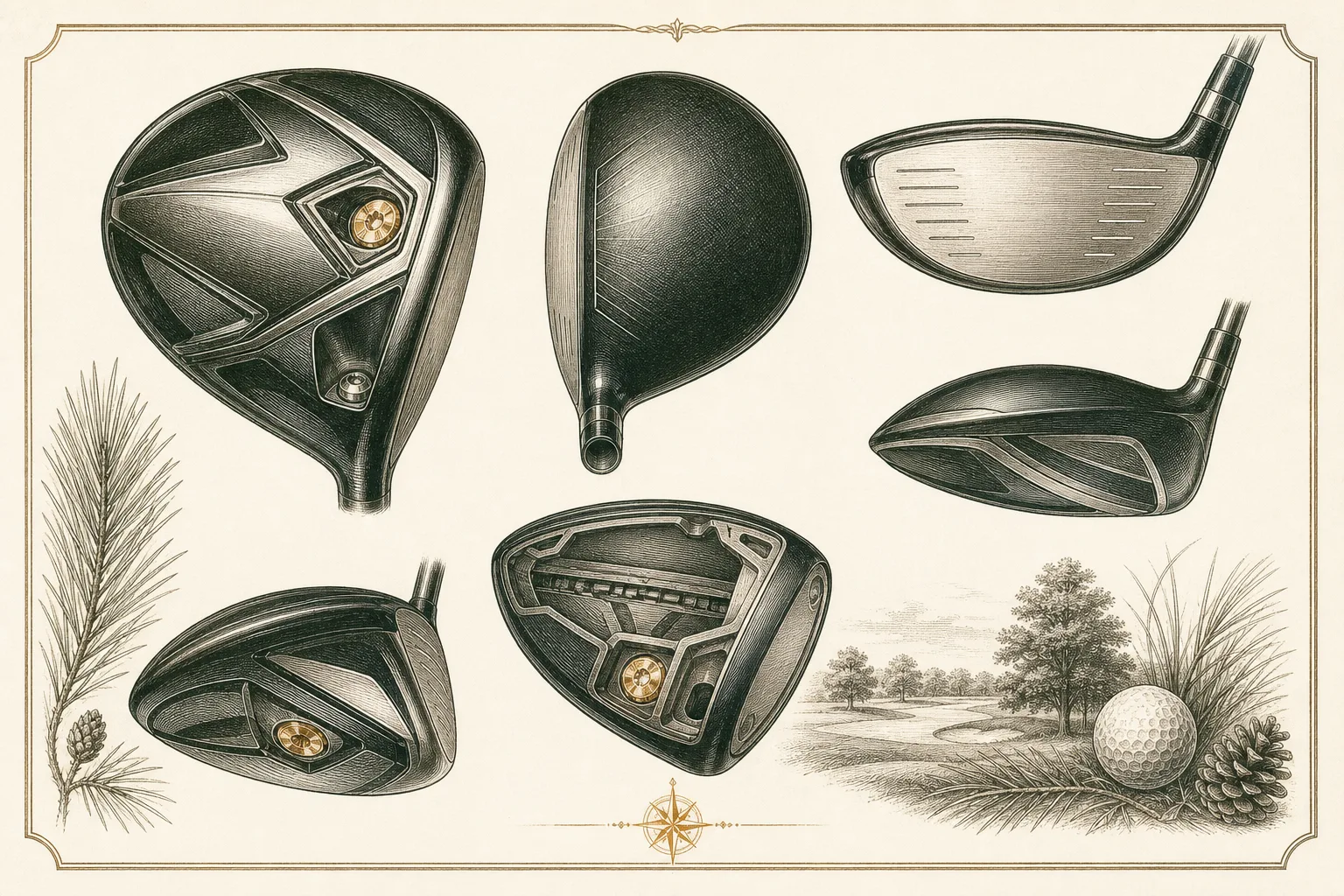
The XD-7 was the fade-biased member of Bridgestone's 2017 Tour B XD driver trio (XD-3 draw, XD-5 neutral, XD-7 fade), the first time Bridgestone built distinct head shapes for distinct ball-flight needs rather than one shape with adjustable weights. It carries a compact 445cc pear-shaped head with a medium-thickness face and toe-biased internal weighting to hold off a draw, paired with Bridgestone's Power Milling face pattern and internal 'Power Ribs' for stability and sound. It shipped 9-degree only (the shortest-loft, most player-oriented option in the line) stock with a Tour AD shaft, and at $699 it was pitched squarely at better players — Bridgestone said its own target was golfers around a 10 handicap or lower.
No forum cult or scarcity story, but genuinely notable for the engineering approach: Bridgestone, a company most golfers only associate with balls, built three distinct driver head shapes mapped to three swing tendencies instead of the industry-standard single-shape-plus-adjustable-hosel formula, and GolfWRX and Golf Digest both covered the line as a deliberate 'ultra-premium' repositioning of Bridgestone's club business, not just another driver refresh.
Better players (roughly single-digit to low-double-digit handicap) who fight a draw or hook and want help holding the ball up against a right-to-left shape, plus enough speed to play a 9-degree head. Not a fit for a high-handicap slicer (wrong shape bias) or anyone wanting max forgiveness — the XD-3 in the same family, or any current mainstream 460cc GI driver, will be more stable on mis-hits.
Launched alongside the XD-3 and XD-5 as Bridgestone's 2017 answer to TaylorMade's M1/M2, Callaway's GBB Epic, and Titleist's 917 line, at a moment when the rest of the market was consolidating around one adjustable head rather than three fixed shapes. It was superseded within Bridgestone's own line by the JGR and later B-series drivers as the company moved toward more mainstream, higher-MOI 460cc shapes; a modern equivalent inside Bridgestone's current range is the Tour B JGR or B3 driver.
Middling for a modern 445cc driver and deliberately the least forgiving of Bridgestone's own 2017 trio: the pear shape and toe-weighting are tuned to fight a slice, which concentrates mass away from a symmetric MOI layout and narrows the truly flush zone versus the rounder, higher-MOI XD-3 draw model. It is far more forgiving than any iron or wedge, but within the driver category it trades off some raw stability for shot-shape control aimed at a sub-10-handicap swinger who already controls face angle.
Calibrated across the whole catalog — a tour blade scores low here on purpose; it means control, not ease.
A 9-year-old niche players' driver with modest original sales volume; 2026 private-party prices run roughly $60–$110 for a clean head with stock shaft on eBay/2nd Swing-type marketplaces, toward the low end if the stock Tour AD shaft has been swapped. It has no collector premium — value is purely functional and depreciates like any dated driver head.
Reading is one thing — hitting is another. Book a bay and see the numbers for yourself before you buy anywhere.
“A rung-3 low-spin players driver, the compact 445cc pear shape that launches lower with a fade lean for fast, aggressive swings. Rewards good deliveries and punishes misses. Buy it if you have the speed to use it.”
The XD-7 was the fade-biased member of Bridgestone's 2017 Tour B XD driver trio (XD-3 draw, XD-5 neutral, XD-7 fade), the first time Bridgestone built distinct head shapes for distinct ball-flight needs rather than one shape with adjustable weights. It carries a compact 445cc pear-shaped head with a medium-thickness face and toe-biased internal weighting to hold off a draw, paired with Bridgestone's Power Milling face pattern and internal 'Power Ribs' for stability and sound. It shipped 9-degree only (the shortest-loft, most player-oriented option in the line) stock with a Tour AD shaft, and at $699 it was pitched squarely at better players — Bridgestone said its own target was golfers around a 10 handicap or lower.
No forum cult or scarcity story, but genuinely notable for the engineering approach: Bridgestone, a company most golfers only associate with balls, built three distinct driver head shapes mapped to three swing tendencies instead of the industry-standard single-shape-plus-adjustable-hosel formula, and GolfWRX and Golf Digest both covered the line as a deliberate 'ultra-premium' repositioning of Bridgestone's club business, not just another driver refresh.
Better players (roughly single-digit to low-double-digit handicap) who fight a draw or hook and want help holding the ball up against a right-to-left shape, plus enough speed to play a 9-degree head. Not a fit for a high-handicap slicer (wrong shape bias) or anyone wanting max forgiveness — the XD-3 in the same family, or any current mainstream 460cc GI driver, will be more stable on mis-hits.
Launched alongside the XD-3 and XD-5 as Bridgestone's 2017 answer to TaylorMade's M1/M2, Callaway's GBB Epic, and Titleist's 917 line, at a moment when the rest of the market was consolidating around one adjustable head rather than three fixed shapes. It was superseded within Bridgestone's own line by the JGR and later B-series drivers as the company moved toward more mainstream, higher-MOI 460cc shapes; a modern equivalent inside Bridgestone's current range is the Tour B JGR or B3 driver.
Middling for a modern 445cc driver and deliberately the least forgiving of Bridgestone's own 2017 trio: the pear shape and toe-weighting are tuned to fight a slice, which concentrates mass away from a symmetric MOI layout and narrows the truly flush zone versus the rounder, higher-MOI XD-3 draw model. It is far more forgiving than any iron or wedge, but within the driver category it trades off some raw stability for shot-shape control aimed at a sub-10-handicap swinger who already controls face angle.
Calibrated across the whole catalog — a tour blade scores low here on purpose; it means control, not ease.
A 9-year-old niche players' driver with modest original sales volume; 2026 private-party prices run roughly $60–$110 for a clean head with stock shaft on eBay/2nd Swing-type marketplaces, toward the low end if the stock Tour AD shaft has been swapped. It has no collector premium — value is purely functional and depreciates like any dated driver head.
Reading is one thing — hitting is another. Book a bay and see the numbers for yourself before you buy anywhere.