“First Steelhead generation — a fine-playing head marooned on a shaft era that no longer matches any modern speed band. Sentimental buy only.”
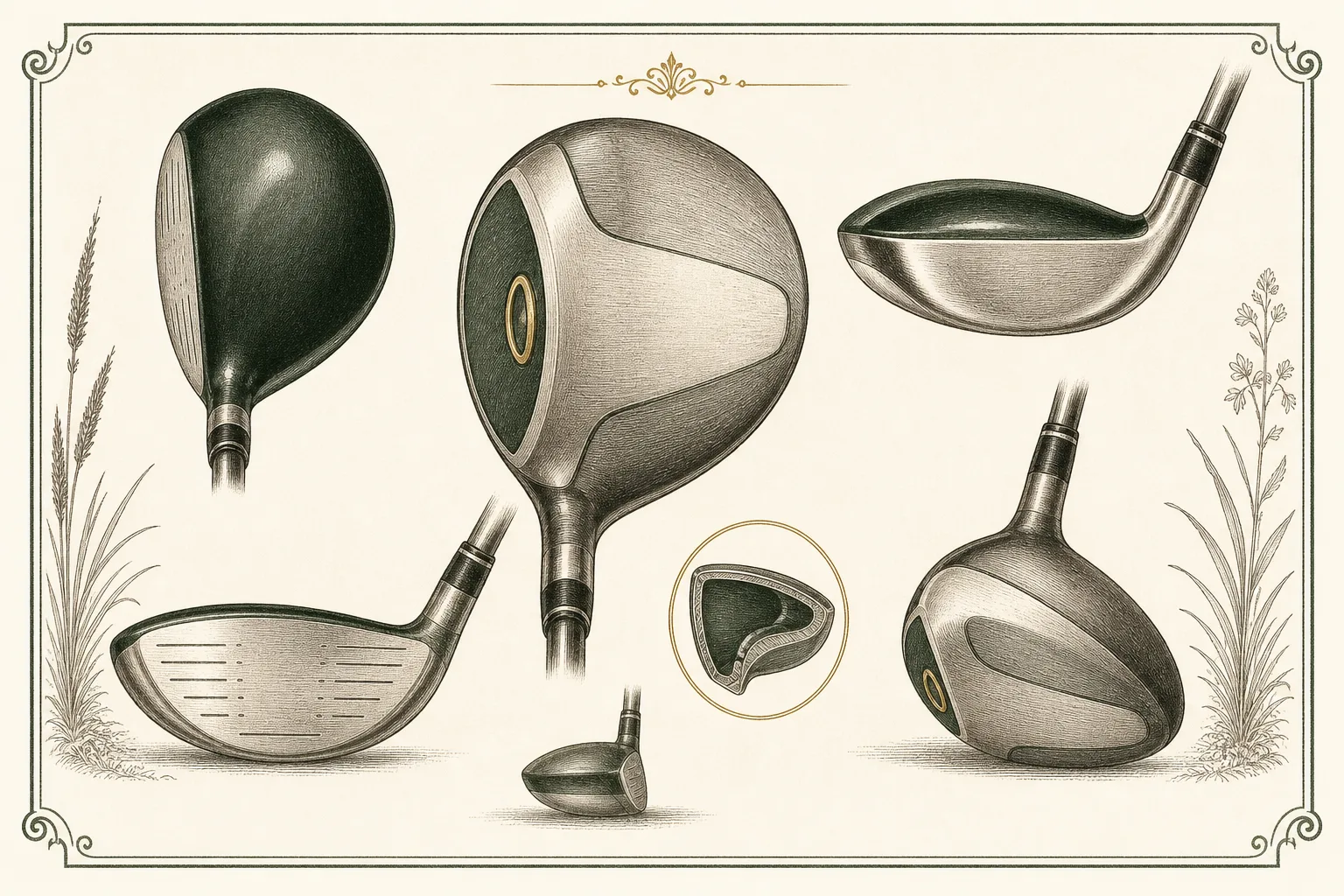
Launched in 1997, the original Steelhead fairway wood took the Big Bertha name -- already dominant in drivers -- and applied it to a stainless-steel fairway metal built around a three-piece construction: a heavy, wear-resistant stainless steel sole, a thin, hot-faced steel face plate, and a very thin steel crown, all combined to pull the center of gravity extremely low for easy, high launch. Callaway paired that with its S2H2 (Short, Straight, Hollow Hosel) technology to move discretionary weight low and back. It went on to become, by Callaway's own account, the best-selling fairway wood the company has ever made, and its basic three-piece low-CG shape became the template Callaway reused through the Steelhead Plus and Steelhead III generations.
Not a scarcity-driven cult classic, but genuinely notable: multiple retailers and reviewers independently describe it as Callaway's best-selling fairway wood of all time, and it still draws steady user-review volume (part of a combined 230-review, 4.2/5 Steelhead/Steelhead Plus listing on golfreview.com) nearly three decades on.
A good fit today for a nostalgic or budget-minded mid-to-high handicapper wanting a simple, easy-launching steel fairway wood at a very low price; a golfer chasing modern ball speeds, adjustability, or a lower/more penetrating flight should buy something newer.
Competed in the mid-to-late-1990s steel fairway wood market against Titleist's DCI woods and TaylorMade's Burner Bubble-era metals, immediately preceding Callaway's own Steelhead Plus (1998) upgrade with Variable Face Thickness. A modern equivalent within Callaway's current lineup is the Paradym or Ai Smoke fairway wood, though those use titanium/multi-material construction rather than steel.
The three-piece low-CG build was explicitly designed to launch the ball high and easily even on mis-hits, trading some feel and workability for consistency; period reviewers and long-term owners describe it as forgiving and easy to get airborne from a variety of lies, in keeping with Callaway's game-improvement positioning of the era.
Calibrated across the whole catalog — a tour blade scores low here on purpose; it means control, not ease.
Extremely cheap in 2026 -- a single steel-shafted unit commonly sells for roughly $20-$50 on eBay and similar marketplaces, reflecting its age, steel (not titanium) construction, and total absence of collector premium despite its sales-volume reputation.
Reading is one thing — hitting is another. Book a bay and see the numbers for yourself before you buy anywhere.