“The iconic cavity-back that changed golf and still lives in some bags. A rung-1 classic - forgiving and playable; game it proudly if it fits, but a modern GI iron gaps and launches more consistently.”
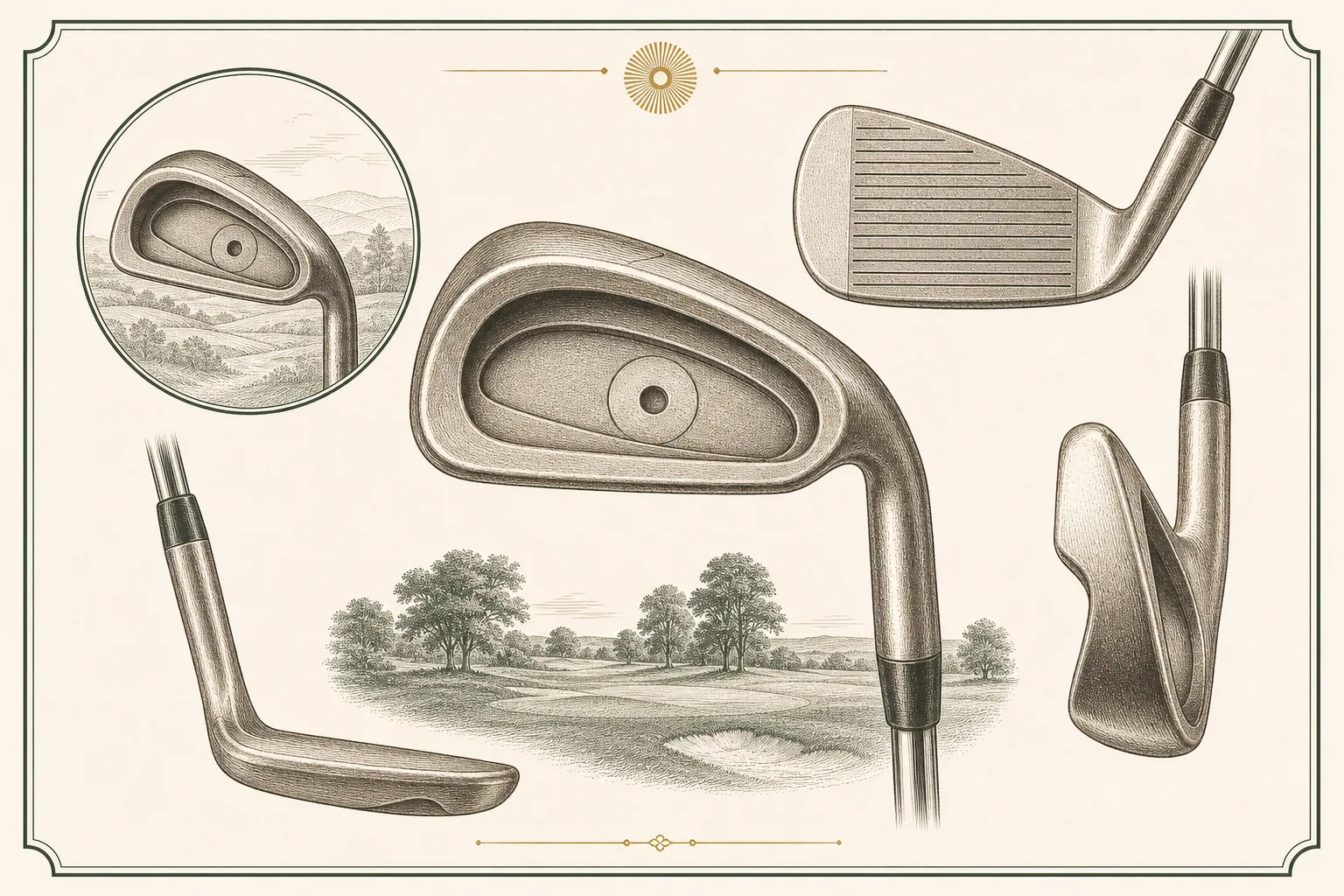
The Eye 2, released in the fall of 1982, is the iron that turned 'game improvement' from a compromise into golf's biggest category. Karsten Solheim evolved the original Eye into a longer-bladed, taller-faced, thinner-topline cavity-back with a wide cambered sole and deep heel-toe perimeter weighting, sold through Ping's color-dot lie-angle fitting system, and it became the best-selling iron in history and Ping's flagship for most of the 1980s. Then it became bigger than a product. When Ping added U-shaped 'square' grooves, the Eye 2 sat at the center of a decade of litigation with the USGA and PGA Tour that reshaped the Rules of Golf, and a settlement grandfather clause turned a set of 1980s irons into a loophole pros were still exploiting in 2010. No iron casts a longer shadow.
Repeatedly cited as the best-selling iron of all time and 'the most important iron ever made': it defined the game-improvement genre, took commanding iron market share through the mid-1980s, won majors (Bob Tway 1986 PGA, Mark Calcavecchia 1989 Open), and sat at the heart of two landmark lawsuits that changed equipment rules. Its cultural footprint, including the 2010 Mickelson square-groove-wedge affair, is documented across independent golf media, not just forums.
Historically and still the forgiving, cheap, easy-to-launch iron for the recreational or improving player who does not chase modern distance lofts. Two buyer caveats: pre-1990 square-groove examples are non-conforming for tournament play under the 2010 groove rule, so avoid them for competition; and lofts are traditional/weak, so it flies short by modern numbers. Good ball-strikers wanting workability, or competitors needing conforming grooves, should look elsewhere.
At launch it buried late-1970s forged blades and early cavities and forced rivals to chase perimeter weighting; it evolved directly from the 1978 Eye and led on to the Eye 2+, Zing and later ISI lines. The entire modern game-improvement shelf, Callaway's X-series, TaylorMade Burner/RAC, Ping's own G-series, descends conceptually from what the Eye 2 proved a cavity-back could do. Its modern equivalent is the Ping G430/G440 iron: same philosophy, four more decades of materials science.
Revolutionary in 1982 and still forgiving by any standard: heel-toe perimeter weighting widens the effective sweet spot, the wide cambered sole resists digging and launches from imperfect lies, and the low CG gets the ball up easily, so off-center strikes lose remarkably little versus the blades it displaced. It is beaten on raw forgiveness only by modern multi-material max-GI irons; against anything from its own era it is a giant. Grooves aside, a high-handicapper could play a set well today.
Calibrated across the whole catalog — a tour blade scores low here on purpose; it means control, not ease.
Plentiful and cheap: complete stainless-steel sets commonly sell for roughly 50-150 dollars in 2026, an outstanding cost-per-forgiveness buy for a casual player. Value drivers are the exceptions, beryllium-copper sets and clean square-groove wedges command real premiums, while groove wear, rust and non-conforming square-groove status cap value. It is cheap because millions were made, not because it is unloved. Beware reconditioned-retail tags that overstate private-party worth.
The Legends Rack
The crown jewel of the budget tier and the best story in golf equipment. Launched in fall 1982, the Eye2 is the best-selling club in golf history — it drove Ping's iron market share from 18% in 1985 to 28% by 1988, and its square grooves triggered a legal war that changed golf's rules. Forty-plus years later there are literally hundreds in stock at any given moment for less than a dinner out. ✓ Who'll love it: every single person who walks in. This is the rack's anchor; the most iconic-per-dollar object in golf.
Who it suitsAll
Reading is one thing — hitting is another. Book a bay and see the numbers for yourself before you buy anywhere.
“The iconic cavity-back that changed golf and still lives in some bags. A rung-1 classic - forgiving and playable; game it proudly if it fits, but a modern GI iron gaps and launches more consistently.”
The Eye 2, released in the fall of 1982, is the iron that turned 'game improvement' from a compromise into golf's biggest category. Karsten Solheim evolved the original Eye into a longer-bladed, taller-faced, thinner-topline cavity-back with a wide cambered sole and deep heel-toe perimeter weighting, sold through Ping's color-dot lie-angle fitting system, and it became the best-selling iron in history and Ping's flagship for most of the 1980s. Then it became bigger than a product. When Ping added U-shaped 'square' grooves, the Eye 2 sat at the center of a decade of litigation with the USGA and PGA Tour that reshaped the Rules of Golf, and a settlement grandfather clause turned a set of 1980s irons into a loophole pros were still exploiting in 2010. No iron casts a longer shadow.
Repeatedly cited as the best-selling iron of all time and 'the most important iron ever made': it defined the game-improvement genre, took commanding iron market share through the mid-1980s, won majors (Bob Tway 1986 PGA, Mark Calcavecchia 1989 Open), and sat at the heart of two landmark lawsuits that changed equipment rules. Its cultural footprint, including the 2010 Mickelson square-groove-wedge affair, is documented across independent golf media, not just forums.
Historically and still the forgiving, cheap, easy-to-launch iron for the recreational or improving player who does not chase modern distance lofts. Two buyer caveats: pre-1990 square-groove examples are non-conforming for tournament play under the 2010 groove rule, so avoid them for competition; and lofts are traditional/weak, so it flies short by modern numbers. Good ball-strikers wanting workability, or competitors needing conforming grooves, should look elsewhere.
At launch it buried late-1970s forged blades and early cavities and forced rivals to chase perimeter weighting; it evolved directly from the 1978 Eye and led on to the Eye 2+, Zing and later ISI lines. The entire modern game-improvement shelf, Callaway's X-series, TaylorMade Burner/RAC, Ping's own G-series, descends conceptually from what the Eye 2 proved a cavity-back could do. Its modern equivalent is the Ping G430/G440 iron: same philosophy, four more decades of materials science.
Revolutionary in 1982 and still forgiving by any standard: heel-toe perimeter weighting widens the effective sweet spot, the wide cambered sole resists digging and launches from imperfect lies, and the low CG gets the ball up easily, so off-center strikes lose remarkably little versus the blades it displaced. It is beaten on raw forgiveness only by modern multi-material max-GI irons; against anything from its own era it is a giant. Grooves aside, a high-handicapper could play a set well today.
Calibrated across the whole catalog — a tour blade scores low here on purpose; it means control, not ease.
Plentiful and cheap: complete stainless-steel sets commonly sell for roughly 50-150 dollars in 2026, an outstanding cost-per-forgiveness buy for a casual player. Value drivers are the exceptions, beryllium-copper sets and clean square-groove wedges command real premiums, while groove wear, rust and non-conforming square-groove status cap value. It is cheap because millions were made, not because it is unloved. Beware reconditioned-retail tags that overstate private-party worth.
The Legends Rack
The crown jewel of the budget tier and the best story in golf equipment. Launched in fall 1982, the Eye2 is the best-selling club in golf history — it drove Ping's iron market share from 18% in 1985 to 28% by 1988, and its square grooves triggered a legal war that changed golf's rules. Forty-plus years later there are literally hundreds in stock at any given moment for less than a dinner out. ✓ Who'll love it: every single person who walks in. This is the rack's anchor; the most iconic-per-dollar object in golf.
Who it suitsAll
Reading is one thing — hitting is another. Book a bay and see the numbers for yourself before you buy anywhere.