“Premium milled Anser wedge with a tungsten toe weight for stability. Steel-dominant players' wedge; a better-player identity club.”
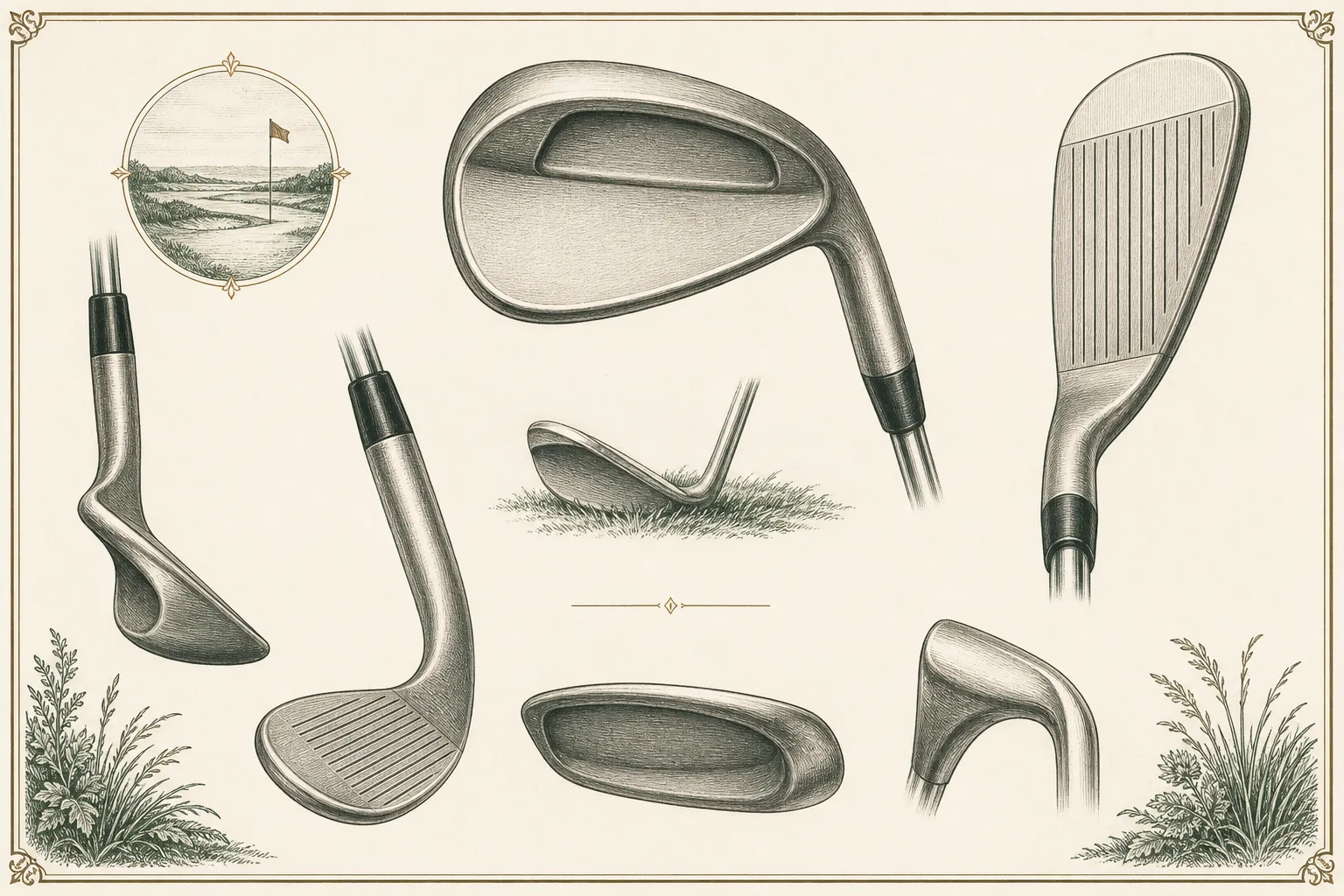
The Anser Wedge (2013) was Ping's premium, tour-styled companion to the Anser Forged irons: forged from soft 8620 steel with a thicker hitting area and an hourglass-shaped reinforced cavity for feel, plus a tungsten toe weight balanced against a slightly longer hosel to enlarge the effective sweet spot. Reviewers called it among the best-looking wedges on the market for its satin finish and clean cavity, and praised its bunker performance as 'almost automatic,' though some noted the sole was wide enough that pickers (players who sweep rather than dig through impact) occasionally wanted a narrower option for tight chips.
Well-regarded by equipment reviewers (GolfWRX, Today's Golfer, The Hackers Paradise) at launch as a genuine players'-wedge alternative to Titleist Vokey and Cleveland RTX, but it never developed a cult following or scarcity premium -- it was a good, honestly premium-priced Ping wedge that was eventually folded into Ping's later Glide wedge line.
Better players (single-digit handicaps) who want a clean, classic wedge look with slightly more forgiveness than a pure blade, and who play a descending, ball-first strike rather than sweeping the ball. Full-swing and bunker play are particular strengths. Higher handicappers or golfers who tend to catch chips thin or fat would be better served by a wider-soled, more forgiving game-improvement wedge.
Released in 2013 alongside the Anser Forged irons, positioned against Titleist Vokey SM4/SM5, Cleveland RTX and Mizuno MP-T wedges of the same period. It was priced and marketed as a step above Ping's mainstream Tour-W/Glide wedges. Ping's current equivalent is the Glide 4.0, which carries forward the tungsten-toe/hosel-balance concept with updated grinds and grooves.
This is a players' wedge, not a game-improvement one, and it scores accordingly low on the cross-category scale: a milled, tour-styled head with a moderate sole. The tungsten toe weight and longer hosel do meaningfully enlarge the sweet spot versus a pure blade wedge, but reviewers still flagged the sole as wide enough to fight pickers on tight lies, meaning it demands a fairly precise strike to get full value from the bounce/grind. A 4 reflects 'forgiving for a tour-grade wedge,' not forgiving in absolute terms.
Calibrated across the whole catalog — a tour blade scores low here on purpose; it means control, not ease.
Single wedges typically sell for $35-$70 used in 2026 depending on loft, grind and groove wear -- grooves matter enormously on a used wedge's real performance. No collector premium; value tracks groove condition, not brand cachet.
Reading is one thing — hitting is another. Book a bay and see the numbers for yourself before you buy anywhere.
“Premium milled Anser wedge with a tungsten toe weight for stability. Steel-dominant players' wedge; a better-player identity club.”
The Anser Wedge (2013) was Ping's premium, tour-styled companion to the Anser Forged irons: forged from soft 8620 steel with a thicker hitting area and an hourglass-shaped reinforced cavity for feel, plus a tungsten toe weight balanced against a slightly longer hosel to enlarge the effective sweet spot. Reviewers called it among the best-looking wedges on the market for its satin finish and clean cavity, and praised its bunker performance as 'almost automatic,' though some noted the sole was wide enough that pickers (players who sweep rather than dig through impact) occasionally wanted a narrower option for tight chips.
Well-regarded by equipment reviewers (GolfWRX, Today's Golfer, The Hackers Paradise) at launch as a genuine players'-wedge alternative to Titleist Vokey and Cleveland RTX, but it never developed a cult following or scarcity premium -- it was a good, honestly premium-priced Ping wedge that was eventually folded into Ping's later Glide wedge line.
Better players (single-digit handicaps) who want a clean, classic wedge look with slightly more forgiveness than a pure blade, and who play a descending, ball-first strike rather than sweeping the ball. Full-swing and bunker play are particular strengths. Higher handicappers or golfers who tend to catch chips thin or fat would be better served by a wider-soled, more forgiving game-improvement wedge.
Released in 2013 alongside the Anser Forged irons, positioned against Titleist Vokey SM4/SM5, Cleveland RTX and Mizuno MP-T wedges of the same period. It was priced and marketed as a step above Ping's mainstream Tour-W/Glide wedges. Ping's current equivalent is the Glide 4.0, which carries forward the tungsten-toe/hosel-balance concept with updated grinds and grooves.
This is a players' wedge, not a game-improvement one, and it scores accordingly low on the cross-category scale: a milled, tour-styled head with a moderate sole. The tungsten toe weight and longer hosel do meaningfully enlarge the sweet spot versus a pure blade wedge, but reviewers still flagged the sole as wide enough to fight pickers on tight lies, meaning it demands a fairly precise strike to get full value from the bounce/grind. A 4 reflects 'forgiving for a tour-grade wedge,' not forgiving in absolute terms.
Calibrated across the whole catalog — a tour blade scores low here on purpose; it means control, not ease.
Single wedges typically sell for $35-$70 used in 2026 depending on loft, grind and groove wear -- grooves matter enormously on a used wedge's real performance. No collector premium; value tracks groove condition, not brand cachet.
Reading is one thing — hitting is another. Book a bay and see the numbers for yourself before you buy anywhere.