“Titanium-faced fairway companion to the low-spin ST180 driver. Rung-2 - more all-around than the driver it's paired with.”
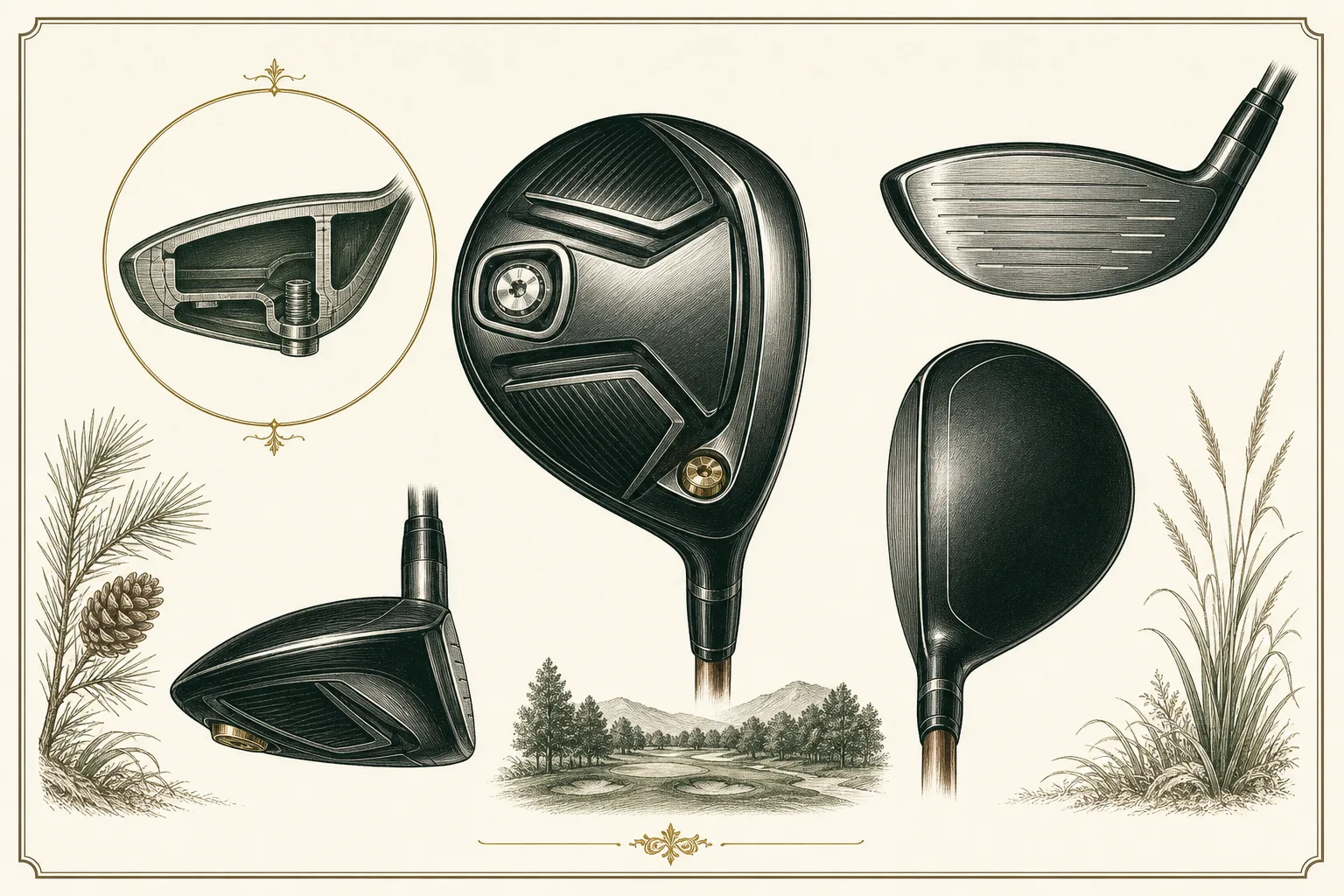
Launched alongside the ST180 driver as part of Mizuno's first fully modern metalwood platform, the ST180 fairway paired a maraging-steel face (for more ball speed than a titanium-only face) with the same ridged Wave Sole geometry and waffle-pattern composite crown as its driver sibling, moving weight low for easier launch and lower spin. It shipped in Mizuno's signature blue crown, sold in 15°/18°/21° with an adjustable hosel on the 15° head letting it morph between a 13° 'fairway driver' and a 17° 4-wood. It earned a place on Golf Digest's 2018 Hot List, with reviewers praising a flatter, efficient ball flight and strong consistency even on low, thin strikes — a legitimately good, if not category-leading, fairway wood.
A genuine trade accolade (Golf Digest 2018 Hot List selection) plus consistently positive contemporary reviews (Plugged In Golf, Golfalot, Today's Golfer) separate it from a pure commodity verdict, but there is no lasting collector or forum-driven demand for it — it was a well-reviewed product of its two-year cycle, not a club players still seek out.
Golfers who want a forgiving, easy-launching fairway wood that gets the ball up quickly even from a slightly thin strike, and who value the adjustable-hosel versatility to fine-tune loft between 13° and 17° on the 15° head. Better players wanting a lower, more penetrating flight or more workability should look at Mizuno's later ST190/ST200 fairways or a players'-profile competitor instead.
Went up against TaylorMade's M3/M4 fairways, Callaway's Rogue, and Titleist's 917/818 fairways in 2018. It was Mizuno's first fairway wood built on the new Wave Sole platform shared with the ST180 driver, establishing the design language (maraging face, waffle crown, ridged sole) that carried into the ST190 and ST200 fairways that followed.
Reviewers specifically called out forgiveness in both ball speed and launch while spin stayed reasonably controlled — the maraging face and low-CG waffle crown were tuned to keep low, mis-hit strikes airborne and traveling. It is a mainstream game-improvement fairway wood, not a low-spin players' model; shot-shaping precision is secondary to easy launch here.
Calibrated across the whole catalog — a tour blade scores low here on purpose; it means control, not ease.
An 8-year-old commodity fairway wood by 2026: realistic private-party pricing runs roughly $40-75 on eBay/SidelineSwap depending on shaft and hosel condition, with reconditioned-retail listings running somewhat higher. It holds no premium beyond being a still-playable, well-reviewed used club.
Reading is one thing — hitting is another. Book a bay and see the numbers for yourself before you buy anywhere.
“Titanium-faced fairway companion to the low-spin ST180 driver. Rung-2 - more all-around than the driver it's paired with.”
Launched alongside the ST180 driver as part of Mizuno's first fully modern metalwood platform, the ST180 fairway paired a maraging-steel face (for more ball speed than a titanium-only face) with the same ridged Wave Sole geometry and waffle-pattern composite crown as its driver sibling, moving weight low for easier launch and lower spin. It shipped in Mizuno's signature blue crown, sold in 15°/18°/21° with an adjustable hosel on the 15° head letting it morph between a 13° 'fairway driver' and a 17° 4-wood. It earned a place on Golf Digest's 2018 Hot List, with reviewers praising a flatter, efficient ball flight and strong consistency even on low, thin strikes — a legitimately good, if not category-leading, fairway wood.
A genuine trade accolade (Golf Digest 2018 Hot List selection) plus consistently positive contemporary reviews (Plugged In Golf, Golfalot, Today's Golfer) separate it from a pure commodity verdict, but there is no lasting collector or forum-driven demand for it — it was a well-reviewed product of its two-year cycle, not a club players still seek out.
Golfers who want a forgiving, easy-launching fairway wood that gets the ball up quickly even from a slightly thin strike, and who value the adjustable-hosel versatility to fine-tune loft between 13° and 17° on the 15° head. Better players wanting a lower, more penetrating flight or more workability should look at Mizuno's later ST190/ST200 fairways or a players'-profile competitor instead.
Went up against TaylorMade's M3/M4 fairways, Callaway's Rogue, and Titleist's 917/818 fairways in 2018. It was Mizuno's first fairway wood built on the new Wave Sole platform shared with the ST180 driver, establishing the design language (maraging face, waffle crown, ridged sole) that carried into the ST190 and ST200 fairways that followed.
Reviewers specifically called out forgiveness in both ball speed and launch while spin stayed reasonably controlled — the maraging face and low-CG waffle crown were tuned to keep low, mis-hit strikes airborne and traveling. It is a mainstream game-improvement fairway wood, not a low-spin players' model; shot-shaping precision is secondary to easy launch here.
Calibrated across the whole catalog — a tour blade scores low here on purpose; it means control, not ease.
An 8-year-old commodity fairway wood by 2026: realistic private-party pricing runs roughly $40-75 on eBay/SidelineSwap depending on shaft and hosel condition, with reconditioned-retail listings running somewhat higher. It holds no premium beyond being a still-playable, well-reviewed used club.
Reading is one thing — hitting is another. Book a bay and see the numbers for yourself before you buy anywhere.