“A standard, versatile fairway wood - rung-2 neutral flight for a repeating swing and a solid gap-filler between driver and irons.”
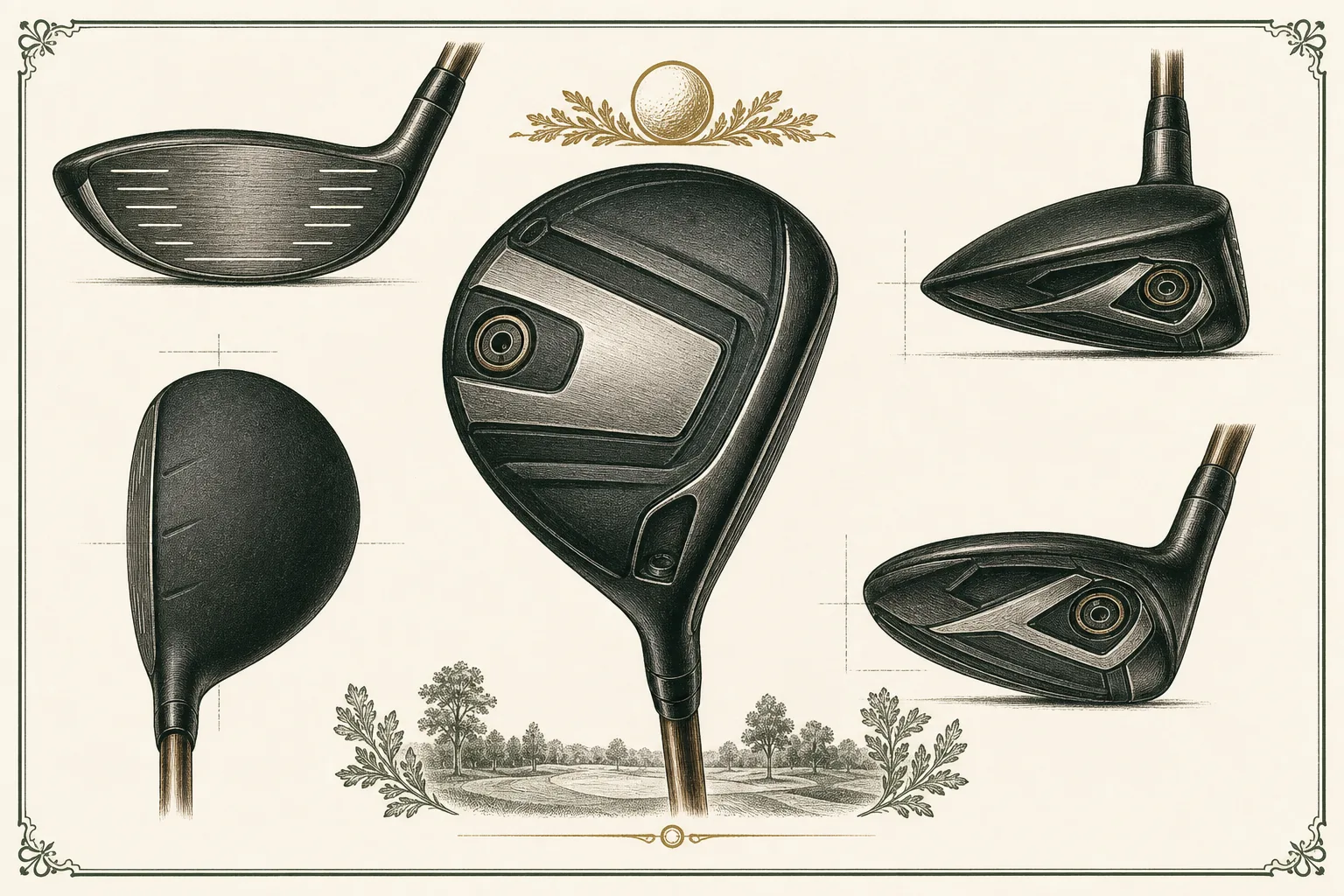
The 2016 G Fairway carried over the G30's plain-sole, Turbulator-crown look but sharpened the leading edge so the club could slide under the ball more cleanly, and Ping claims impact lands about 12% higher on the face than the G30 — raising launch and cutting spin. It skipped the Dragonfly crown pattern reserved for the driver but still shaved crown thickness to about 0.019 inches, 25% thinner than the G30 fairway, freeing up discretionary weight for a lower, more stable CG. In testing it showed unusually tight dispersion for a fairway wood of its era — about a 3.9 mph ball-speed drop-off between center strikes and misses — making it a steady, unglamorous performer rather than a headline-grabber. It was quietly replaced within the normal two-year Ping refresh cycle.
It carries no cult following of its own, but it is a legitimate, well-reviewed entry in the G-series relaunch that re-established Ping's mainstream reputation in the mid-2010s (the same generation as the G driver and G Hybrid). Multiple independent outlets (Golf.com ClubTest, Today's Golfer, Plugged In Golf) rated it favorably for stability and ease of launch; that is real but ordinary praise, not a collectible legend.
A solid fit for mid-swing-speed players who want a versatile, easy-launching gap-filler between driver and irons and value consistency over outright distance ceiling. Better players chasing low, penetrating flight or extra workability were better served by Ping's own lower-spin 'SF Tec'/Tour-style fairway options released in the same window.
Part of Ping's 2016 G-series relaunch (G driver, G Fairway, G Hybrid, G Crossover), competing directly with TaylorMade's M1/M2, Callaway's XR, and Titleist's 915/917 fairway woods. It was replaced by the G400 Fairway two years later, which added a forged, thinner face (T9S+) as Ping's fairway-wood tech matured quickly through the late 2010s.
Genuinely stable for mis-hits: reviewers measured only about 3.9 mph of ball-speed loss between pured and off-center strikes, a tight number for a fairway wood of its generation, thanks to the low-CG, thin-crown construction. It is not a max-game-improvement head (no dedicated 'SF Tec' draw-bias version was needed here because the standard head was already neutral-to-forgiving), which keeps it a notch below the true max-forgiveness fairway woods on the market.
Calibrated across the whole catalog — a tour blade scores low here on purpose; it means control, not ease.
Realistic 2026 private-party pricing runs about $70-$130 depending on shaft and condition; graded/reconditioned retailers (2nd Swing, Golf Avenue) list toward the top or slightly above that band, which reflects warranty and grading rather than any scarcity premium. It is a decade-old commodity fairway wood — cheap, plentiful, and valued purely for on-course usability.
Reading is one thing — hitting is another. Book a bay and see the numbers for yourself before you buy anywhere.
“A standard, versatile fairway wood - rung-2 neutral flight for a repeating swing and a solid gap-filler between driver and irons.”
The 2016 G Fairway carried over the G30's plain-sole, Turbulator-crown look but sharpened the leading edge so the club could slide under the ball more cleanly, and Ping claims impact lands about 12% higher on the face than the G30 — raising launch and cutting spin. It skipped the Dragonfly crown pattern reserved for the driver but still shaved crown thickness to about 0.019 inches, 25% thinner than the G30 fairway, freeing up discretionary weight for a lower, more stable CG. In testing it showed unusually tight dispersion for a fairway wood of its era — about a 3.9 mph ball-speed drop-off between center strikes and misses — making it a steady, unglamorous performer rather than a headline-grabber. It was quietly replaced within the normal two-year Ping refresh cycle.
It carries no cult following of its own, but it is a legitimate, well-reviewed entry in the G-series relaunch that re-established Ping's mainstream reputation in the mid-2010s (the same generation as the G driver and G Hybrid). Multiple independent outlets (Golf.com ClubTest, Today's Golfer, Plugged In Golf) rated it favorably for stability and ease of launch; that is real but ordinary praise, not a collectible legend.
A solid fit for mid-swing-speed players who want a versatile, easy-launching gap-filler between driver and irons and value consistency over outright distance ceiling. Better players chasing low, penetrating flight or extra workability were better served by Ping's own lower-spin 'SF Tec'/Tour-style fairway options released in the same window.
Part of Ping's 2016 G-series relaunch (G driver, G Fairway, G Hybrid, G Crossover), competing directly with TaylorMade's M1/M2, Callaway's XR, and Titleist's 915/917 fairway woods. It was replaced by the G400 Fairway two years later, which added a forged, thinner face (T9S+) as Ping's fairway-wood tech matured quickly through the late 2010s.
Genuinely stable for mis-hits: reviewers measured only about 3.9 mph of ball-speed loss between pured and off-center strikes, a tight number for a fairway wood of its generation, thanks to the low-CG, thin-crown construction. It is not a max-game-improvement head (no dedicated 'SF Tec' draw-bias version was needed here because the standard head was already neutral-to-forgiving), which keeps it a notch below the true max-forgiveness fairway woods on the market.
Calibrated across the whole catalog — a tour blade scores low here on purpose; it means control, not ease.
Realistic 2026 private-party pricing runs about $70-$130 depending on shaft and condition; graded/reconditioned retailers (2nd Swing, Golf Avenue) list toward the top or slightly above that band, which reflects warranty and grading rather than any scarcity premium. It is a decade-old commodity fairway wood — cheap, plentiful, and valued purely for on-course usability.
Reading is one thing — hitting is another. Book a bay and see the numbers for yourself before you buy anywhere.