“The blade half of Tiger's 1997 Masters combo set (with MP-29 long irons). Beautiful, unforgiving, and correctly rung-4 - only for a swing already producing a very high, repeatable strike rate.”
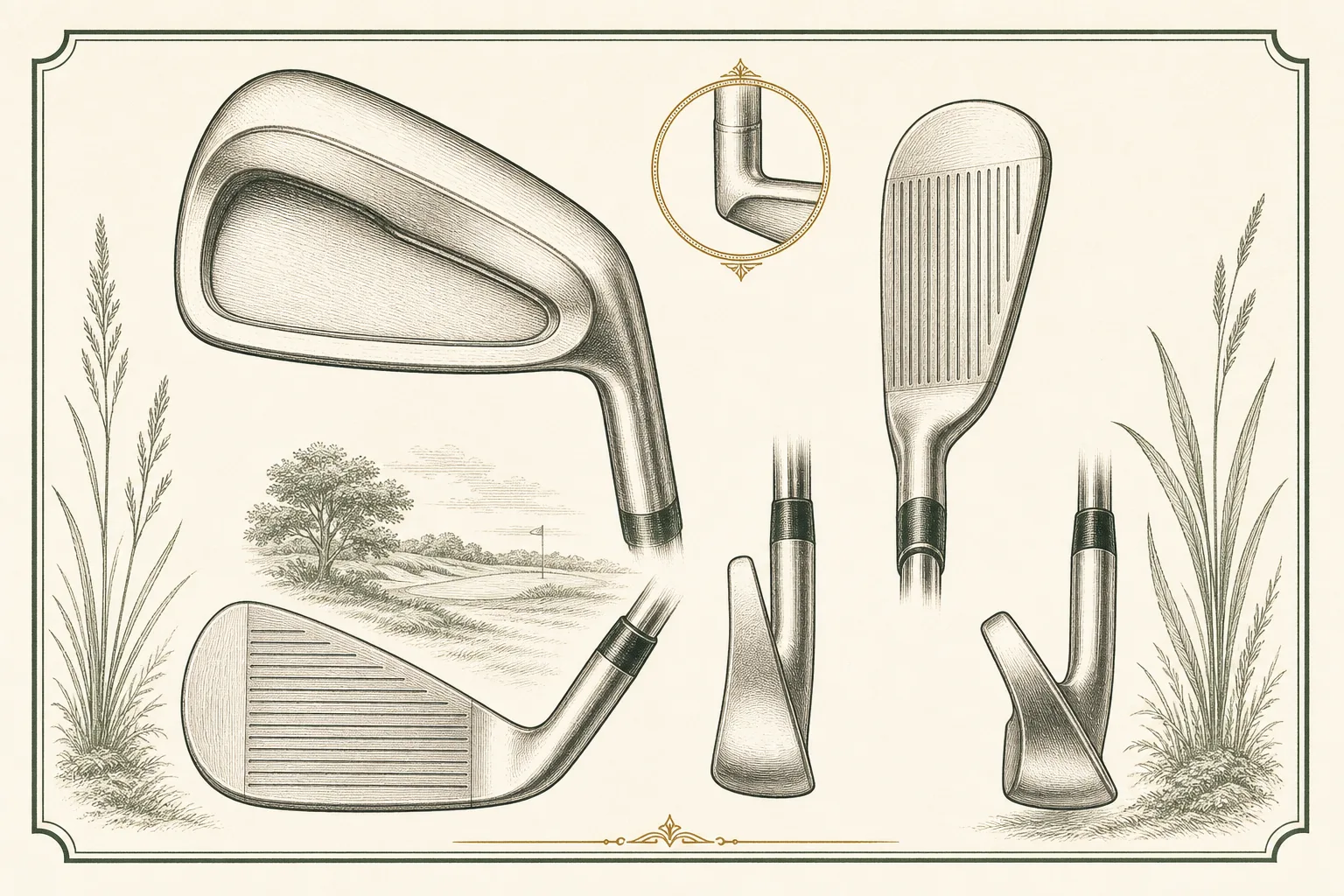
The MP-14, released in 1994 and produced through 1998, is one of Mizuno's classic one-piece forged musclebacks from its golden era of blades. Grain Flow Forged from soft carbon steel, it delivers the buttery, dense impact feel that built Mizuno's reputation among tour pros and purists. Its defining moment came at the 1997 Masters, where Tiger Woods gamed the MP-14 in the 5-iron through pitching wedge, pairing it with MP-29 long irons because the MP-14 offered the least offset in the mid and short irons. A true blade with a thin topline, minimal offset and a compact head, it is remembered as a feel benchmark and part of the most famous split set in golf.
Revered decades later for feel and provenance: it is repeatedly named among the greatest Mizuno blades and its role in Tiger Woods' 1997 Masters win (in the 5-PW slots of his MP-29/MP-14 combo) is documented by PGA Tour, Golf.com, Golf365 and others. Purists still describe it as some of the best feel ever found in a forged iron, and clean sets are actively sought rather than discarded.
For skilled, high-speed, low-handicap players (roughly 0-6) who want maximum shot-shaping control, minimal offset and elite forged feel, and who strike the center of the face repeatedly. Anyone chasing forgiveness, easy launch or distance should avoid it entirely - a cavity or game-improvement iron is a completely different and far more suitable tool.
Competed in the mid-1990s against Titleist's blade offerings, Hogan Apex and other tour musclebacks, and sat alongside the MP-29 and ahead of the later MP-33 in Mizuno's MP blade lineage. Its DNA runs forward through the MP-33, MP-32/MP-14-descended blades and today's Mizuno Pro 221/241 musclebacks. Lofts are traditional/weak by modern standards (3-iron ~23, PW ~51), so it flies shorter and spins more than a current set.
A pure one-piece muscleback blade - about as unforgiving as an iron gets. Thin topline, minimal offset, a small sweet spot and no perimeter weighting mean mis-hits are punished immediately with lost distance, height and feel. Its entire purpose is workability and feedback for elite ball-strikers, not error correction. A 2 (below even the muscle-cavity MP-29's 3) reflects that this is a traditional blade with none of the stability aids that push a players' cavity higher.
Calibrated across the whole catalog — a tour blade scores low here on purpose; it means control, not ease.
Clean full sets typically trade private-party for roughly $150-350 in 2026 depending on shaft, flex and condition, holding value unusually well for a 30-year-old blade thanks to steady feel-chaser demand and the Tiger/1997-Masters association. Reconditioned-retail listings run higher and warrantied. Rust, pitting and worn grooves cut value; premium shafts and complete runs lift it.
The Legends Rack
"Nothing feels like a Mizuno" was built on these. Grain-flow forged in Hiroshima, worshipped on forums for twenty years. The MP-33 may be the most beloved blade of the modern era. Who'll love it: feel obsessives — hand it over and count to three before the sigh.
Who it suitsBetter players
Reading is one thing — hitting is another. Book a bay and see the numbers for yourself before you buy anywhere.
“The blade half of Tiger's 1997 Masters combo set (with MP-29 long irons). Beautiful, unforgiving, and correctly rung-4 - only for a swing already producing a very high, repeatable strike rate.”
The MP-14, released in 1994 and produced through 1998, is one of Mizuno's classic one-piece forged musclebacks from its golden era of blades. Grain Flow Forged from soft carbon steel, it delivers the buttery, dense impact feel that built Mizuno's reputation among tour pros and purists. Its defining moment came at the 1997 Masters, where Tiger Woods gamed the MP-14 in the 5-iron through pitching wedge, pairing it with MP-29 long irons because the MP-14 offered the least offset in the mid and short irons. A true blade with a thin topline, minimal offset and a compact head, it is remembered as a feel benchmark and part of the most famous split set in golf.
Revered decades later for feel and provenance: it is repeatedly named among the greatest Mizuno blades and its role in Tiger Woods' 1997 Masters win (in the 5-PW slots of his MP-29/MP-14 combo) is documented by PGA Tour, Golf.com, Golf365 and others. Purists still describe it as some of the best feel ever found in a forged iron, and clean sets are actively sought rather than discarded.
For skilled, high-speed, low-handicap players (roughly 0-6) who want maximum shot-shaping control, minimal offset and elite forged feel, and who strike the center of the face repeatedly. Anyone chasing forgiveness, easy launch or distance should avoid it entirely - a cavity or game-improvement iron is a completely different and far more suitable tool.
Competed in the mid-1990s against Titleist's blade offerings, Hogan Apex and other tour musclebacks, and sat alongside the MP-29 and ahead of the later MP-33 in Mizuno's MP blade lineage. Its DNA runs forward through the MP-33, MP-32/MP-14-descended blades and today's Mizuno Pro 221/241 musclebacks. Lofts are traditional/weak by modern standards (3-iron ~23, PW ~51), so it flies shorter and spins more than a current set.
A pure one-piece muscleback blade - about as unforgiving as an iron gets. Thin topline, minimal offset, a small sweet spot and no perimeter weighting mean mis-hits are punished immediately with lost distance, height and feel. Its entire purpose is workability and feedback for elite ball-strikers, not error correction. A 2 (below even the muscle-cavity MP-29's 3) reflects that this is a traditional blade with none of the stability aids that push a players' cavity higher.
Calibrated across the whole catalog — a tour blade scores low here on purpose; it means control, not ease.
Clean full sets typically trade private-party for roughly $150-350 in 2026 depending on shaft, flex and condition, holding value unusually well for a 30-year-old blade thanks to steady feel-chaser demand and the Tiger/1997-Masters association. Reconditioned-retail listings run higher and warrantied. Rust, pitting and worn grooves cut value; premium shafts and complete runs lift it.
The Legends Rack
"Nothing feels like a Mizuno" was built on these. Grain-flow forged in Hiroshima, worshipped on forums for twenty years. The MP-33 may be the most beloved blade of the modern era. Who'll love it: feel obsessives — hand it over and count to three before the sigh.
Who it suitsBetter players
Reading is one thing — hitting is another. Book a bay and see the numbers for yourself before you buy anywhere.