“A rung-4 pure muscleback prized by feel purists and still sought used, so it holds value well. Zero forgiveness and demands a repeating strike. Buy only if you flush it consistently.”
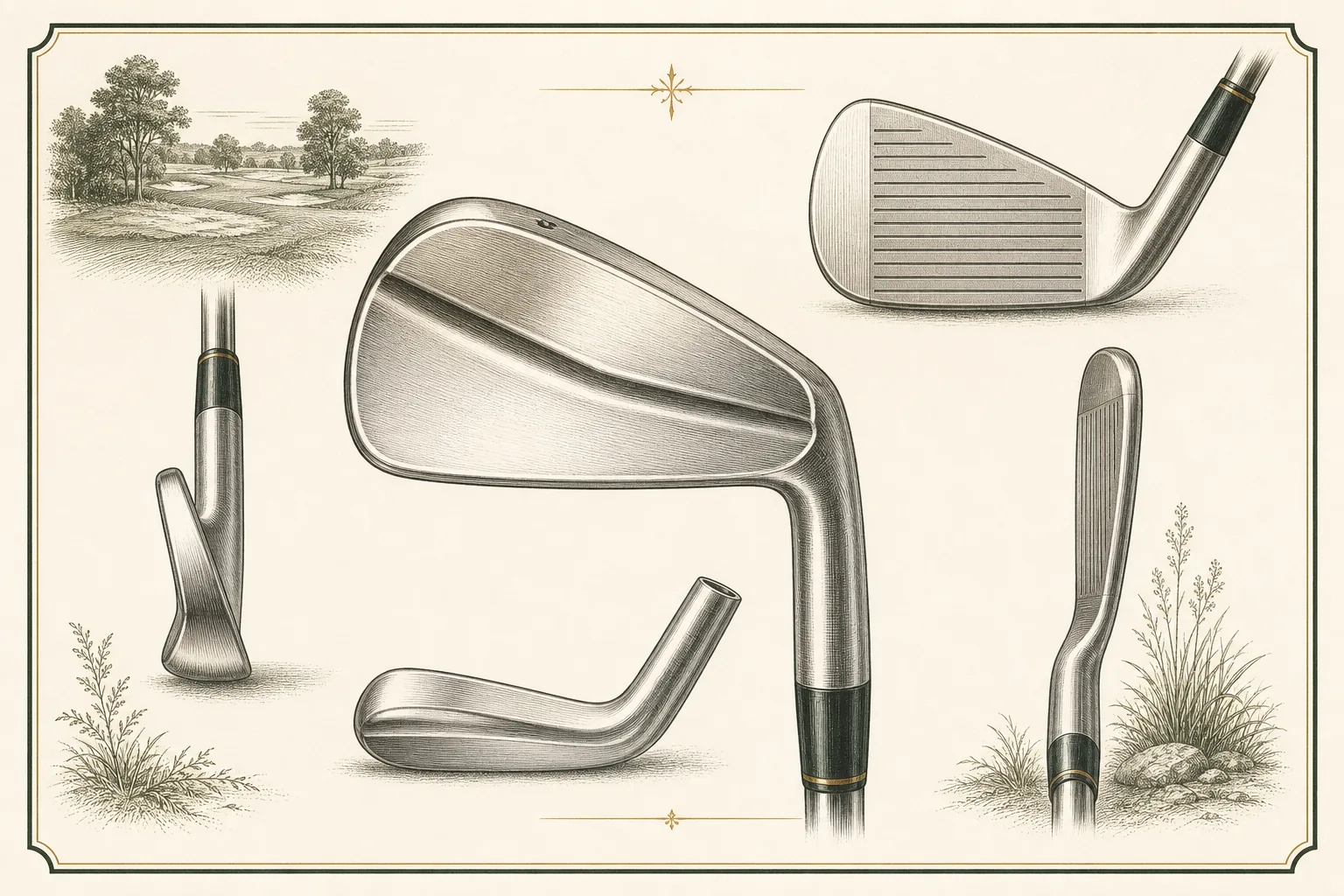
The J33 Forged Blade was Bridgestone's 2005 statement that a company Americans knew for golf balls could forge a blade to rival Mizuno. Made from 1020 mild carbon steel by Japan's Endo Manufacturing, it used a long-hosel, deliberately HIGH center of gravity to produce a penetrating flight and maximum shot-shaping, wrapped in a thin topline, narrow sole and minimal offset under a satin-chrome finish. It headlined a family that also included a Forged Cavity and the popular Forged Combo, letting better players blend cavity long irons with blade scoring clubs. Reviewers of the day said it gave Mizuno's blades 'a real run for their money' on feel, and nearly two decades later Bridgestone itself invoked 'the gorgeous J33' when marketing its 2024 comeback blade.
Among blade purists the J33 is the Bridgestone that gets name-checked as an equal to the Mizuno MP blades of the same era, and it is the one Bridgestone itself invokes for pedigree: in 2024/25 golf.com and Bridgestone's own marketing describe the new 220 MB as harking back to 'the gorgeous J33.' It carried a 4.2/5 across 34 user reviews on golfreview.com and is still specifically hunted by feel-chasers rather than sitting as generic old iron. That named, cross-generational reverence from independent media plus a manufacturer's own callback is what separates it from a merely respected commodity.
Low single-digit handicaps and better who deliver a repeating, ball-first strike and want to work the ball both ways with premium forged feel. Anyone above roughly a 6-8 handicap, or a player chasing launch/distance, should not buy this; a players-cavity like the J33's own CB sibling or a modern forged cavity will hold line and launch far more kindly.
Launched in 2005 as the flagship blade of Bridgestone's J33 family, which also included a Forged Cavity and a popular Forged Combo (blade short irons, cavity long irons). It competed head-on with the Mizuno MP-32/MP-33, Titleist 690.MB/695.MB and TaylorMade rac TP blades. Its direct successor was the 2008 J36 Blade. The design brief lives on in Bridgestone's 2024 220 MB single-piece forged blade, which the company explicitly ties back to the J33.
A true muscle-back with a thin topline, narrow sole, minimal offset and a deliberately HIGH center of gravity (the long hosel raises CG to promote a penetrating flight and shot-shaping). That high-CG design is the opposite of a forgiveness feature: it rewards a center strike with control and punishes thin/toe misses with lost height and distance. A 2 reflects near-zero help on mishits, consistent with its rung-4 muscleback classification.
Calibrated across the whole catalog — a tour blade scores low here on purpose; it means control, not ease.
Realistic 2026 private-party value for a clean 3-PW or 4-PW set is roughly $120-$275 depending on shaft (Dynamic Gold S300/R300 common) and groove wear; original MSRP was ~$899. It holds value better than a commodity iron of its age because blade collectors and feel-chasers keep demand steady, but beware reconditioned-retail listings (2nd Swing sells single J33 irons individually and graded sets carry a store premium) that overstate what a private seller can get.
Reading is one thing — hitting is another. Book a bay and see the numbers for yourself before you buy anywhere.
“A rung-4 pure muscleback prized by feel purists and still sought used, so it holds value well. Zero forgiveness and demands a repeating strike. Buy only if you flush it consistently.”
The J33 Forged Blade was Bridgestone's 2005 statement that a company Americans knew for golf balls could forge a blade to rival Mizuno. Made from 1020 mild carbon steel by Japan's Endo Manufacturing, it used a long-hosel, deliberately HIGH center of gravity to produce a penetrating flight and maximum shot-shaping, wrapped in a thin topline, narrow sole and minimal offset under a satin-chrome finish. It headlined a family that also included a Forged Cavity and the popular Forged Combo, letting better players blend cavity long irons with blade scoring clubs. Reviewers of the day said it gave Mizuno's blades 'a real run for their money' on feel, and nearly two decades later Bridgestone itself invoked 'the gorgeous J33' when marketing its 2024 comeback blade.
Among blade purists the J33 is the Bridgestone that gets name-checked as an equal to the Mizuno MP blades of the same era, and it is the one Bridgestone itself invokes for pedigree: in 2024/25 golf.com and Bridgestone's own marketing describe the new 220 MB as harking back to 'the gorgeous J33.' It carried a 4.2/5 across 34 user reviews on golfreview.com and is still specifically hunted by feel-chasers rather than sitting as generic old iron. That named, cross-generational reverence from independent media plus a manufacturer's own callback is what separates it from a merely respected commodity.
Low single-digit handicaps and better who deliver a repeating, ball-first strike and want to work the ball both ways with premium forged feel. Anyone above roughly a 6-8 handicap, or a player chasing launch/distance, should not buy this; a players-cavity like the J33's own CB sibling or a modern forged cavity will hold line and launch far more kindly.
Launched in 2005 as the flagship blade of Bridgestone's J33 family, which also included a Forged Cavity and a popular Forged Combo (blade short irons, cavity long irons). It competed head-on with the Mizuno MP-32/MP-33, Titleist 690.MB/695.MB and TaylorMade rac TP blades. Its direct successor was the 2008 J36 Blade. The design brief lives on in Bridgestone's 2024 220 MB single-piece forged blade, which the company explicitly ties back to the J33.
A true muscle-back with a thin topline, narrow sole, minimal offset and a deliberately HIGH center of gravity (the long hosel raises CG to promote a penetrating flight and shot-shaping). That high-CG design is the opposite of a forgiveness feature: it rewards a center strike with control and punishes thin/toe misses with lost height and distance. A 2 reflects near-zero help on mishits, consistent with its rung-4 muscleback classification.
Calibrated across the whole catalog — a tour blade scores low here on purpose; it means control, not ease.
Realistic 2026 private-party value for a clean 3-PW or 4-PW set is roughly $120-$275 depending on shaft (Dynamic Gold S300/R300 common) and groove wear; original MSRP was ~$899. It holds value better than a commodity iron of its age because blade collectors and feel-chasers keep demand steady, but beware reconditioned-retail listings (2nd Swing sells single J33 irons individually and graded sets carry a store premium) that overstate what a private seller can get.
Reading is one thing — hitting is another. Book a bay and see the numbers for yourself before you buy anywhere.