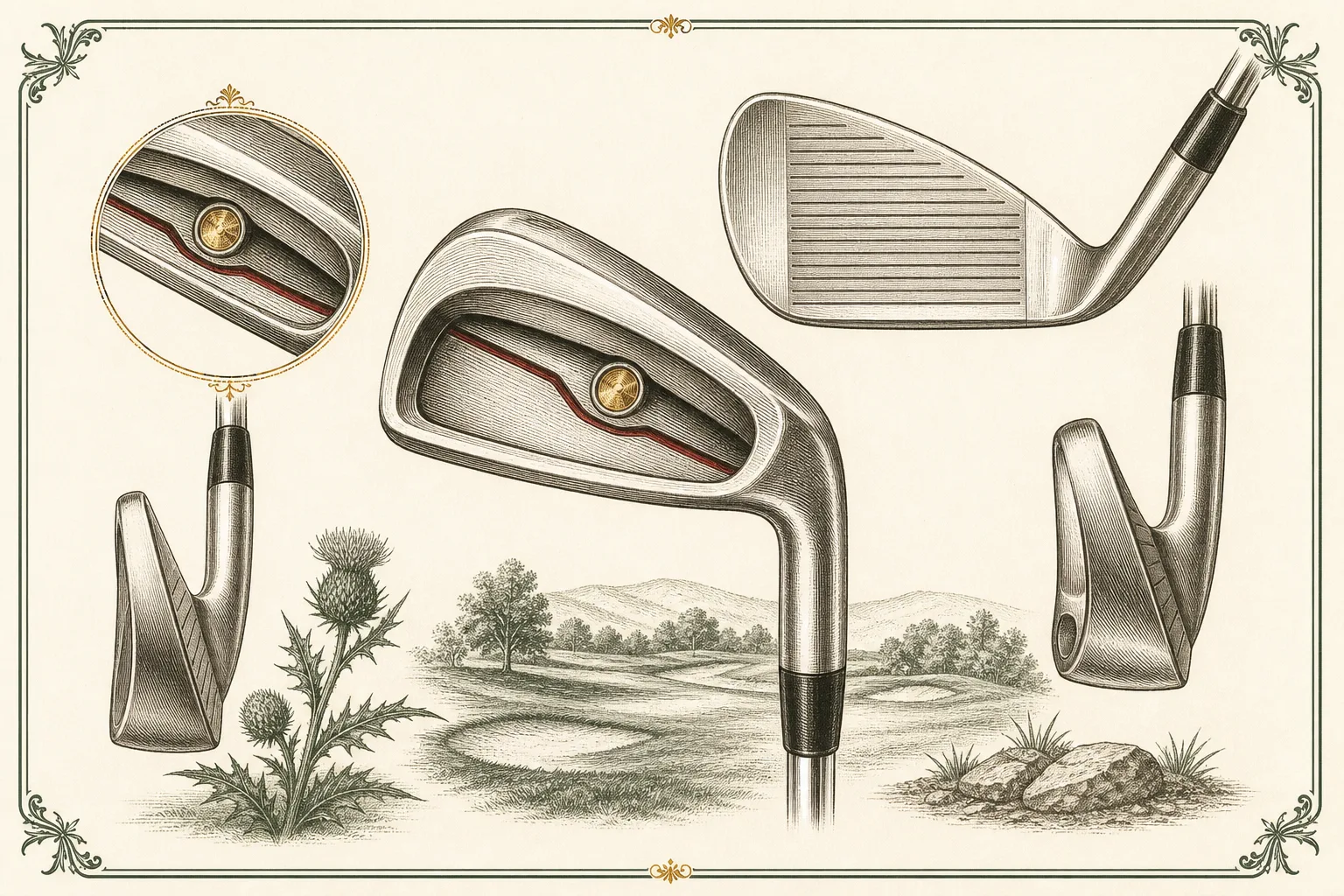
“Apex Redline - the mid-90s forged Hogan blade. Rung-4, vintage feel.”
The Apex Redline is the outlier in the classic Hogan Apex lineage: the only Ben Hogan Apex irons ever built with square (U-shaped) grooves, named for the red underline stamped beneath the Apex logo on the back of each head. It is a compact, forged carbon-steel muscleback from the original Fort Worth Hogan company, cut from the same butter-knife blade template the brand's reputation rode on, but with the square grooves that briefly spiked spin in the mid-to-late 1980s before the USGA's groove scrutiny of that era. Feel-chasers still praise it, on golfreview.com the Redline holds a 4.9/5 across its (small) review pool, with owners saying the profile and feel beat blades they have since owned, including Mizuno.
A sleeper rather than a headline cult club: it lives in the shadow of the more famous 1999/Apex forged blades, yet it carries a distinct, sourced identity (the only square-groove Hogan Apex) and an outsized 4.9/5 owner rating on golfreview.com from a devoted few. Collectors of vintage Hogan blades seek clean square-groove Redline heads specifically, but volume and mainstream recognition are low, so it is underappreciated, not iconic.
For low-handicap, tour-level ball-strikers (roughly 88+ mph swing speed) who want vintage forged feel and shot-shaping and can consistently find the center. Anyone mid-handicap or higher, or a golfer chasing launch, distance or a safety net, should avoid it; a modern players-distance or game-improvement iron will be dramatically easier. Competitive players should also confirm groove conformance given the square-groove design.
A product of the original Fort Worth-based Ben Hogan Company (before its Spalding sale after Hogan's 1997 death), it sat in the Apex blade family that ran from the celebrated 1970s Apex through the '92/'94/'96 refinements and into the 1999 Apex. Its square grooves make it the era-specific oddity in that otherwise V-groove lineage; conceptually its descendants are the later classic Apex forged blades and, in the revived brand, the Fort Worth MB.
A true 1980s forged muscleback: thin sole, thin topline, minimal offset and a small sweet spot, so it punishes any strike off center with lost distance and harsh feedback. The square grooves affected spin, not forgiveness. A 2 places it at the unforgiving end of the whole catalog alongside pure players blades, well below any cavity-back, its reward is feel and control, never help.
Calibrated across the whole catalog — a tour blade scores low here on purpose; it means control, not ease.
A vintage-market club, not an appreciating collectible. Reconditioned-retail and per-club vintage listings (2nd Swing, Golf Avenue) can look high on a cost-per-club basis, but realistic 2026 private-party value for a complete steel set is roughly $60-150 depending on groove wear, rust and shaft. Clean square-groove heads and full matched sets sit at the top of that band; worn or partial sets fall below it. It is cheap because it is old and niche, prized by a small feel-and-history crowd rather than the broad market.
Reading is one thing — hitting is another. Book a bay and see the numbers for yourself before you buy anywhere.
“Apex Redline - the mid-90s forged Hogan blade. Rung-4, vintage feel.”
The Apex Redline is the outlier in the classic Hogan Apex lineage: the only Ben Hogan Apex irons ever built with square (U-shaped) grooves, named for the red underline stamped beneath the Apex logo on the back of each head. It is a compact, forged carbon-steel muscleback from the original Fort Worth Hogan company, cut from the same butter-knife blade template the brand's reputation rode on, but with the square grooves that briefly spiked spin in the mid-to-late 1980s before the USGA's groove scrutiny of that era. Feel-chasers still praise it, on golfreview.com the Redline holds a 4.9/5 across its (small) review pool, with owners saying the profile and feel beat blades they have since owned, including Mizuno.
A sleeper rather than a headline cult club: it lives in the shadow of the more famous 1999/Apex forged blades, yet it carries a distinct, sourced identity (the only square-groove Hogan Apex) and an outsized 4.9/5 owner rating on golfreview.com from a devoted few. Collectors of vintage Hogan blades seek clean square-groove Redline heads specifically, but volume and mainstream recognition are low, so it is underappreciated, not iconic.
For low-handicap, tour-level ball-strikers (roughly 88+ mph swing speed) who want vintage forged feel and shot-shaping and can consistently find the center. Anyone mid-handicap or higher, or a golfer chasing launch, distance or a safety net, should avoid it; a modern players-distance or game-improvement iron will be dramatically easier. Competitive players should also confirm groove conformance given the square-groove design.
A product of the original Fort Worth-based Ben Hogan Company (before its Spalding sale after Hogan's 1997 death), it sat in the Apex blade family that ran from the celebrated 1970s Apex through the '92/'94/'96 refinements and into the 1999 Apex. Its square grooves make it the era-specific oddity in that otherwise V-groove lineage; conceptually its descendants are the later classic Apex forged blades and, in the revived brand, the Fort Worth MB.
A true 1980s forged muscleback: thin sole, thin topline, minimal offset and a small sweet spot, so it punishes any strike off center with lost distance and harsh feedback. The square grooves affected spin, not forgiveness. A 2 places it at the unforgiving end of the whole catalog alongside pure players blades, well below any cavity-back, its reward is feel and control, never help.
Calibrated across the whole catalog — a tour blade scores low here on purpose; it means control, not ease.
A vintage-market club, not an appreciating collectible. Reconditioned-retail and per-club vintage listings (2nd Swing, Golf Avenue) can look high on a cost-per-club basis, but realistic 2026 private-party value for a complete steel set is roughly $60-150 depending on groove wear, rust and shaft. Clean square-groove heads and full matched sets sit at the top of that band; worn or partial sets fall below it. It is cheap because it is old and niche, prized by a small feel-and-history crowd rather than the broad market.
Reading is one thing — hitting is another. Book a bay and see the numbers for yourself before you buy anywhere.