“The original 588 RTX introduced Rotex milled-face technology and Zip grooves for spin, in low/standard/high bounce across CB and bladed shapes. A players/tour-milled wedge that's plentiful and cheap used now, a great low-cost gamer for anyone whose iron set already gaps into it.”
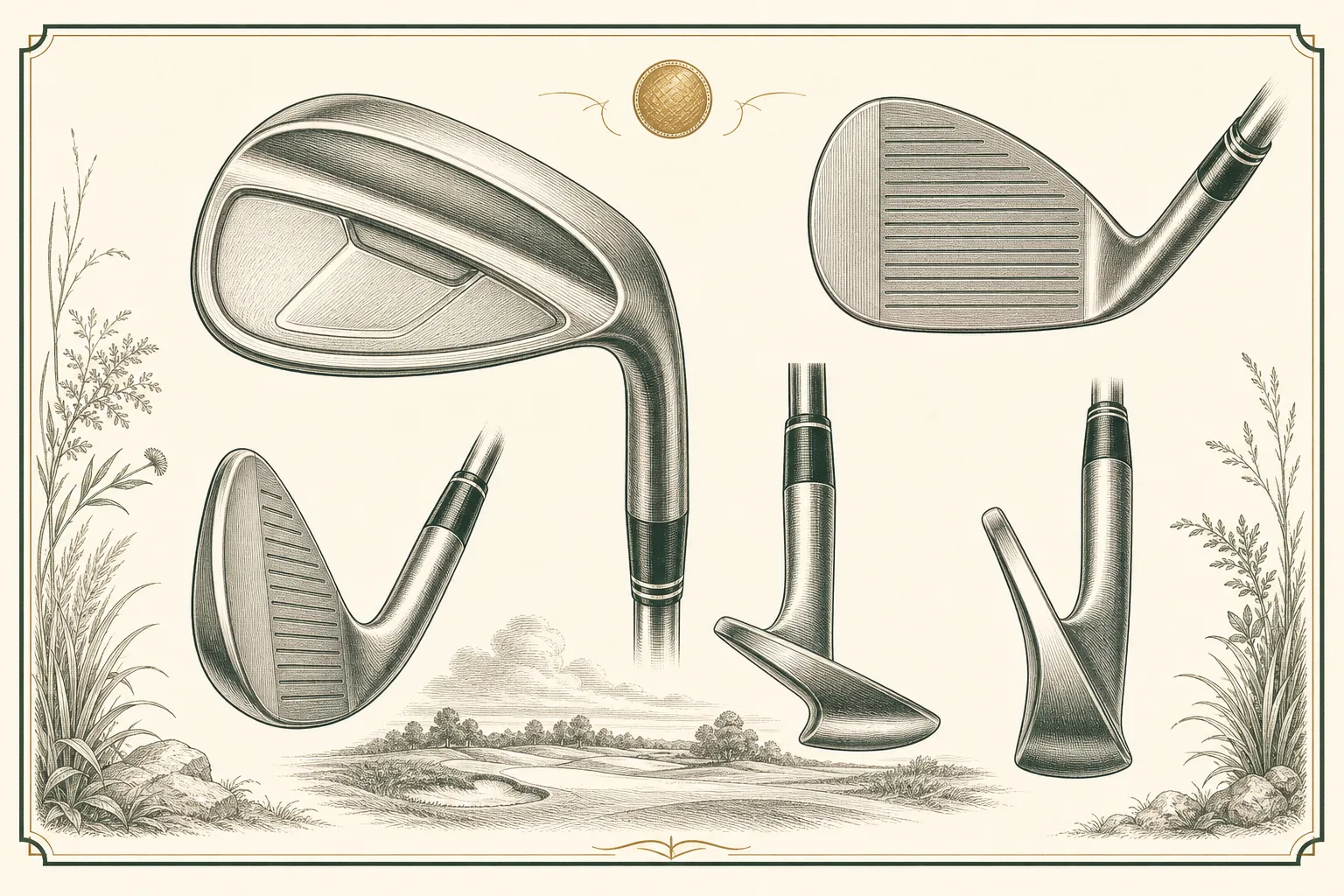
The original 588 RTX (2013) was where Cleveland introduced Rotex, a directional, deeply milled face pattern engineered to add friction, spin and durability at impact. Its U-grooves were developed with tour players and run roughly 16% larger than the prior 588's, aimed at maximizing spin on the shots that matter most: from rough, sand and wet turf, and on open-face greenside shots. It was offered in both a compact blade and a slightly more forgiving CB (cavity-back) shape, across low, standard and high bounce and a wide loft range, so a broad span of players could fit into it. Praised for exceptional stopping power and soft feel, it was quickly followed by the 588 RTX 2.0 (2014) and became the seed of Cleveland's long-running RTX wedge franchise.
Notable for its lineage, not scarcity: the original 588 RTX launched Rotex face milling and the RTX name that became Cleveland's flagship wedge line for the following decade (RTX 2.0, RTX-3, RTX-4, RTX ZipCore, RTX 6). That founding role is a genuine, sourced distinction. Honesty check: this specific first-gen unit is itself a plentiful, cheap used wedge with no collector premium, most of the RTX franchise's fame accrued to later models, so it is notable, not iconic or cult.
Broad by wedge standards thanks to the two head shapes and three bounce options: good players take the compact blade with matched bounce for shotmaking, while mid-to-higher handicaps can choose the CB shape for extra stability. Its spin performance on greenside and open-face shots benefits everyone. Who should not overthink it: it is a cheap, effective gamer for anyone whose iron set gaps into it, provided the grooves are still fresh, worn Rotex faces lose the spin that is the whole selling point.
Launched 2013 (DB run 2013-2014) as the debut of Rotex face technology and the RTX name, replacing the CG-series milled wedges as Cleveland's spin-focused flagship. It was superseded within a year by the 588 RTX 2.0 (2014) and then by the RTX-3/RTX-4/RTX ZipCore/RTX 6 generations that carried the line into the 2020s. It arrived as tour wedges leaned hard into milled faces to maximize spin under the post-2010 groove rules.
A specialty wedge, so mid-low on the scale, but slightly more forgiving than the blade-only 588 variants because it was also sold in a CB (cavity-back) shape whose perimeter weighting steadies off-center strikes. The blade version plays like a traditional players' wedge. In both, the Rotex milled face and enlarged grooves preserve spin and stopping power on mishits and shorter shots better than smoother older faces, which reviewers noted made it usable for higher handicaps too. There is still no game-improvement-level rescue on badly thin or toe strikes.
Calibrated across the whole catalog — a tour blade scores low here on purpose; it means control, not ease.
Plentiful and cheap. Realistic 2026 private-party value is roughly $30-$55 for a single original 588 RTX in playable condition, less with worn grooves or a tired Rotex face. As the first RTX it has a sliver of historical interest but no real collector premium, later RTX models command more. An excellent low-cost gamer for a golfer whose set gaps into it, as long as the milled face still has bite.
Reading is one thing — hitting is another. Book a bay and see the numbers for yourself before you buy anywhere.
“The original 588 RTX introduced Rotex milled-face technology and Zip grooves for spin, in low/standard/high bounce across CB and bladed shapes. A players/tour-milled wedge that's plentiful and cheap used now, a great low-cost gamer for anyone whose iron set already gaps into it.”
The original 588 RTX (2013) was where Cleveland introduced Rotex, a directional, deeply milled face pattern engineered to add friction, spin and durability at impact. Its U-grooves were developed with tour players and run roughly 16% larger than the prior 588's, aimed at maximizing spin on the shots that matter most: from rough, sand and wet turf, and on open-face greenside shots. It was offered in both a compact blade and a slightly more forgiving CB (cavity-back) shape, across low, standard and high bounce and a wide loft range, so a broad span of players could fit into it. Praised for exceptional stopping power and soft feel, it was quickly followed by the 588 RTX 2.0 (2014) and became the seed of Cleveland's long-running RTX wedge franchise.
Notable for its lineage, not scarcity: the original 588 RTX launched Rotex face milling and the RTX name that became Cleveland's flagship wedge line for the following decade (RTX 2.0, RTX-3, RTX-4, RTX ZipCore, RTX 6). That founding role is a genuine, sourced distinction. Honesty check: this specific first-gen unit is itself a plentiful, cheap used wedge with no collector premium, most of the RTX franchise's fame accrued to later models, so it is notable, not iconic or cult.
Broad by wedge standards thanks to the two head shapes and three bounce options: good players take the compact blade with matched bounce for shotmaking, while mid-to-higher handicaps can choose the CB shape for extra stability. Its spin performance on greenside and open-face shots benefits everyone. Who should not overthink it: it is a cheap, effective gamer for anyone whose iron set gaps into it, provided the grooves are still fresh, worn Rotex faces lose the spin that is the whole selling point.
Launched 2013 (DB run 2013-2014) as the debut of Rotex face technology and the RTX name, replacing the CG-series milled wedges as Cleveland's spin-focused flagship. It was superseded within a year by the 588 RTX 2.0 (2014) and then by the RTX-3/RTX-4/RTX ZipCore/RTX 6 generations that carried the line into the 2020s. It arrived as tour wedges leaned hard into milled faces to maximize spin under the post-2010 groove rules.
A specialty wedge, so mid-low on the scale, but slightly more forgiving than the blade-only 588 variants because it was also sold in a CB (cavity-back) shape whose perimeter weighting steadies off-center strikes. The blade version plays like a traditional players' wedge. In both, the Rotex milled face and enlarged grooves preserve spin and stopping power on mishits and shorter shots better than smoother older faces, which reviewers noted made it usable for higher handicaps too. There is still no game-improvement-level rescue on badly thin or toe strikes.
Calibrated across the whole catalog — a tour blade scores low here on purpose; it means control, not ease.
Plentiful and cheap. Realistic 2026 private-party value is roughly $30-$55 for a single original 588 RTX in playable condition, less with worn grooves or a tired Rotex face. As the first RTX it has a sliver of historical interest but no real collector premium, later RTX models command more. An excellent low-cost gamer for a golfer whose set gaps into it, as long as the milled face still has bite.
Reading is one thing — hitting is another. Book a bay and see the numbers for yourself before you buy anywhere.