“Smaller, thinner-topline Pro version for better ballstrikers. A rung-2 set that still rewards a centered strike; buy on value.”
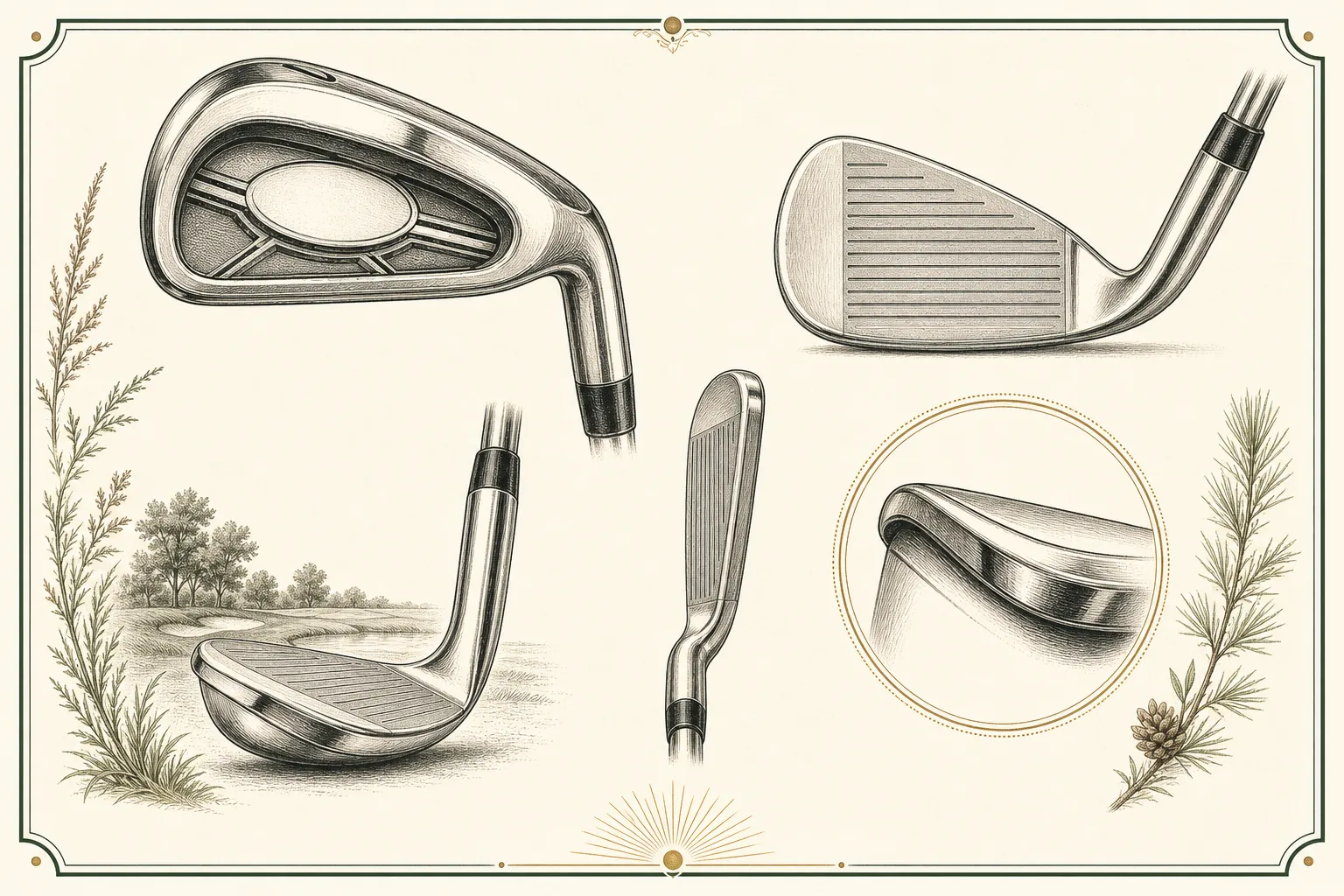
The X-16 Pro Series was Callaway's better-player companion to the mainstream X-16 -- a shorter blade length and higher topline than the earlier X-14, wrapped around Callaway's Notch weighting technology that shifted mass to the perimeter for a confidence-inspiring, slightly compact look behind the ball. It mixed stainless steel casting with an undercut cavity to keep the forgiveness of a game-improvement iron in a head shape that better ball-strikers wouldn't feel embarrassed carrying. Stock steel shaft was True Temper Dynamic Gold, the era's default players shaft. It arrived in the thick of Callaway's rapid-fire early-2000s X-series refresh cycle -- X-14, X-16, X-18 -- each cycle roughly two years apart with incremental notch-weighting and undercut tweaks rather than wholesale redesigns.
No hunted-down scarcity or forum mythology, but it holds an unusually strong and sustained user reputation: 4 out of 5 stars across 77 reviews on golfreview.com, with individual owners specifically calling them 'the nicest irons I have ever owned.' That is a meaningfully higher, more durable satisfaction signal than most single-cycle Callaway GI irons of the same era generate, even without cult-classic-level scarcity or a pro-usage legend.
Mid-to-low handicappers (roughly 5-15) who liked the standard X-16's forgiving cast-cavity engineering but wanted a smaller, less bulky head at address. A high handicapper chasing maximum forgiveness should look at the standard X-16 or a wider-soled contemporary GI set instead.
Sat in Callaway's early-2000s X-series ladder between the X-14 Pro Series and the X-18 Pro Series that replaced it around 2004-2005, competing with Titleist's DCI 990-era irons and Ping's i3/Eye2+ successors. It represents the mid-point of Callaway's Notch-weighting design language before the company moved to S2H2/Tru-Bore construction with the X-18 generation.
The Pro Series trims size and topline height versus the standard X-16 specifically to appeal to better players, so it gives up some of the standard model's wide-sole, oversized-head forgiveness in exchange for a cleaner look and more control -- still a cavity-back with real perimeter weighting via the Notch design, just calibrated toward accomplished ball-strikers rather than high handicappers.
Calibrated across the whole catalog — a tour blade scores low here on purpose; it means control, not ease.
Complete steel sets commonly sell for roughly $80-$150 in 2026 given the clubs' age (20+ years) -- functional, cheap, and plentiful, with no collector premium despite the strong user reviews. Rust on the cast-stainless heads and worn grooves are the main value drags.
Reading is one thing — hitting is another. Book a bay and see the numbers for yourself before you buy anywhere.
“Smaller, thinner-topline Pro version for better ballstrikers. A rung-2 set that still rewards a centered strike; buy on value.”
The X-16 Pro Series was Callaway's better-player companion to the mainstream X-16 -- a shorter blade length and higher topline than the earlier X-14, wrapped around Callaway's Notch weighting technology that shifted mass to the perimeter for a confidence-inspiring, slightly compact look behind the ball. It mixed stainless steel casting with an undercut cavity to keep the forgiveness of a game-improvement iron in a head shape that better ball-strikers wouldn't feel embarrassed carrying. Stock steel shaft was True Temper Dynamic Gold, the era's default players shaft. It arrived in the thick of Callaway's rapid-fire early-2000s X-series refresh cycle -- X-14, X-16, X-18 -- each cycle roughly two years apart with incremental notch-weighting and undercut tweaks rather than wholesale redesigns.
No hunted-down scarcity or forum mythology, but it holds an unusually strong and sustained user reputation: 4 out of 5 stars across 77 reviews on golfreview.com, with individual owners specifically calling them 'the nicest irons I have ever owned.' That is a meaningfully higher, more durable satisfaction signal than most single-cycle Callaway GI irons of the same era generate, even without cult-classic-level scarcity or a pro-usage legend.
Mid-to-low handicappers (roughly 5-15) who liked the standard X-16's forgiving cast-cavity engineering but wanted a smaller, less bulky head at address. A high handicapper chasing maximum forgiveness should look at the standard X-16 or a wider-soled contemporary GI set instead.
Sat in Callaway's early-2000s X-series ladder between the X-14 Pro Series and the X-18 Pro Series that replaced it around 2004-2005, competing with Titleist's DCI 990-era irons and Ping's i3/Eye2+ successors. It represents the mid-point of Callaway's Notch-weighting design language before the company moved to S2H2/Tru-Bore construction with the X-18 generation.
The Pro Series trims size and topline height versus the standard X-16 specifically to appeal to better players, so it gives up some of the standard model's wide-sole, oversized-head forgiveness in exchange for a cleaner look and more control -- still a cavity-back with real perimeter weighting via the Notch design, just calibrated toward accomplished ball-strikers rather than high handicappers.
Calibrated across the whole catalog — a tour blade scores low here on purpose; it means control, not ease.
Complete steel sets commonly sell for roughly $80-$150 in 2026 given the clubs' age (20+ years) -- functional, cheap, and plentiful, with no collector premium despite the strong user reviews. Rust on the cast-stainless heads and worn grooves are the main value drags.
Reading is one thing — hitting is another. Book a bay and see the numbers for yourself before you buy anywhere.