“A rung-2 forged cavity with a midsize head and magnesium composite for a bit of extra forgiveness and dampened feel. Great value used at well under retail. A dependable choice for a low-to-mid handicap.”
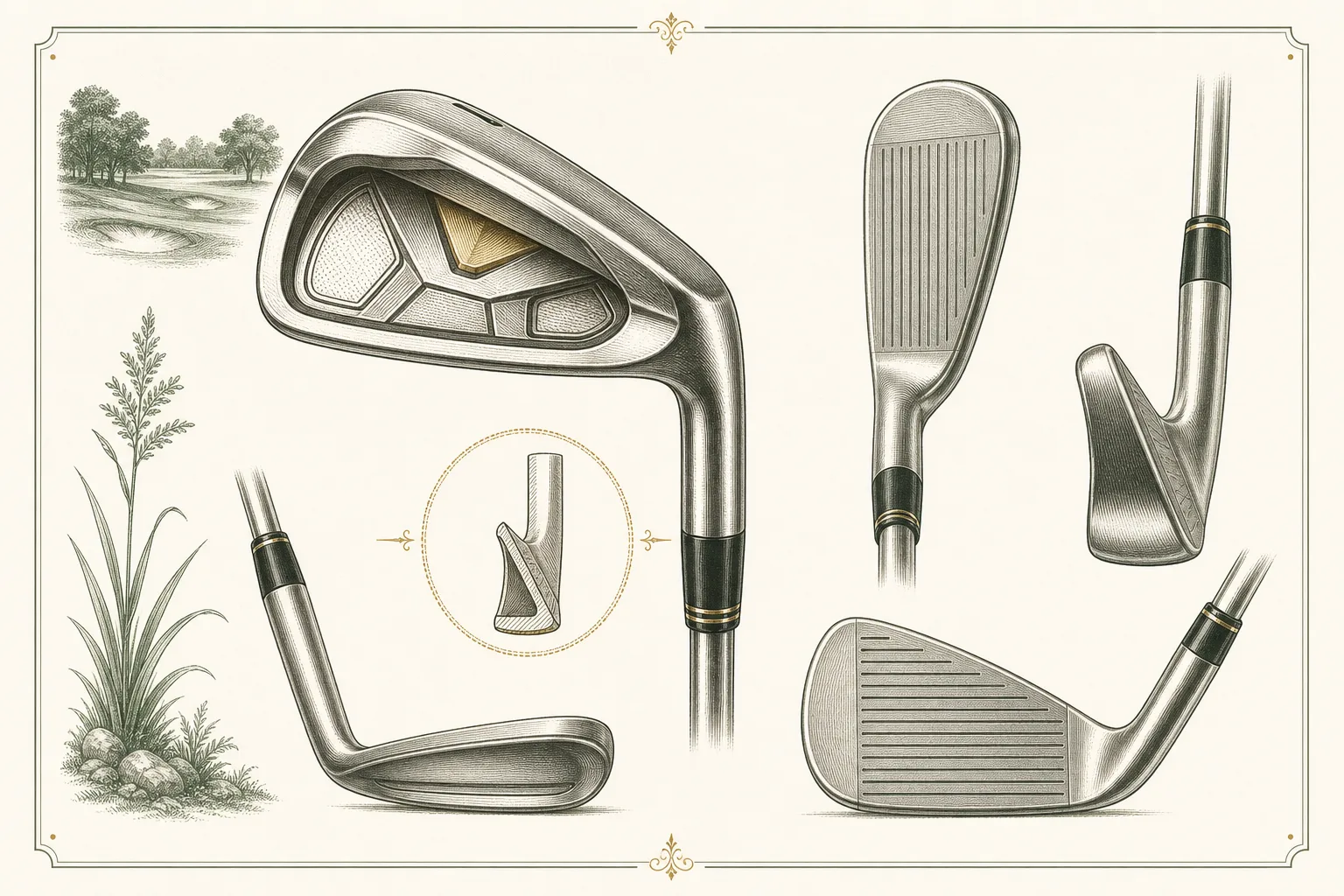
Launched in 2010 as Bridgestone Golf's US-market answer to Titleist and Mizuno's better-player cavity backs, the J38 Cavity Back paired a midsize forged head with a magnesium composite insert set behind the face - a material choice meant to redistribute mass to the perimeter for stability while damping vibration for the soft, 'buttery' feel period reviewers singled out. Forged from 1020 carbon steel with a dual-pocket-cavity design that carved two cavities out of the back to push weight outward, it kept a thin topline, shallow heel and minimal offset despite its larger-than-blade footprint, aiming at low-to-mid-handicap players who wanted forgiveness without a bulky game-improvement look. It shipped stock with Project X Flighted shafts and a 46-degree pitching wedge, retailing at $799.
No lawsuit, no landmark tour moment, and no enduring collector market - golfreview.com shows only 3 total user reviews (rated 4.9/5), and today's used market is thin (about 10 active listings on aggregator used.forsale versus roughly 29 for the later J40), reading as a genuinely low production run rather than suppressed demand. It is best described honestly as a commodity-tier release with a small, loyal niche of Bridgestone brand fans rather than any broader cult reputation.
Suits mid-to-low handicaps who want the look and feel of a forged players iron but still occasionally miss the center of the face; Bridgestone marketed it from 'professional level to mid handicap,' and the 46-degree stock PW loft plus a +/-3-degree loft/lie fitting window suit a player getting custom-fit rather than buying off the rack.
Released in 2010 during Fred Couples' big season as Bridgestone's Champions Tour staff pro, the J38 competed against contemporaries like the Titleist 690 series, Mizuno MP-60, and TaylorMade R9 - one reviewer specifically noted it ran with 'a slightly smaller head, less offset and definitely thinner topline' than the R9. It was succeeded in 2011 by the compact J40 CB and J40 Combo lines, which forum commentary later described as barely distinguishable in performance from the J38 ('not enough difference to move from J38's').
The dual-pocket-cavity and magnesium composite insert genuinely move weight to the perimeter, and Today's Golfer's bench test scored forgiveness 3/5 (on their 5-point scale) with reviewers noting 'some forgiveness throughout the heel and toe' - middling for a forged players cavity, well short of a true game-improvement iron, but ahead of a pure muscleback.
Calibrated across the whole catalog — a tour blade scores low here on purpose; it means control, not ease.
Clean used sets are inexpensive and not hard to find but not plentiful either: 2nd Swing has listed individual J38 irons around $47-$60 each and a 'Below Average' condition 4-PW set for about $210 (marked down from $231). Private-party prices on eBay for a full playable 4-PW or 3-PW set with Project X shafts realistically run around $150-$300 in 2026, well down from the $799 original retail.
Reading is one thing — hitting is another. Book a bay and see the numbers for yourself before you buy anywhere.
“A rung-2 forged cavity with a midsize head and magnesium composite for a bit of extra forgiveness and dampened feel. Great value used at well under retail. A dependable choice for a low-to-mid handicap.”
Launched in 2010 as Bridgestone Golf's US-market answer to Titleist and Mizuno's better-player cavity backs, the J38 Cavity Back paired a midsize forged head with a magnesium composite insert set behind the face - a material choice meant to redistribute mass to the perimeter for stability while damping vibration for the soft, 'buttery' feel period reviewers singled out. Forged from 1020 carbon steel with a dual-pocket-cavity design that carved two cavities out of the back to push weight outward, it kept a thin topline, shallow heel and minimal offset despite its larger-than-blade footprint, aiming at low-to-mid-handicap players who wanted forgiveness without a bulky game-improvement look. It shipped stock with Project X Flighted shafts and a 46-degree pitching wedge, retailing at $799.
No lawsuit, no landmark tour moment, and no enduring collector market - golfreview.com shows only 3 total user reviews (rated 4.9/5), and today's used market is thin (about 10 active listings on aggregator used.forsale versus roughly 29 for the later J40), reading as a genuinely low production run rather than suppressed demand. It is best described honestly as a commodity-tier release with a small, loyal niche of Bridgestone brand fans rather than any broader cult reputation.
Suits mid-to-low handicaps who want the look and feel of a forged players iron but still occasionally miss the center of the face; Bridgestone marketed it from 'professional level to mid handicap,' and the 46-degree stock PW loft plus a +/-3-degree loft/lie fitting window suit a player getting custom-fit rather than buying off the rack.
Released in 2010 during Fred Couples' big season as Bridgestone's Champions Tour staff pro, the J38 competed against contemporaries like the Titleist 690 series, Mizuno MP-60, and TaylorMade R9 - one reviewer specifically noted it ran with 'a slightly smaller head, less offset and definitely thinner topline' than the R9. It was succeeded in 2011 by the compact J40 CB and J40 Combo lines, which forum commentary later described as barely distinguishable in performance from the J38 ('not enough difference to move from J38's').
The dual-pocket-cavity and magnesium composite insert genuinely move weight to the perimeter, and Today's Golfer's bench test scored forgiveness 3/5 (on their 5-point scale) with reviewers noting 'some forgiveness throughout the heel and toe' - middling for a forged players cavity, well short of a true game-improvement iron, but ahead of a pure muscleback.
Calibrated across the whole catalog — a tour blade scores low here on purpose; it means control, not ease.
Clean used sets are inexpensive and not hard to find but not plentiful either: 2nd Swing has listed individual J38 irons around $47-$60 each and a 'Below Average' condition 4-PW set for about $210 (marked down from $231). Private-party prices on eBay for a full playable 4-PW or 3-PW set with Project X shafts realistically run around $150-$300 in 2026, well down from the $799 original retail.
Reading is one thing — hitting is another. Book a bay and see the numbers for yourself before you buy anywhere.