Hit 17 times in The Clubhouse
“First fairway generation to use A.I.-optimized face architecture per loft — a real engineering step, but standard-rung fit territory, not a forgiveness or low-spin outlier.”
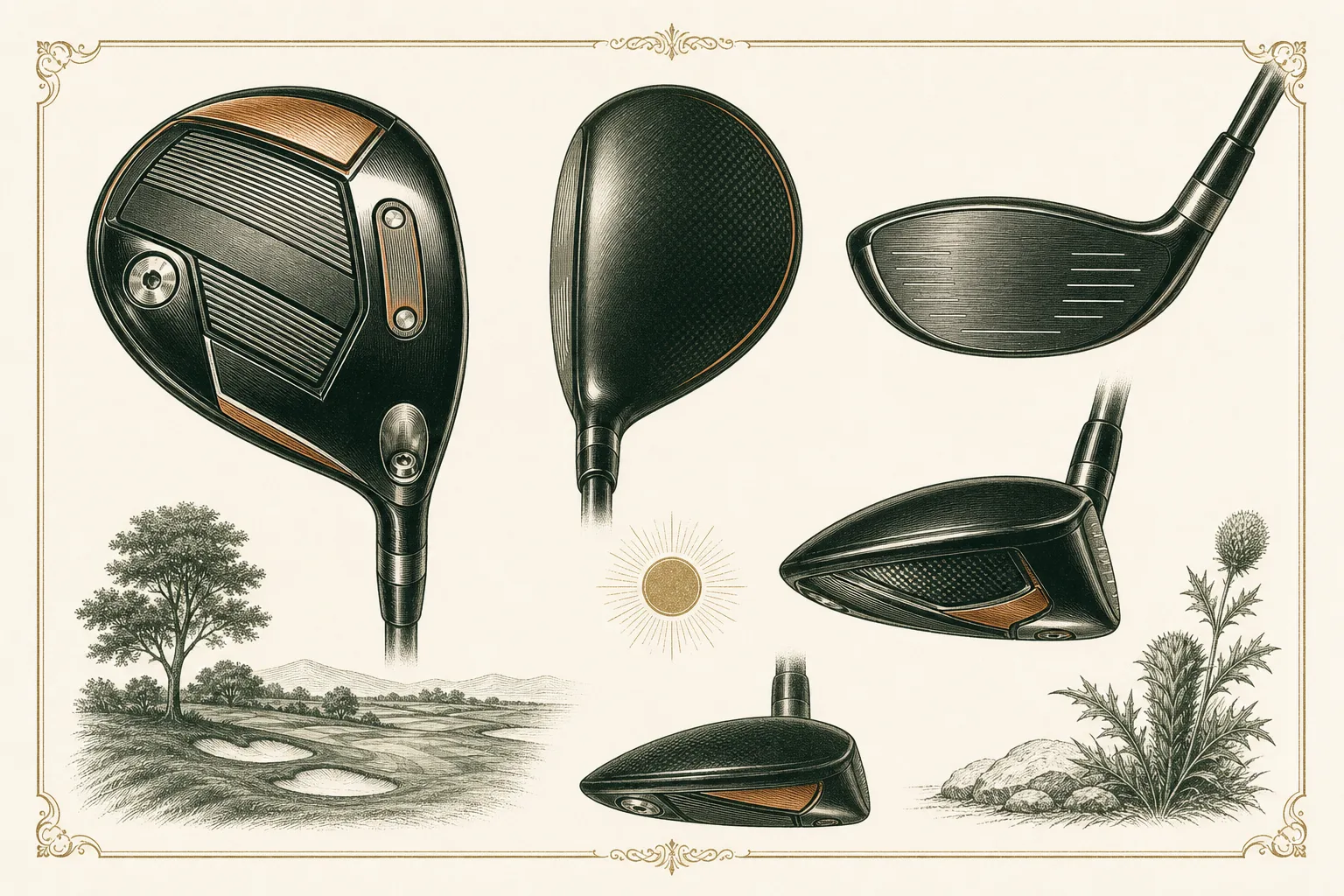
The standard Mavrik fairway wood carried the same AI-designed 'Flash Face' philosophy as its driver sibling down into a 174cc head, with a high-strength C300 Maraging steel face and Jailbreak bars behind it to push ball speed. Callaway built three distinct Mavrik fairway models — standard, Max, and Sub Zero — with the standard positioned as the balanced, no-adjustability middle option: reviewers found the stock 15-degree model struck an especially good balance of high launch and low spin, averaging over 251 yards of carry off the deck in testing. It lacked any hosel adjustability, a deliberate simplicity trade-off versus rivals, and it was the least distinctive of the three Mavrik fairway variants — the Sub Zero (low-spin, better-player) and Max (draw-biased, max forgiveness) each carved out a clearer identity.
Solidly reviewed for distance and consistency but explicitly the 'middle child' of its own three-model Mavrik fairway lineup — testers and reviewers routinely singled out the Sub Zero as the standout of the three, leaving the standard Mavrik as a competent, forgettable middle option rather than a club anyone specifically sought out.
Golfers with moderate driver swing speeds (roughly 85-100mph) who want strong, consistent carry distance from the fairway without needing extra draw bias or hosel adjustability. Slower swingers chasing maximum forgiveness and a wider loft range down to an 11-wood are better fit into the Mavrik Max.
One of three 2020 Mavrik fairway models (standard, Max, Sub Zero) succeeding the 2019 Epic Flash fairway family and preceding the 2021 Epic Speed fairways, competing against TaylorMade's SIM and Ping's G410 fairway woods of the same season.
A standard-rung fairway with genuine perimeter weighting and a forgiving face-speed profile from the AI-optimized Flash Face and Jailbreak, appropriate for a mid-swing-speed player (85-100mph), but it sits below the larger, higher-MOI Mavrik Max in raw forgiveness and below the low-spin, better-player-oriented Sub Zero in shot-shaping control.
Calibrated across the whole catalog — a tour blade scores low here on purpose; it means control, not ease.
Used copies typically sell for roughly $70-$130 on eBay/2nd Swing private-party listings in 2026, well down from the original $280 retail; 2nd Swing's graded/warrantied listings run somewhat higher. As with the driver, this reflects normal depreciation on a high-volume annual release rather than any lasting demand.
Reading is one thing — hitting is another. Book a bay and see the numbers for yourself before you buy anywhere.