“Early white-crown ultralight, marketed as the lightest TaylorMade driver ever at 279g. Forgiving and dirt cheap used; a fine rung-1 gamer for a moderate swing that wants help getting the ball up.”
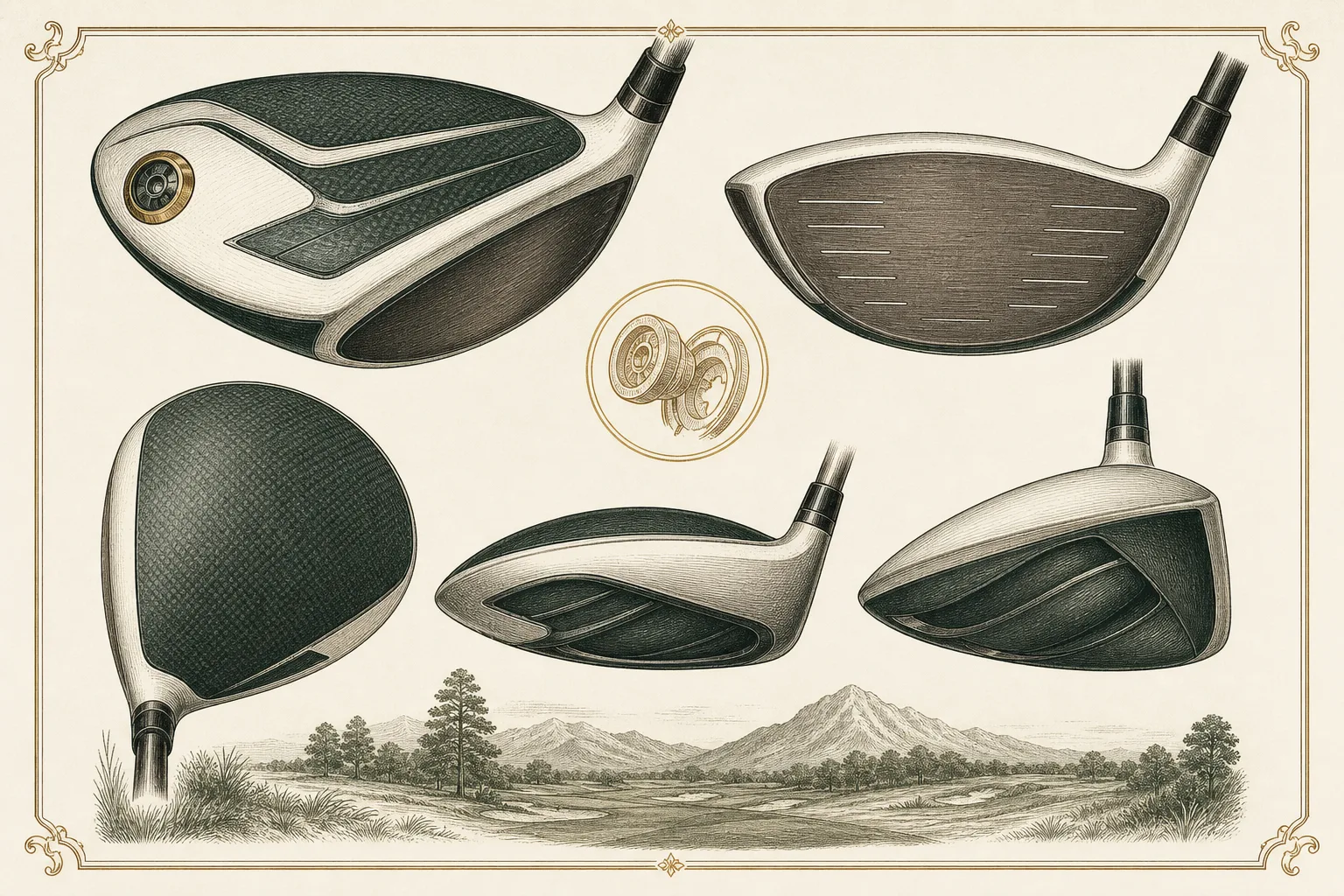
The SuperFast 2.0 was TaylorMade's second lightweight-driver bite at the apple after the original 2010 Burner SuperFast, and it doubled down on the same idea: shave every gram to build clubhead speed. At 279 grams total it was billed as TaylorMade's lightest driver to date, paired with a deeper face and a low, forward-shifted CG for a higher, lower-spin launch than the first SuperFast. The white crown with black face contrast made the 460cc head easy to align and look bigger at address. TaylorMade claimed roughly 7 extra yards over the first SuperFast, largely attributable to a longer stock shaft and Inverted Cone Technology stretching the forgiving zone. A step-up TP version with a smaller, lower-spin profile targeted better players in the same release cycle.
A mainstream, one-year mass-market driver in TaylorMade's relentless annual-refresh cycle -- no tour-win legend, no forum reverence, no scarcity. It was superseded within a year by the R11 and RocketBallz lines. Its one specific claim to note, sourced from TaylorMade's own materials, is being the lightest driver TaylorMade had built up to that point; that is a manufacturing footnote, not a cult following.
Moderate-to-slower swing speed golfers wanting more clubhead speed and a higher, more forgiving launch without swinging harder. A strong or fast-swinging player will likely find the ultralight build feels unstable and harder to control shot shape with versus a standard-weight driver; that golfer should look at the same-era Burner SuperFast 2.0 TP instead.
Launched into a lightweight-driver arms race that TaylorMade itself kicked off with the original 2010 SuperFast, competing against Callaway's FT-9/RAZR and Nike's VR series. It was replaced within the TaylorMade line by the R11 (2011) and RocketBallz (2012) as the white-crown/adjustable-hosel era took hold. A modern equivalent is the TaylorMade Qi10 Max -- same forgiveness-first design brief with two more decades of aerodynamics and MOI engineering.
Genuinely forgiving as an ultralight, max-launch game-improvement driver: deep, low CG plus Inverted Cone Technology widens the effective hitting zone and holds ball speed on off-center strikes. It is not a max-MOI modern 460cc driver, but for its era it launches high and straight with minimal shot-shaping demanded of the golfer -- the trade-off of an ultralight build is a slightly less stable, more clicky feel on pure strikes versus a heavier players' driver.
Calibrated across the whole catalog — a tour blade scores low here on purpose; it means control, not ease.
A 15-year-old mass-market driver with no collector interest: realistic 2026 private-party price is roughly $25-50 in playable condition, with graded/warrantied retailer listings (2nd Swing, Golf Avenue) sometimes asking modestly more for clean examples with premium aftermarket shafts. It is bought as a cheap practice/beater or entry driver, not an investment.
The Legends Rack
The white-hot seller of the late 2000s and the driver half of America's dads still miss. Ultralight, huge-flying, with that unmistakable hollow thwack. This is the single most requested nostalgia driver in any sim — the club people grab and immediately start telling stories about. Who'll love it: everyone; it's a time machine with a grip.
Who it suitsAll
Reading is one thing — hitting is another. Book a bay and see the numbers for yourself before you buy anywhere.
“Early white-crown ultralight, marketed as the lightest TaylorMade driver ever at 279g. Forgiving and dirt cheap used; a fine rung-1 gamer for a moderate swing that wants help getting the ball up.”
The SuperFast 2.0 was TaylorMade's second lightweight-driver bite at the apple after the original 2010 Burner SuperFast, and it doubled down on the same idea: shave every gram to build clubhead speed. At 279 grams total it was billed as TaylorMade's lightest driver to date, paired with a deeper face and a low, forward-shifted CG for a higher, lower-spin launch than the first SuperFast. The white crown with black face contrast made the 460cc head easy to align and look bigger at address. TaylorMade claimed roughly 7 extra yards over the first SuperFast, largely attributable to a longer stock shaft and Inverted Cone Technology stretching the forgiving zone. A step-up TP version with a smaller, lower-spin profile targeted better players in the same release cycle.
A mainstream, one-year mass-market driver in TaylorMade's relentless annual-refresh cycle -- no tour-win legend, no forum reverence, no scarcity. It was superseded within a year by the R11 and RocketBallz lines. Its one specific claim to note, sourced from TaylorMade's own materials, is being the lightest driver TaylorMade had built up to that point; that is a manufacturing footnote, not a cult following.
Moderate-to-slower swing speed golfers wanting more clubhead speed and a higher, more forgiving launch without swinging harder. A strong or fast-swinging player will likely find the ultralight build feels unstable and harder to control shot shape with versus a standard-weight driver; that golfer should look at the same-era Burner SuperFast 2.0 TP instead.
Launched into a lightweight-driver arms race that TaylorMade itself kicked off with the original 2010 SuperFast, competing against Callaway's FT-9/RAZR and Nike's VR series. It was replaced within the TaylorMade line by the R11 (2011) and RocketBallz (2012) as the white-crown/adjustable-hosel era took hold. A modern equivalent is the TaylorMade Qi10 Max -- same forgiveness-first design brief with two more decades of aerodynamics and MOI engineering.
Genuinely forgiving as an ultralight, max-launch game-improvement driver: deep, low CG plus Inverted Cone Technology widens the effective hitting zone and holds ball speed on off-center strikes. It is not a max-MOI modern 460cc driver, but for its era it launches high and straight with minimal shot-shaping demanded of the golfer -- the trade-off of an ultralight build is a slightly less stable, more clicky feel on pure strikes versus a heavier players' driver.
Calibrated across the whole catalog — a tour blade scores low here on purpose; it means control, not ease.
A 15-year-old mass-market driver with no collector interest: realistic 2026 private-party price is roughly $25-50 in playable condition, with graded/warrantied retailer listings (2nd Swing, Golf Avenue) sometimes asking modestly more for clean examples with premium aftermarket shafts. It is bought as a cheap practice/beater or entry driver, not an investment.
The Legends Rack
The white-hot seller of the late 2000s and the driver half of America's dads still miss. Ultralight, huge-flying, with that unmistakable hollow thwack. This is the single most requested nostalgia driver in any sim — the club people grab and immediately start telling stories about. Who'll love it: everyone; it's a time machine with a grip.
Who it suitsAll
Reading is one thing — hitting is another. Book a bay and see the numbers for yourself before you buy anywhere.