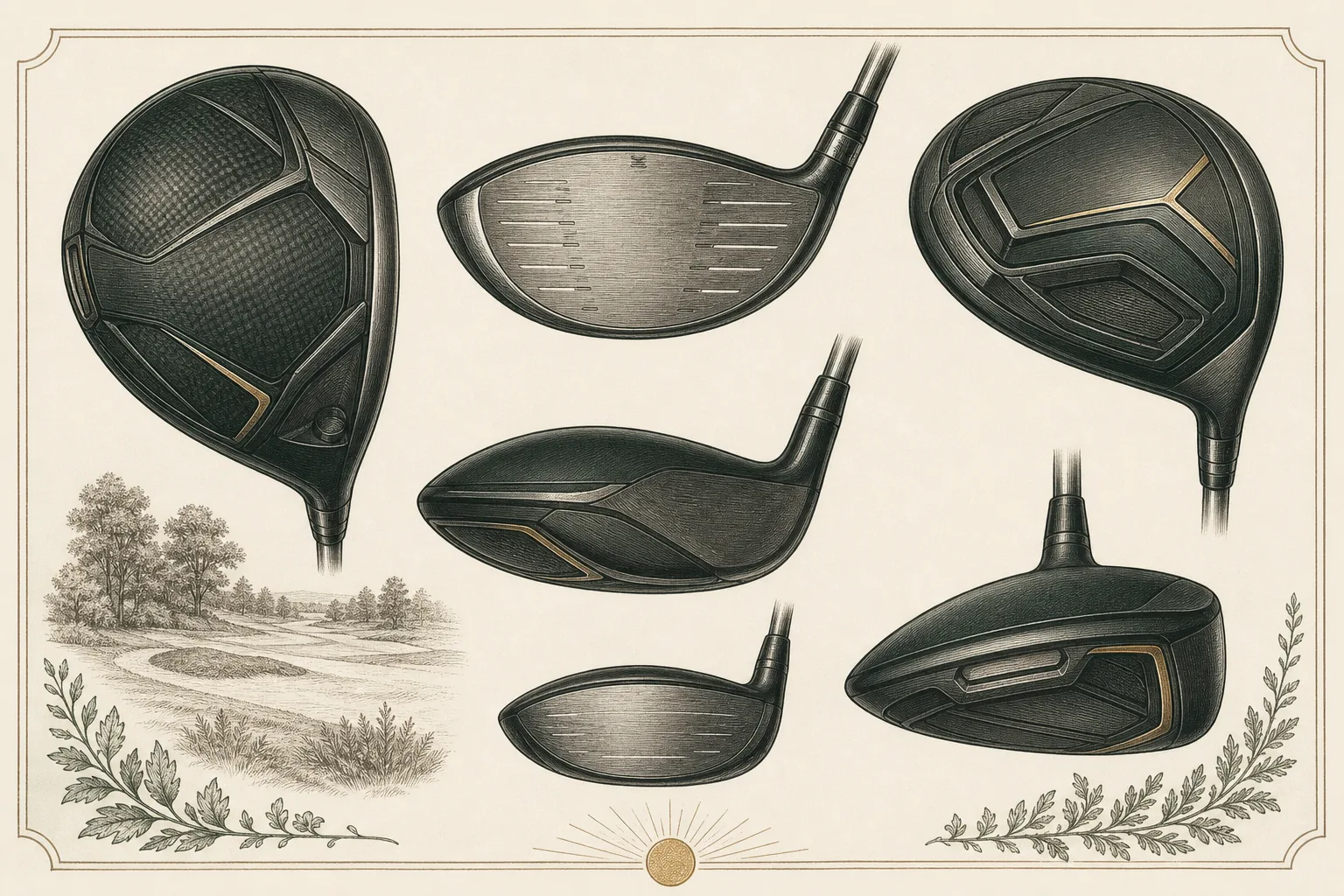
Released January 19, 2024 (not 2022 — see flags) at $449.99, the Launcher XL2 replaced the original Launcher XL (2022) as Cleveland's flagship game-improvement driver, headlined by MainFrame XL — an AI-driven design process that shapes a variable-thickness face to enlarge the effective sweet spot beyond what human-only engineering had produced for the line. It paired that face with Rebound Frame technology (shared across Cleveland/Srixon/XXIO sibling brands, flexing the whole head rather than just the face for more ball speed) and Cleveland's Action Mass CB counterbalanced grip weighting, continuing the philosophy first introduced on the Launcher XL Lite (see companion record) but folded into the mainline model. A Draw-biased XL2 Draw variant launched alongside it.
A well-reviewed, mainstream forgiveness driver with no cult following or collector value; MyGolfSpy and Golf.com framed it as a solid, good-value performer rather than a standout, and it competes as one option among many similarly AI-marketed 2024 game-improvement drivers.
Aimed at recreational, mid-to-high handicap golfers who want forgiveness and value over tour-level tunability — reviewers explicitly framed it as built for that buyer rather than better players; a low-handicap or tour-caliber player wanting adjustability and workability should look at a premium-tier 2024 driver (Callaway Paradym, TaylorMade Qi10, Titleist GT) instead.
Launched into the 2024 game-improvement field against Callaway's Paradym Ai Smoke Max, TaylorMade's Qi10 Max and Titleist's GT2, all leaning on AI-assisted face design that year. It replaced the 2022 Launcher XL directly and sits one step ahead in Cleveland's rapid Launcher XL iteration cycle that also produced the 2021 Launcher XL Lite (see companion record).
The AI-designed MainFrame XL face and Rebound Frame body genuinely enlarge the forgiving zone versus the prior Launcher XL, per manufacturer and reviewer testing, and reviewers noted a noticeable draw bias and mid-to-high spin that helps get the ball airborne on thin or toe strikes; the trade-off is less workability and a higher-pitched impact sound that some reviewers found less refined than premium-tier competitors.
Calibrated across the whole catalog — a tour blade scores low here on purpose; it means control, not ease.
As a driver still within its original retail cycle as of 2026, used pricing sits well above older Launcher models: 2nd Swing and eBay listings for a clean example commonly run roughly $220-$320 depending on shaft and condition, a modest discount off the $449.99 MSRP typical for a driver only one to two years removed from release.
Reading is one thing — hitting is another. Book a bay and see the numbers for yourself before you buy anywhere.
Released January 19, 2024 (not 2022 — see flags) at $449.99, the Launcher XL2 replaced the original Launcher XL (2022) as Cleveland's flagship game-improvement driver, headlined by MainFrame XL — an AI-driven design process that shapes a variable-thickness face to enlarge the effective sweet spot beyond what human-only engineering had produced for the line. It paired that face with Rebound Frame technology (shared across Cleveland/Srixon/XXIO sibling brands, flexing the whole head rather than just the face for more ball speed) and Cleveland's Action Mass CB counterbalanced grip weighting, continuing the philosophy first introduced on the Launcher XL Lite (see companion record) but folded into the mainline model. A Draw-biased XL2 Draw variant launched alongside it.
A well-reviewed, mainstream forgiveness driver with no cult following or collector value; MyGolfSpy and Golf.com framed it as a solid, good-value performer rather than a standout, and it competes as one option among many similarly AI-marketed 2024 game-improvement drivers.
Aimed at recreational, mid-to-high handicap golfers who want forgiveness and value over tour-level tunability — reviewers explicitly framed it as built for that buyer rather than better players; a low-handicap or tour-caliber player wanting adjustability and workability should look at a premium-tier 2024 driver (Callaway Paradym, TaylorMade Qi10, Titleist GT) instead.
Launched into the 2024 game-improvement field against Callaway's Paradym Ai Smoke Max, TaylorMade's Qi10 Max and Titleist's GT2, all leaning on AI-assisted face design that year. It replaced the 2022 Launcher XL directly and sits one step ahead in Cleveland's rapid Launcher XL iteration cycle that also produced the 2021 Launcher XL Lite (see companion record).
The AI-designed MainFrame XL face and Rebound Frame body genuinely enlarge the forgiving zone versus the prior Launcher XL, per manufacturer and reviewer testing, and reviewers noted a noticeable draw bias and mid-to-high spin that helps get the ball airborne on thin or toe strikes; the trade-off is less workability and a higher-pitched impact sound that some reviewers found less refined than premium-tier competitors.
Calibrated across the whole catalog — a tour blade scores low here on purpose; it means control, not ease.
As a driver still within its original retail cycle as of 2026, used pricing sits well above older Launcher models: 2nd Swing and eBay listings for a clean example commonly run roughly $220-$320 depending on shaft and condition, a modest discount off the $449.99 MSRP typical for a driver only one to two years removed from release.
Reading is one thing — hitting is another. Book a bay and see the numbers for yourself before you buy anywhere.