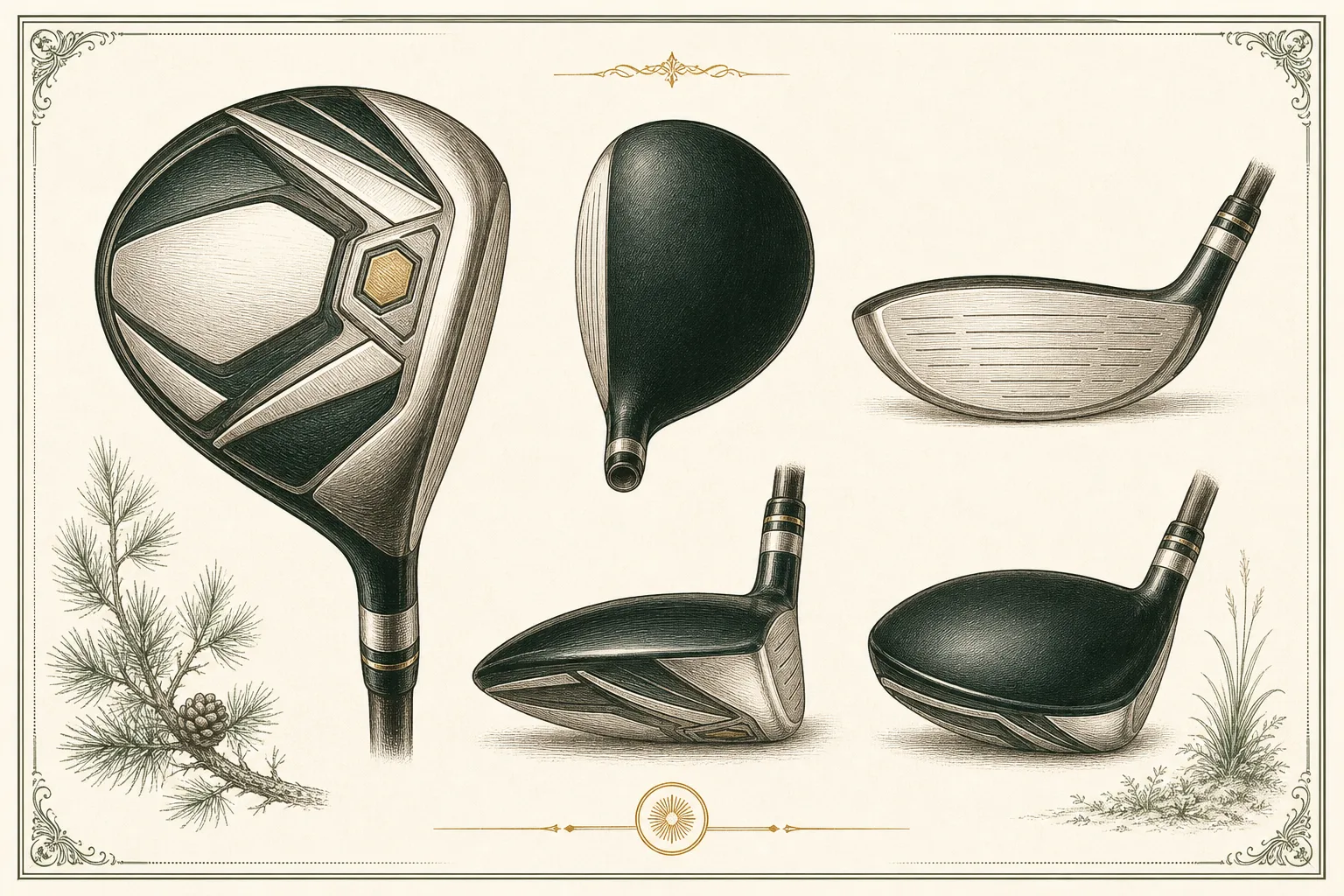
“A rung-1 forgiving fairway with a milled face for ball speed and an easy, high launch. Pairs with the JGR driver family. Cheap used and a solid get-it-airborne option for mid-to-high handicaps.”
Built on the same technology platform as the 2016 JGR driver — a flexible FAST crown paired with a stiff sole and a milled face for ball speed — the JGR fairway wood was tuned for a repeatable, wind-resistant mid-to-low flight. Golf.com's ClubTest praised it as one of the year's top fairway wood picks, noting the 3-wood produced driver-like stinger distance off the tee while the higher-lofted options got the ball up easily for soft landings on long approaches. At a modest launch price, it was aimed squarely at both high-handicap amateurs wanting help and lower-handicap players wanting a usable off-the-deck club.
A genuine, sourced editorial distinction — naming to Golf.com's 2016 ClubTest top picks is a real, independently verifiable achievement, not marketing copy — but it did not translate into lasting reputation; it was replaced within the normal Bridgestone refresh cycle by the Tour B JGR fairway wood and carries no collector or forum following today.
A good fit across a wide handicap range — high-handicappers get an easy-launching, forgiving option off the tee or deck, while lower-handicappers benefit from the flatter, more penetrating flight of the 3-wood for control shots into wind. Not a specialist's high-spin, shot-shaping fairway wood.
Part of Bridgestone's 2016 JGR family alongside the driver, hybrid and CB irons, competing against TaylorMade's M2, Callaway's Big Bertha, and Titleist's 915F/816F1 fairway woods of the same period.
Shares the driver's flexing crown and milled face for consistent ball speed, and reviewers specifically noted that mishit yardage was hard to distinguish from pure strikes — solid, above-midpoint forgiveness for a fairway wood category that inherently rewards more consistent strikers than a driver's larger head does.
Calibrated across the whole catalog — a tour blade scores low here on purpose; it means control, not ease.
Realistic 2026 private-party pricing is roughly $55–$95 for a clean example with stock shaft, tracking below the used JGR driver's price band as fairway woods generally depreciate faster once a brand's next model cycle lands; Bridgestone's smaller US market share keeps demand — and price — modest.
Reading is one thing — hitting is another. Book a bay and see the numbers for yourself before you buy anywhere.
“A rung-1 forgiving fairway with a milled face for ball speed and an easy, high launch. Pairs with the JGR driver family. Cheap used and a solid get-it-airborne option for mid-to-high handicaps.”
Built on the same technology platform as the 2016 JGR driver — a flexible FAST crown paired with a stiff sole and a milled face for ball speed — the JGR fairway wood was tuned for a repeatable, wind-resistant mid-to-low flight. Golf.com's ClubTest praised it as one of the year's top fairway wood picks, noting the 3-wood produced driver-like stinger distance off the tee while the higher-lofted options got the ball up easily for soft landings on long approaches. At a modest launch price, it was aimed squarely at both high-handicap amateurs wanting help and lower-handicap players wanting a usable off-the-deck club.
A genuine, sourced editorial distinction — naming to Golf.com's 2016 ClubTest top picks is a real, independently verifiable achievement, not marketing copy — but it did not translate into lasting reputation; it was replaced within the normal Bridgestone refresh cycle by the Tour B JGR fairway wood and carries no collector or forum following today.
A good fit across a wide handicap range — high-handicappers get an easy-launching, forgiving option off the tee or deck, while lower-handicappers benefit from the flatter, more penetrating flight of the 3-wood for control shots into wind. Not a specialist's high-spin, shot-shaping fairway wood.
Part of Bridgestone's 2016 JGR family alongside the driver, hybrid and CB irons, competing against TaylorMade's M2, Callaway's Big Bertha, and Titleist's 915F/816F1 fairway woods of the same period.
Shares the driver's flexing crown and milled face for consistent ball speed, and reviewers specifically noted that mishit yardage was hard to distinguish from pure strikes — solid, above-midpoint forgiveness for a fairway wood category that inherently rewards more consistent strikers than a driver's larger head does.
Calibrated across the whole catalog — a tour blade scores low here on purpose; it means control, not ease.
Realistic 2026 private-party pricing is roughly $55–$95 for a clean example with stock shaft, tracking below the used JGR driver's price band as fairway woods generally depreciate faster once a brand's next model cycle lands; Bridgestone's smaller US market share keeps demand — and price — modest.
Reading is one thing — hitting is another. Book a bay and see the numbers for yourself before you buy anywhere.