“A standard, versatile fairway wood - rung-2 neutral flight for a repeating swing and a solid gap-filler between driver and irons. Old but honest; buy on price, not hype.”
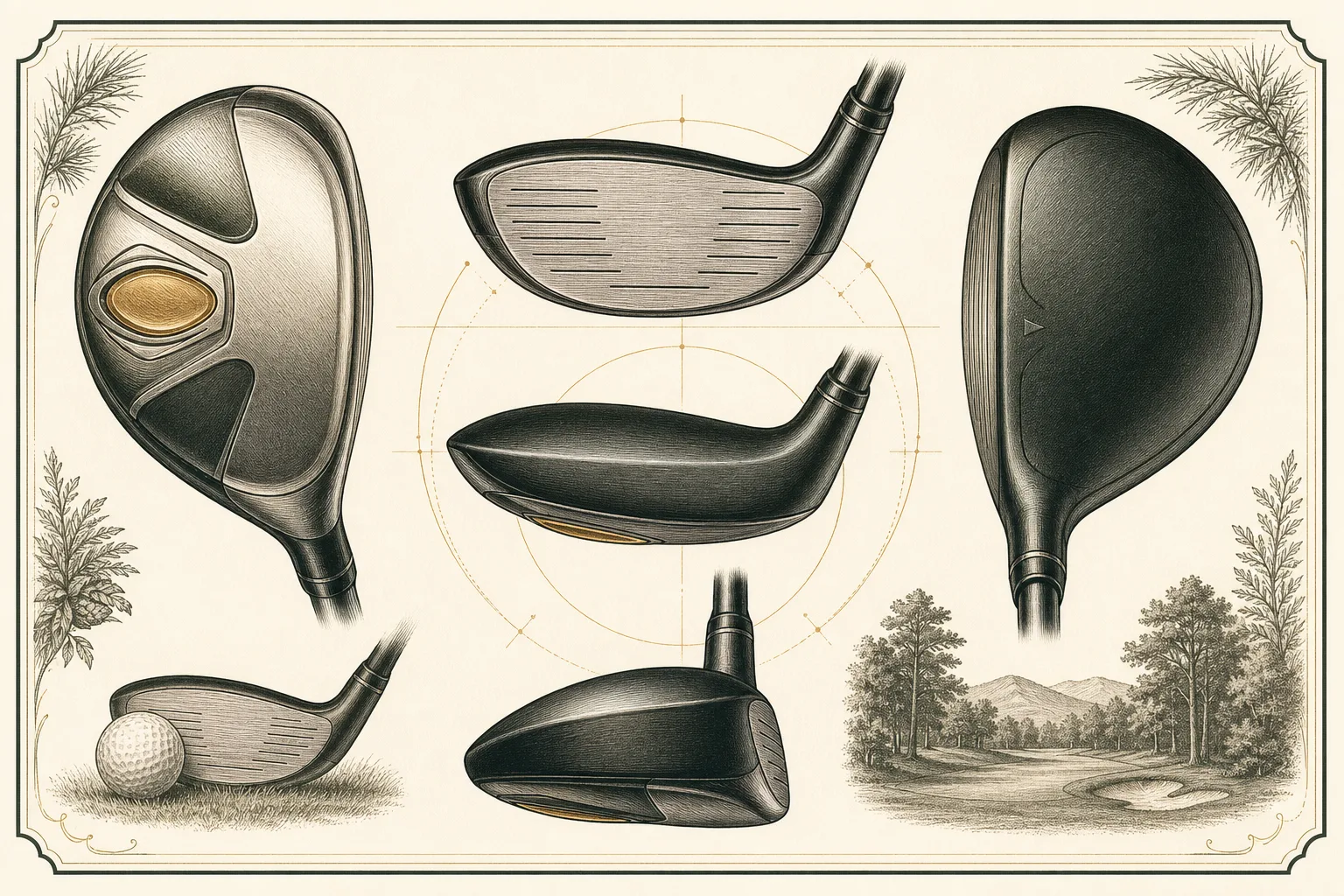
Launched alongside the G5 driver in Ping's August 2005 all-category rollout, the G5 fairway wood paired a stainless-steel body with a hotter 455 steel face and a 'rocker sole' -- a curved sole meant to square the face at impact across a range of turf contact. Internal weight pads moved progressively toward the back of the head as loft increased, tuning spin and launch club-by-club rather than applying one blanket setting across the set. A crescent alignment mark on the crown matched the driver's cue. Reviewers singled out the 3-wood as one of the easiest fairway metals of its year to get airborne, with a higher-pitched, distinctive 'pingy' strike sound. It ran alongside the new G5 hybrid as Ping's long-game answer for players who wanted forgiveness ahead of shot-shaping control.
No cult attaches to it: a competent, well-reviewed mid-2000s fairway wood (4.3/5 across 43 golfreview.com ratings) that did its job and was superseded within a couple of product cycles by the G10/G15 fairways, the ordinary fate of most game-improvement fairway metals from this era.
Mid-swing-speed players wanting a versatile, easy-launching gap-filler between driver and irons/hybrids -- the sole design particularly helps golfers who sweep or catch the turf inconsistently. A better player wanting a lower, more workable flight, or anyone chasing modern ball speeds, will be better served by a current players' or GI fairway wood.
Competed against Callaway's Big Bertha Fusion fairway woods, TaylorMade's R7 fairways, and Titleist's 906F around 2005-2006. Ping's fairway-wood line continued through the G10 and G15 generations with similar rocker-sole thinking carried forward. A modern equivalent is the Ping G430 fairway wood, which keeps the forgiveness-first brief with a modern face and adjustable hosel added.
The rocker sole and progressive internal weighting genuinely help square the face and launch mis-hits higher than a period players' fairway wood would, and the large stainless head spreads weight for a wider effective sweet spot. It sits at 7 rather than 8-9 because 2005-era fairway-wood forgiveness, without today's variable face thickness and lower/more extreme CG placement, still gives up ball speed and dispersion on strikes away from center compared to a current game-improvement fairway wood.
Calibrated across the whole catalog — a tour blade scores low here on purpose; it means control, not ease.
A cheap, plentiful used club today: individual heads typically sell for roughly $35-70 on eBay/SidelineSwap/Golf Avenue depending on loft, shaft and condition, reflecting its age and the fact it was a mainstream, high-volume release rather than a limited one. It does not command any collector premium.
Reading is one thing — hitting is another. Book a bay and see the numbers for yourself before you buy anywhere.