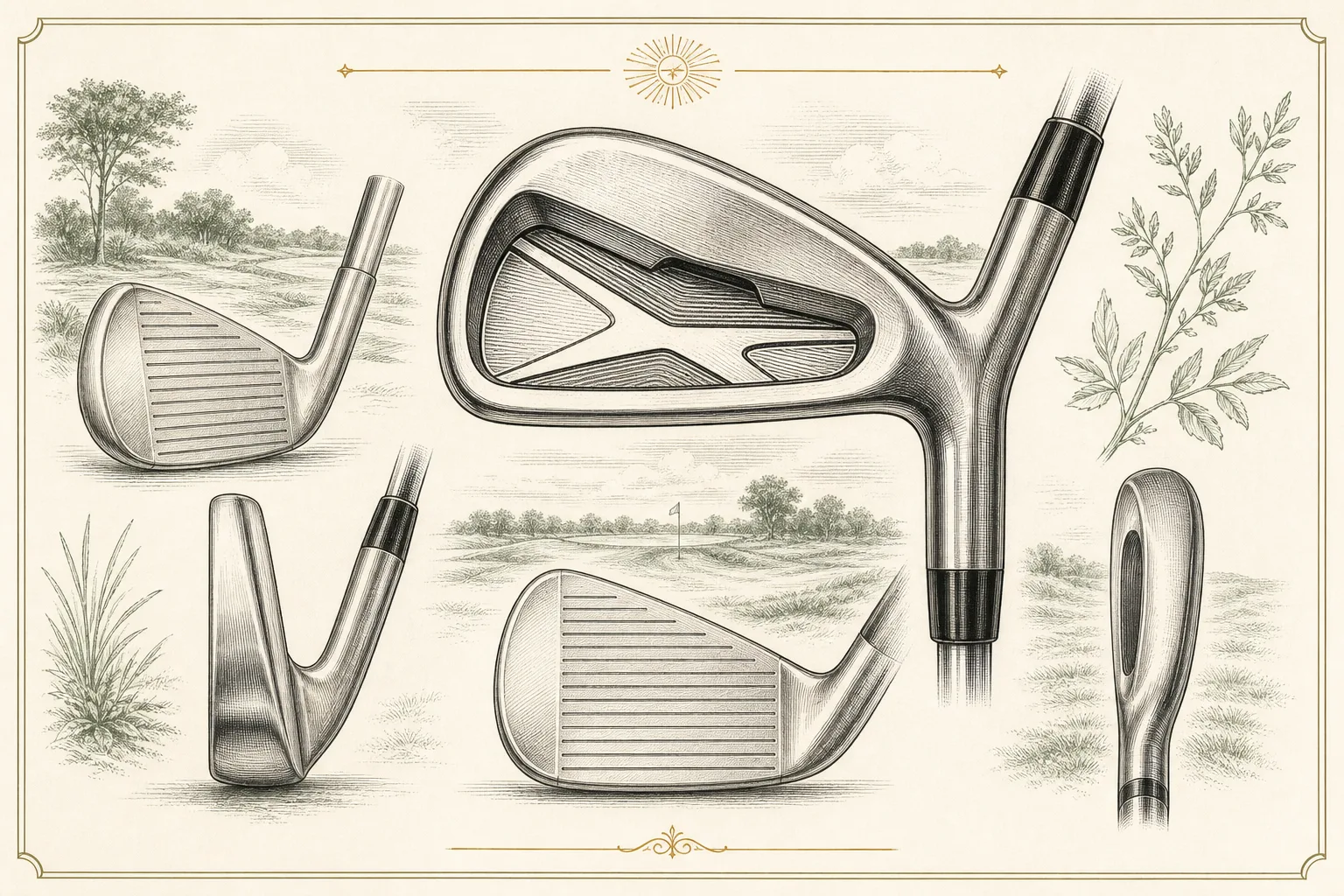
“Second-gen X Forged: forged carbon players cavity with a Tour-inspired thin topline, narrow sole and short blade plus Progressive Dual Notch Weighting. Prized for feel by strong ball-strikers.”
The 2009 X Forged sharpened the 2007 model into an even more tour-oriented shape after Callaway incorporated feedback from its own touring pros: more bounce and camber, a tighter sole radius, a thinner topline, narrower sole and shorter blade length. It kept the same forged soft-carbon construction and progressive CG philosophy but tightened tolerances for a purer players' shape. Reviewers found the feel and distance excellent for solid strikes, but flagged the head as slightly heavy - muting some of the pure forged feedback - and warned of severe distance loss on anything but a center-face hit. The verdict at the time was blunt: fantastic for a low single-digit handicapper, and 'for really good players only.'
No cult-classic case here - the club's own contemporaneous reviews gate-kept it to elite ball-strikers, which is the opposite of the broad, sustained forum-wide chase that defines a cult classic. It earns a fair 'notable' on the strength of a perfect small-sample user score (5/5 across 9 golfreview.com reviews) and consistently positive press, without inflating that into manufactured cult status.
Low single-digit handicappers and better with confident, repeatable ball-striking. Contemporary reviews were explicit that this is not for the golfer still working on consistency - a mid or high handicapper would be punished heavily by mis-hits and gain nothing over a modern iron in exchange.
Refined the 2007 X Forged on Callaway's roughly two-year iron-refresh cadence, competing against Titleist's 690.CB/MB and Mizuno's MP-63/64 and TaylorMade's Tour Preferred line of the same period. A modern equivalent is Callaway's own Apex MB or Apex CB.
The tightest, least forgiving of the two X Forged models: a shorter blade, narrower sole and thinner topline than the 2007 version, combined with reviewer-documented 'severe distance loss when the sweet spot is missed by even a fraction.' This is a demanding players iron built for players who rarely miss center, not one with meaningful forgiveness margin.
Calibrated across the whole catalog — a tour blade scores low here on purpose; it means control, not ease.
Comparable to the 2007 model: private-party complete sets run roughly $150-300 in 2026, single irons $15-35, with reconditioned-retail (2nd Swing) listings priced higher due to grading and warranty.
Reading is one thing — hitting is another. Book a bay and see the numbers for yourself before you buy anywhere.
“Second-gen X Forged: forged carbon players cavity with a Tour-inspired thin topline, narrow sole and short blade plus Progressive Dual Notch Weighting. Prized for feel by strong ball-strikers.”
The 2009 X Forged sharpened the 2007 model into an even more tour-oriented shape after Callaway incorporated feedback from its own touring pros: more bounce and camber, a tighter sole radius, a thinner topline, narrower sole and shorter blade length. It kept the same forged soft-carbon construction and progressive CG philosophy but tightened tolerances for a purer players' shape. Reviewers found the feel and distance excellent for solid strikes, but flagged the head as slightly heavy - muting some of the pure forged feedback - and warned of severe distance loss on anything but a center-face hit. The verdict at the time was blunt: fantastic for a low single-digit handicapper, and 'for really good players only.'
No cult-classic case here - the club's own contemporaneous reviews gate-kept it to elite ball-strikers, which is the opposite of the broad, sustained forum-wide chase that defines a cult classic. It earns a fair 'notable' on the strength of a perfect small-sample user score (5/5 across 9 golfreview.com reviews) and consistently positive press, without inflating that into manufactured cult status.
Low single-digit handicappers and better with confident, repeatable ball-striking. Contemporary reviews were explicit that this is not for the golfer still working on consistency - a mid or high handicapper would be punished heavily by mis-hits and gain nothing over a modern iron in exchange.
Refined the 2007 X Forged on Callaway's roughly two-year iron-refresh cadence, competing against Titleist's 690.CB/MB and Mizuno's MP-63/64 and TaylorMade's Tour Preferred line of the same period. A modern equivalent is Callaway's own Apex MB or Apex CB.
The tightest, least forgiving of the two X Forged models: a shorter blade, narrower sole and thinner topline than the 2007 version, combined with reviewer-documented 'severe distance loss when the sweet spot is missed by even a fraction.' This is a demanding players iron built for players who rarely miss center, not one with meaningful forgiveness margin.
Calibrated across the whole catalog — a tour blade scores low here on purpose; it means control, not ease.
Comparable to the 2007 model: private-party complete sets run roughly $150-300 in 2026, single irons $15-35, with reconditioned-retail (2nd Swing) listings priced higher due to grading and warranty.
Reading is one thing — hitting is another. Book a bay and see the numbers for yourself before you buy anywhere.