Hit 61 times in The Clubhouse
“Triple-Net-forged soft carbon steel players iron that Phil Mickelson gamed; compact, workable and buttery. A rung-3 players iron for skilled ball-strikers, available 3-PW.”
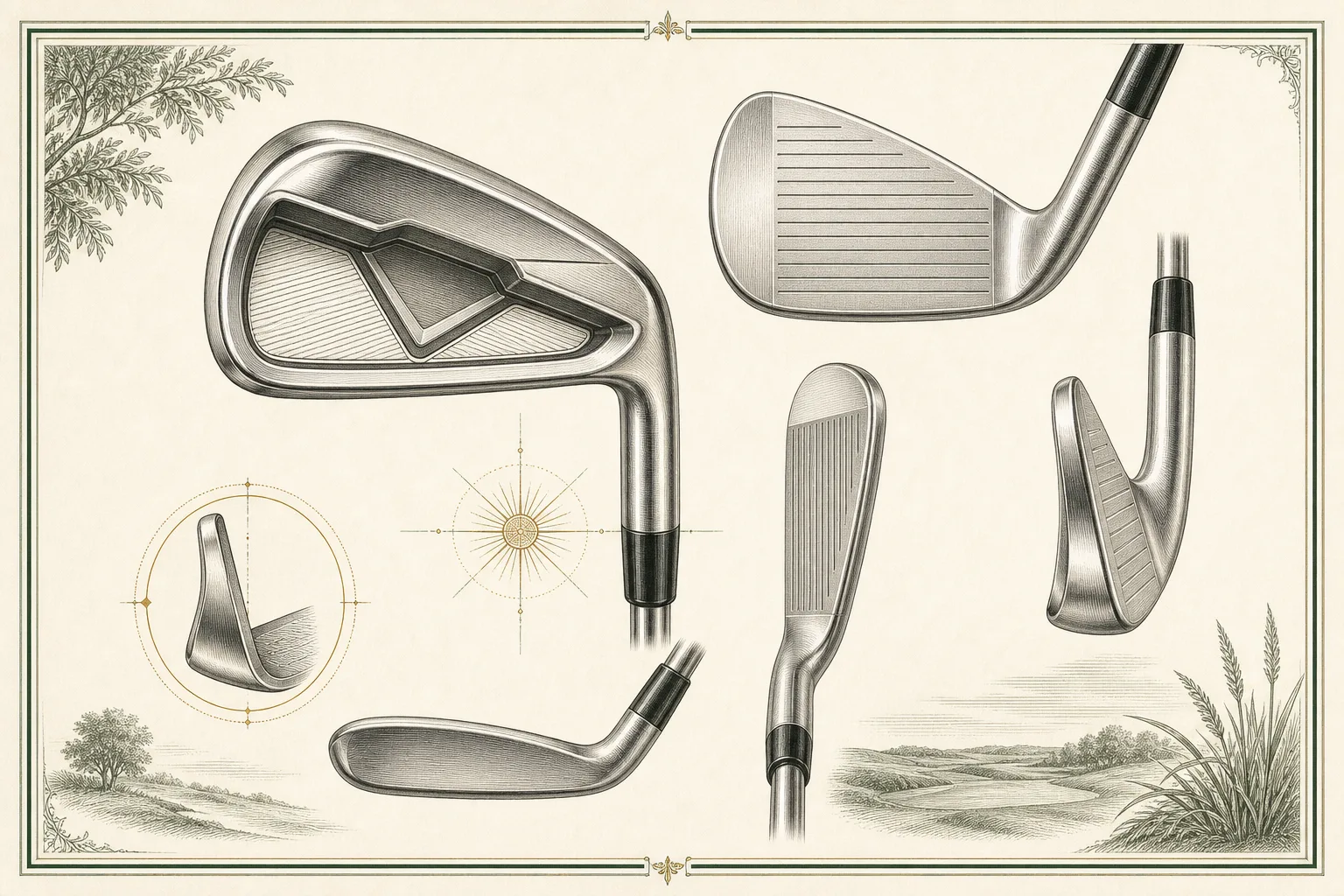
The 2013 X Forged was Callaway's better-player iron of that year, a compact carbon-steel cavity that sits deliberately between a muscleback blade and a true cavity-back. Its headline was manufacturing: a 'Triple Net Forging' process, championed by Callaway's chief wedge/short-game designer Roger Cleveland, that Callaway claimed held tolerances tighter than conventional forging allowed, enabling more aggressive, precise grooves. Progressive CG tuning put a lower center of gravity in the long irons to help them launch and a higher CG in the short irons to keep flight flat and controlled. The result was a genuinely handsome, buttery-soft, workable iron that better players and Callaway tour staff — most notably Phil Mickelson — actually gamed. Reviewers routinely called it one of the best-looking irons of its era.
Notable rather than cult: it is a well-regarded, tour-validated better-player iron (Phil Mickelson gamed and won with it, per Golf Digest/GolfWRX) that reviewers praised for looks and feel, and it anchors the X Forged line that Callaway carried forward. But it was produced in normal volume, is not scarce, and does not command the collector premium or hunt-it-down demand of a true cult classic — it is respected, not mythologized.
For low-handicap, consistent ball-strikers (roughly 0-8) with enough speed to launch a 21-degree 3-iron, who value shot-shaping, a compact address look and forged feel over raw distance or forgiveness. The stock stiff Project X PXi 6.0 steel underlines the better-player intent. A mid-to-high handicap should not buy this — a players-distance or GI iron will be far kinder and longer.
At launch it competed with Titleist's 712/714 CB and MB, Mizuno's MP-64/MP-4, TaylorMade's Tour Preferred MB/CB and Nike's VR Pro combos. Within Callaway it sat below the Apex Pro that followed in 2014 (Callaway said the Apex Pro launched higher and flew farther than the X Forged '13 via a 17%-thinner milled face) and was part of the X Forged lineage that continued in 2015/2018. A modern equivalent is a Callaway Apex TCB or Titleist T100.
Low, as befits a compact players' cavity that leans toward blade. It is more forgiving than the Apex MB blade thanks to a modest cavity and progressive CG that steadies the long irons, and reviewers noted a 'fairly decent-sized sweet spot' for the class — but the thin topline, minimal offset and small head punish thin and toe strikes with immediate lost distance and feel. A 4 means 'about as playable as a near-blade players' iron gets,' not 'easy to hit.'
Calibrated across the whole catalog — a tour blade scores low here on purpose; it means control, not ease.
A players' iron with modest but steady demand. Realistic 2026 private-party value for a complete forged set is roughly $150-300 depending on shaft, flex and groove wear, with clean sets on premium shafts at the top of that range. Dealer/reconditioned listings run higher but are graded/warrantied. Groove wear matters more here than on a GI iron because buyers want the spin.
Reading is one thing — hitting is another. Book a bay and see the numbers for yourself before you buy anywhere.
Hit 61 times in The Clubhouse
“Triple-Net-forged soft carbon steel players iron that Phil Mickelson gamed; compact, workable and buttery. A rung-3 players iron for skilled ball-strikers, available 3-PW.”
The 2013 X Forged was Callaway's better-player iron of that year, a compact carbon-steel cavity that sits deliberately between a muscleback blade and a true cavity-back. Its headline was manufacturing: a 'Triple Net Forging' process, championed by Callaway's chief wedge/short-game designer Roger Cleveland, that Callaway claimed held tolerances tighter than conventional forging allowed, enabling more aggressive, precise grooves. Progressive CG tuning put a lower center of gravity in the long irons to help them launch and a higher CG in the short irons to keep flight flat and controlled. The result was a genuinely handsome, buttery-soft, workable iron that better players and Callaway tour staff — most notably Phil Mickelson — actually gamed. Reviewers routinely called it one of the best-looking irons of its era.
Notable rather than cult: it is a well-regarded, tour-validated better-player iron (Phil Mickelson gamed and won with it, per Golf Digest/GolfWRX) that reviewers praised for looks and feel, and it anchors the X Forged line that Callaway carried forward. But it was produced in normal volume, is not scarce, and does not command the collector premium or hunt-it-down demand of a true cult classic — it is respected, not mythologized.
For low-handicap, consistent ball-strikers (roughly 0-8) with enough speed to launch a 21-degree 3-iron, who value shot-shaping, a compact address look and forged feel over raw distance or forgiveness. The stock stiff Project X PXi 6.0 steel underlines the better-player intent. A mid-to-high handicap should not buy this — a players-distance or GI iron will be far kinder and longer.
At launch it competed with Titleist's 712/714 CB and MB, Mizuno's MP-64/MP-4, TaylorMade's Tour Preferred MB/CB and Nike's VR Pro combos. Within Callaway it sat below the Apex Pro that followed in 2014 (Callaway said the Apex Pro launched higher and flew farther than the X Forged '13 via a 17%-thinner milled face) and was part of the X Forged lineage that continued in 2015/2018. A modern equivalent is a Callaway Apex TCB or Titleist T100.
Low, as befits a compact players' cavity that leans toward blade. It is more forgiving than the Apex MB blade thanks to a modest cavity and progressive CG that steadies the long irons, and reviewers noted a 'fairly decent-sized sweet spot' for the class — but the thin topline, minimal offset and small head punish thin and toe strikes with immediate lost distance and feel. A 4 means 'about as playable as a near-blade players' iron gets,' not 'easy to hit.'
Calibrated across the whole catalog — a tour blade scores low here on purpose; it means control, not ease.
A players' iron with modest but steady demand. Realistic 2026 private-party value for a complete forged set is roughly $150-300 depending on shaft, flex and groove wear, with clean sets on premium shafts at the top of that range. Dealer/reconditioned listings run higher but are graded/warrantied. Groove wear matters more here than on a GI iron because buyers want the spin.
Reading is one thing — hitting is another. Book a bay and see the numbers for yourself before you buy anywhere.