“Callaway's first X Forged: single-piece 1020 forged players cavity with flighted CG, minimal offset and thin topline; made Phil Mickelson's bag. For skilled ball-strikers who want feel and workability.”
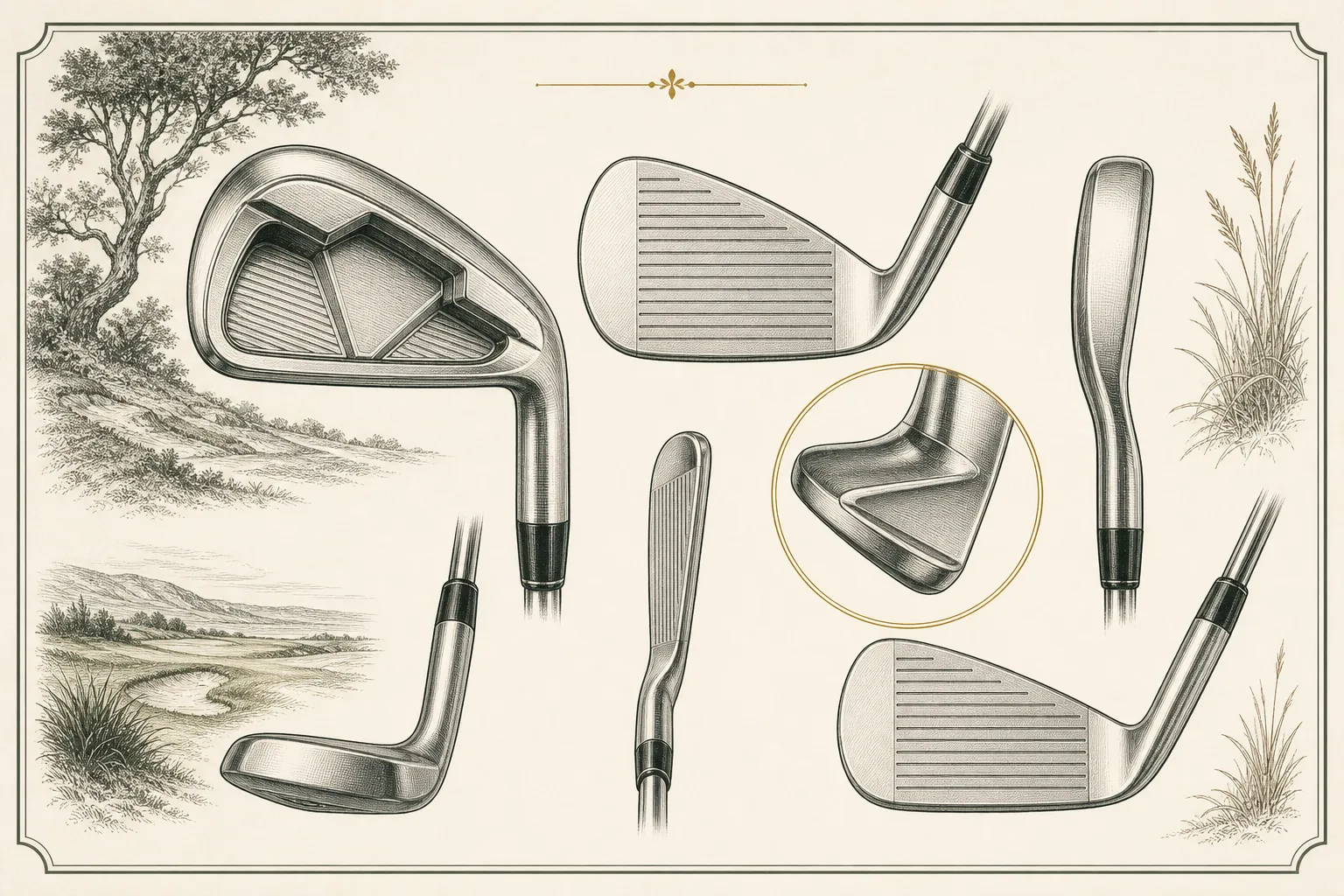
The 2007 X Forged was Callaway's players' iron for golfers who wanted a forged head with a bit more help than a blade. Forged from 1020 soft carbon steel by Endo in Japan, it carried the thinnest topline and narrowest sole in Callaway's iron line at the time, with a 'Notch Back' cut into the cavity to pull weight toward the face for workability while adding some stability over a pure muscle-back. A Flighted CG design set the center of gravity lower in the long irons and progressively higher through the short irons for trajectory and distance control. Reviewers called it 'sleek better-players clubs' that stayed forgiving enough for a low-mid handicapper willing to trade some ease for feel and shape control.
No documented cult following - a single GolfWRX forum post from an owner who couldn't replace his 20-year-old X Forged set is genuine but is one anecdote, not the corroborated, multi-source reverence a cult classic needs. What is well-documented is solid, consistent praise from independent reviewers at launch as a legitimately good forged players iron - that is a fair, honest 'notable,' not a manufactured cult story.
Low-to-mid handicap ball-strikers (roughly 0-10) wanting classic forged feel and workability from a 2007-era players iron. Not a fit for high handicappers seeking help getting the ball airborne or forgiving mis-hits - a game-improvement iron of the same vintage, or any modern iron, will serve that golfer far better.
Launched the same period Callaway's tour-only X Prototype irons were in play with Ernie Els and Phil Mickelson (Els won the 2008 Honda Classic gaming X Prototype irons, a related but distinct model from this retail X Forged). Competed against Titleist's 606/690 series and Mizuno's MP-32/MP-60 in the players-iron market. Replaced by the redesigned X Forged (2009) two years later. A modern equivalent is Callaway's own Apex Pro or Apex CB.
The Notch Back cavity gives it a touch more stability than a true blade, but the thin topline, narrow sole, minimal offset and compact blade length mean center-face contact is still required to get full distance and a clean feel. It sits closer to a blade than a cavity on the forgiveness spectrum of its own era.
Calibrated across the whole catalog — a tour blade scores low here on purpose; it means control, not ease.
Realistic private-party value for a complete 3-PW set in 2026 is roughly $150-300 depending on shaft and condition; single irons trade for $15-30. Reconditioned-retail listings (2nd Swing, Golf Avenue) run noticeably higher, closer to $250-400, reflecting graded/warrantied store pricing rather than open-market value. Original retail was around $999 per set with premium steel.
Reading is one thing — hitting is another. Book a bay and see the numbers for yourself before you buy anywhere.
“Callaway's first X Forged: single-piece 1020 forged players cavity with flighted CG, minimal offset and thin topline; made Phil Mickelson's bag. For skilled ball-strikers who want feel and workability.”
The 2007 X Forged was Callaway's players' iron for golfers who wanted a forged head with a bit more help than a blade. Forged from 1020 soft carbon steel by Endo in Japan, it carried the thinnest topline and narrowest sole in Callaway's iron line at the time, with a 'Notch Back' cut into the cavity to pull weight toward the face for workability while adding some stability over a pure muscle-back. A Flighted CG design set the center of gravity lower in the long irons and progressively higher through the short irons for trajectory and distance control. Reviewers called it 'sleek better-players clubs' that stayed forgiving enough for a low-mid handicapper willing to trade some ease for feel and shape control.
No documented cult following - a single GolfWRX forum post from an owner who couldn't replace his 20-year-old X Forged set is genuine but is one anecdote, not the corroborated, multi-source reverence a cult classic needs. What is well-documented is solid, consistent praise from independent reviewers at launch as a legitimately good forged players iron - that is a fair, honest 'notable,' not a manufactured cult story.
Low-to-mid handicap ball-strikers (roughly 0-10) wanting classic forged feel and workability from a 2007-era players iron. Not a fit for high handicappers seeking help getting the ball airborne or forgiving mis-hits - a game-improvement iron of the same vintage, or any modern iron, will serve that golfer far better.
Launched the same period Callaway's tour-only X Prototype irons were in play with Ernie Els and Phil Mickelson (Els won the 2008 Honda Classic gaming X Prototype irons, a related but distinct model from this retail X Forged). Competed against Titleist's 606/690 series and Mizuno's MP-32/MP-60 in the players-iron market. Replaced by the redesigned X Forged (2009) two years later. A modern equivalent is Callaway's own Apex Pro or Apex CB.
The Notch Back cavity gives it a touch more stability than a true blade, but the thin topline, narrow sole, minimal offset and compact blade length mean center-face contact is still required to get full distance and a clean feel. It sits closer to a blade than a cavity on the forgiveness spectrum of its own era.
Calibrated across the whole catalog — a tour blade scores low here on purpose; it means control, not ease.
Realistic private-party value for a complete 3-PW set in 2026 is roughly $150-300 depending on shaft and condition; single irons trade for $15-30. Reconditioned-retail listings (2nd Swing, Golf Avenue) run noticeably higher, closer to $250-400, reflecting graded/warrantied store pricing rather than open-market value. Original retail was around $999 per set with premium steel.
Reading is one thing — hitting is another. Book a bay and see the numbers for yourself before you buy anywhere.