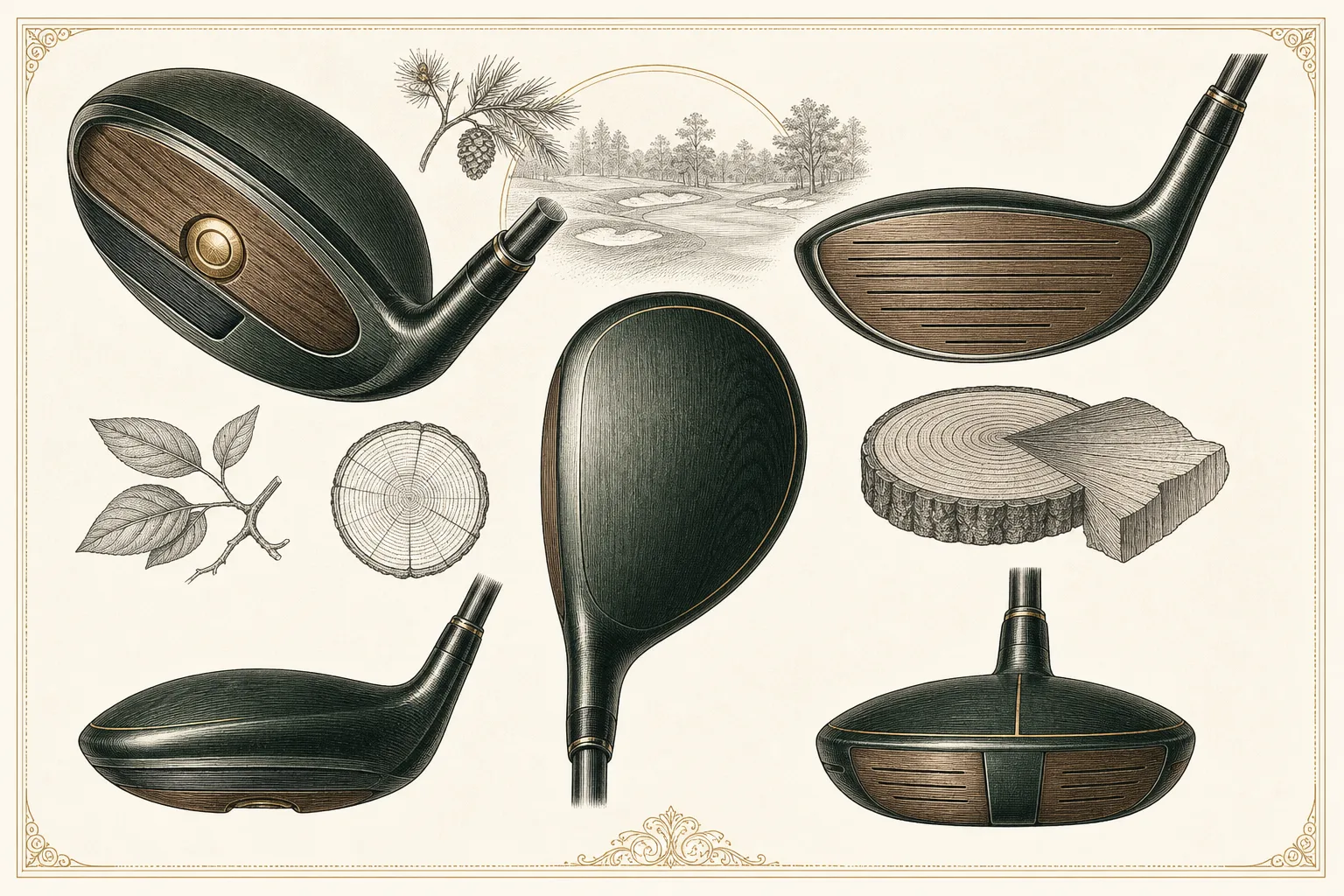
“Haywood fairway - versatile launch and playability. Rung-standard.”
Haywood Golf is a small Vancouver-founded direct-to-consumer brand started in 2018 after founder Josh Haywood balked at paying $700 for three wedges at a big-box retailer; the company builds every club to order rather than dropshipping, cutting out retail markup. Its fairway wood (3/5/7) pairs a carbon-fiber crown with an S450 stainless steel face and a 17-4 stainless body, adding a 15-gram back weight to push MOI up, and ships with an adjustable hosel — a multi-material recipe more associated with major-brand price points than a DTC upstart's.
It punches above its brand recognition: MyGolfSpy's independent 2024 fairway wood test (the only rigorous third-party numbers available on this club) had it post the tightest standard deviations in the field for forgiveness — beating clubs from major manufacturers on that specific metric — despite Haywood being a tiny outside-the-big-five brand most golfers have never heard of.
Fits a golfer who values mishit consistency and is comfortable buying direct from a small brand without in-store fitting or a big-box return network; the adjustable hosel lets it be tuned in rather than bought exact off the rack. A golfer chasing maximum carry distance, or one who wants to try before buying in person, is better served by a major-brand fairway with wider retail/demo availability.
As a small-batch, built-to-order DTC product, there is essentially no secondary/used market to speak of — it isn't a volume club that shows up regularly on eBay or 2nd Swing. Buyers overwhelmingly purchase new direct from haywoodgolf.com, where the fairway wood competes on price against major-brand new-release fairways.
Entered a fairway-wood market in 2022 dominated by TaylorMade, Callaway, Titleist, Ping, and Cobra's annual releases, competing purely on a DTC price/quality argument rather than tour presence or marketing scale. There is no direct 'successor' model in the traditional sense since Haywood iterates its DTC lineup continuously rather than running annual product cycles like the majors.
MyGolfSpy's testing found it delivered the most consistent (tightest-dispersion) ball speed, carry distance, and spin numbers of the fairway woods in that test class, a genuinely strong forgiveness result driven by the 15g back weight raising MOI. The tradeoff noted in the same test: its average carry distance and overall accuracy were below the field average, so the consistency does not translate into extra length.
Calibrated across the whole catalog — a tour blade scores low here on purpose; it means control, not ease.
Reading is one thing — hitting is another. Book a bay and see the numbers for yourself before you buy anywhere.