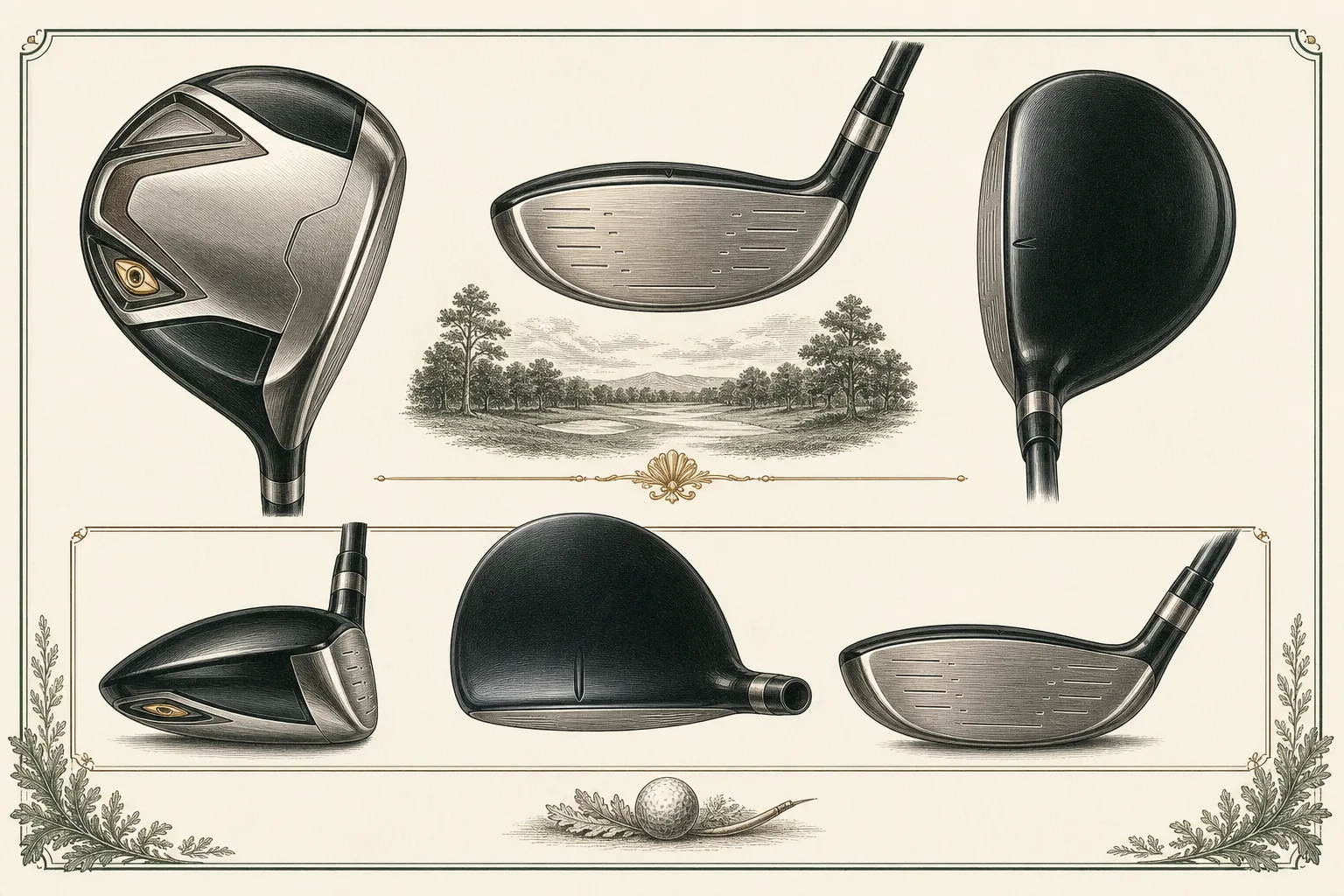
“Two-piece stainless design with internal weighting for a low CG, high launch, and draw bias - built to be easy. Launched at $199.99, RH only. Rung-1.”
The JPX-800 fairway wood arrived in 2011 as Mizuno's game-improvement answer built around 'Hot Metal' Ultimate Dynamic Stability (U.D.S.) technology, replacing the MX-700 with a thinner, hotter 1770 stainless maraging steel face and internal weighting tuned for a low CG, high launch, and a built-in draw bias. It was designed to widen Mizuno's appeal beyond its traditional better-player forged-iron reputation into a genuinely mass-market, easy-to-hit fairway wood, and reviewers credited it with meaningfully faster ball speed and more distance than its predecessor.
It was a solid, well-liked release in its own moment but generated no lasting cult following — it was superseded by the JPX-825 fairway just two years later as part of Mizuno's normal product cycle, and it exists today only as an inexpensive, plentiful used club with no collector interest.
Suits mid-to-high handicap golfers wanting an easy-launching, draw-biased fairway wood at a bargain used price today. Better players wanting a compact, low-launch shape for shot-shaping, or anyone chasing modern ball speeds, should look to a current Mizuno ST-series or similar fairway wood instead — 15 years of face and material advances have moved the ceiling well past the JPX-800.
Launched into a 2011 fairway-wood field alongside TaylorMade's RocketBallz-era predecessors, Callaway's RAZR/Diablo lines, and Titleist's 909/910 fairways; it directly replaced Mizuno's MX-700 and was itself replaced by the JPX-825 in 2013. A modern equivalent within Mizuno's current range is the ST-Z or ST-X fairway wood, sharing the same forgiveness-first brief with contemporary materials.
The U.D.S. technology is specifically engineered to maximize both horizontal and vertical moment of inertia, meaning off-center hits above, below, or toward the heel/toe of the face retain distance and stability far better than a traditional two-piece design — reviewers explicitly praised the forgiveness gain over the preceding MX-700.
Calibrated across the whole catalog — a tour blade scores low here on purpose; it means control, not ease.
As a roughly 15-year-old discontinued Mizuno GI fairway, realistic 2026 private-party prices run about $35–$70 on eBay and Golfbidder for a clean example with the stock graphite shaft — normal depreciation for a mainstream fairway wood of this age with no collector premium.
Reading is one thing — hitting is another. Book a bay and see the numbers for yourself before you buy anywhere.
“Two-piece stainless design with internal weighting for a low CG, high launch, and draw bias - built to be easy. Launched at $199.99, RH only. Rung-1.”
The JPX-800 fairway wood arrived in 2011 as Mizuno's game-improvement answer built around 'Hot Metal' Ultimate Dynamic Stability (U.D.S.) technology, replacing the MX-700 with a thinner, hotter 1770 stainless maraging steel face and internal weighting tuned for a low CG, high launch, and a built-in draw bias. It was designed to widen Mizuno's appeal beyond its traditional better-player forged-iron reputation into a genuinely mass-market, easy-to-hit fairway wood, and reviewers credited it with meaningfully faster ball speed and more distance than its predecessor.
It was a solid, well-liked release in its own moment but generated no lasting cult following — it was superseded by the JPX-825 fairway just two years later as part of Mizuno's normal product cycle, and it exists today only as an inexpensive, plentiful used club with no collector interest.
Suits mid-to-high handicap golfers wanting an easy-launching, draw-biased fairway wood at a bargain used price today. Better players wanting a compact, low-launch shape for shot-shaping, or anyone chasing modern ball speeds, should look to a current Mizuno ST-series or similar fairway wood instead — 15 years of face and material advances have moved the ceiling well past the JPX-800.
Launched into a 2011 fairway-wood field alongside TaylorMade's RocketBallz-era predecessors, Callaway's RAZR/Diablo lines, and Titleist's 909/910 fairways; it directly replaced Mizuno's MX-700 and was itself replaced by the JPX-825 in 2013. A modern equivalent within Mizuno's current range is the ST-Z or ST-X fairway wood, sharing the same forgiveness-first brief with contemporary materials.
The U.D.S. technology is specifically engineered to maximize both horizontal and vertical moment of inertia, meaning off-center hits above, below, or toward the heel/toe of the face retain distance and stability far better than a traditional two-piece design — reviewers explicitly praised the forgiveness gain over the preceding MX-700.
Calibrated across the whole catalog — a tour blade scores low here on purpose; it means control, not ease.
As a roughly 15-year-old discontinued Mizuno GI fairway, realistic 2026 private-party prices run about $35–$70 on eBay and Golfbidder for a clean example with the stock graphite shaft — normal depreciation for a mainstream fairway wood of this age with no collector premium.
Reading is one thing — hitting is another. Book a bay and see the numbers for yourself before you buy anywhere.