“Continuation of the forgiving JPX metalwood fairway concept. Rung-1.”
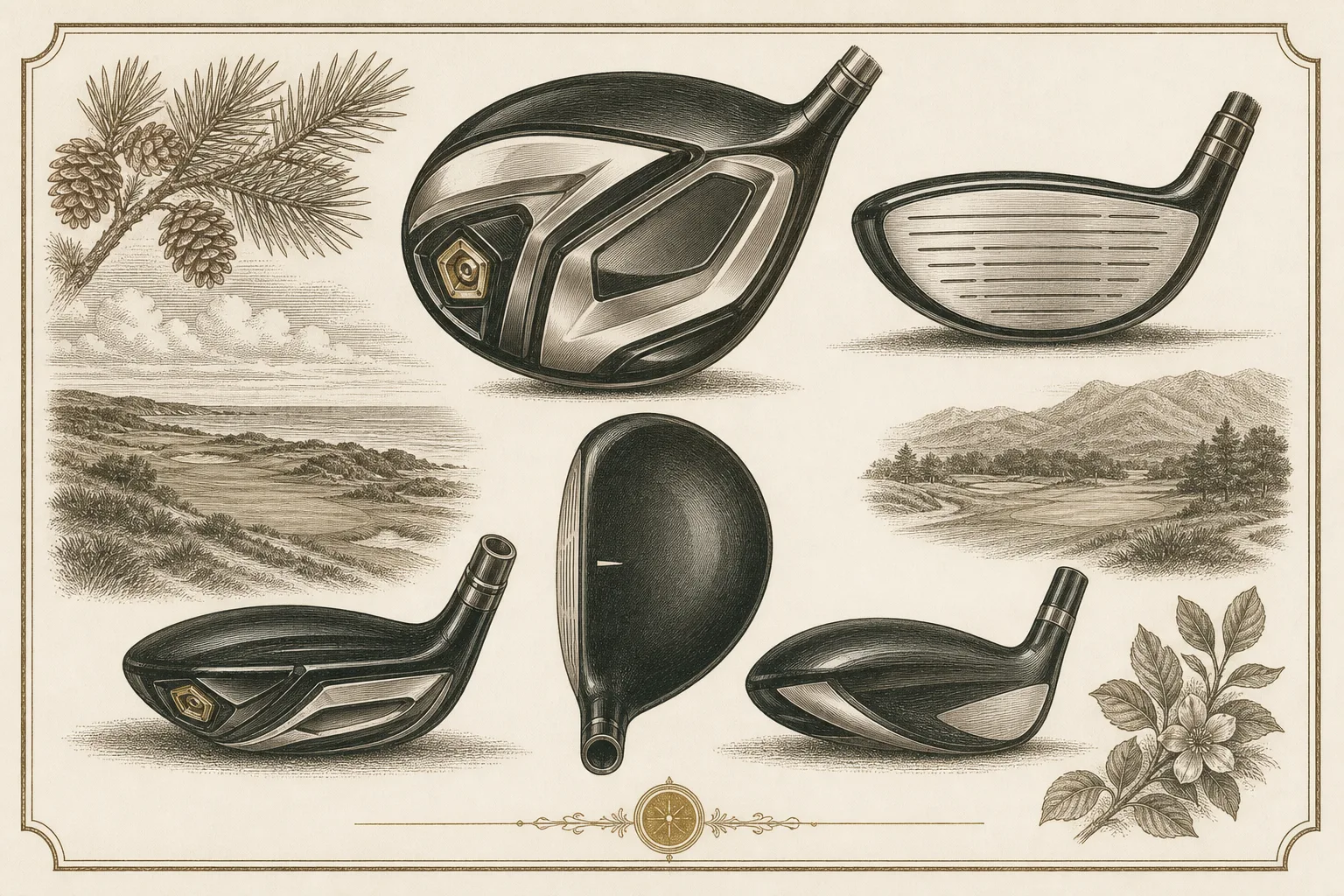
The JPX-825 fairway wood arrived in 2013 as the direct successor to the JPX-800, wrapped in a distinctive black IP finish and built around an L-shaped, multi-thickness maraging steel face designed to trampoline near the USGA/R&A maximum COR limit. Deep internal weighting and a thin crown over a thicker stainless body kept the CG low for a high, stable ball flight, while a square face angle and 'Speed Bevel' sole shape were tuned for cleaner turf interaction, and Mizuno's 'Harmonic Impact Technology' aimed to give it a smoother, more solid sound and feel than the outgoing JPX-800.
It earned genuinely favorable reviews for feel and forgiveness and appealed to a wider handicap range than Mizuno's typical better-player reputation would suggest, but it has no cult following or lasting scarcity — it was itself replaced within a couple of product cycles and today is simply a cheap, plentiful used fairway wood.
Fits a wide range from mid-handicap golfers wanting an easy, high-launching fairway wood to lower-handicap players who liked its solid feel and workability — reviewers noted it performed well across that spread. A buyer specifically wanting a pristine black finish should be aware the black PVD/IP coating was reported to wear off the leading edge and sole with limited use, a cosmetic rather than performance issue.
Released in 2013 alongside Mizuno's JPX-825 driver, irons, and hybrids, competing against TaylorMade's SLDR-era and Callaway's X2 Hot fairway woods of that season; it replaced the JPX-800 and was itself succeeded by later JPX-850/900-series fairways. A modern equivalent within Mizuno's current range is the ST-Z or ST-X fairway wood, built on the same forgiveness-with-feel brief.
The square face angle plus internal weighting was explicitly built for stability on mishits, and reviewers noted it performed well enough for single-digit handicaps while still being easy enough for mid-handicappers — a genuinely broad forgiveness window for its category, aided by the deep, low CG from the internal weight placement.
Calibrated across the whole catalog — a tour blade scores low here on purpose; it means control, not ease.
As a roughly 12-13-year-old discontinued Mizuno fairway wood, realistic 2026 private-party prices run about $45–$85 on eBay and Golf Avenue for a clean example with the stock shaft — normal depreciation, with worn black-finish examples trading at the lower end of that range.
Reading is one thing — hitting is another. Book a bay and see the numbers for yourself before you buy anywhere.
“Continuation of the forgiving JPX metalwood fairway concept. Rung-1.”
The JPX-825 fairway wood arrived in 2013 as the direct successor to the JPX-800, wrapped in a distinctive black IP finish and built around an L-shaped, multi-thickness maraging steel face designed to trampoline near the USGA/R&A maximum COR limit. Deep internal weighting and a thin crown over a thicker stainless body kept the CG low for a high, stable ball flight, while a square face angle and 'Speed Bevel' sole shape were tuned for cleaner turf interaction, and Mizuno's 'Harmonic Impact Technology' aimed to give it a smoother, more solid sound and feel than the outgoing JPX-800.
It earned genuinely favorable reviews for feel and forgiveness and appealed to a wider handicap range than Mizuno's typical better-player reputation would suggest, but it has no cult following or lasting scarcity — it was itself replaced within a couple of product cycles and today is simply a cheap, plentiful used fairway wood.
Fits a wide range from mid-handicap golfers wanting an easy, high-launching fairway wood to lower-handicap players who liked its solid feel and workability — reviewers noted it performed well across that spread. A buyer specifically wanting a pristine black finish should be aware the black PVD/IP coating was reported to wear off the leading edge and sole with limited use, a cosmetic rather than performance issue.
Released in 2013 alongside Mizuno's JPX-825 driver, irons, and hybrids, competing against TaylorMade's SLDR-era and Callaway's X2 Hot fairway woods of that season; it replaced the JPX-800 and was itself succeeded by later JPX-850/900-series fairways. A modern equivalent within Mizuno's current range is the ST-Z or ST-X fairway wood, built on the same forgiveness-with-feel brief.
The square face angle plus internal weighting was explicitly built for stability on mishits, and reviewers noted it performed well enough for single-digit handicaps while still being easy enough for mid-handicappers — a genuinely broad forgiveness window for its category, aided by the deep, low CG from the internal weight placement.
Calibrated across the whole catalog — a tour blade scores low here on purpose; it means control, not ease.
As a roughly 12-13-year-old discontinued Mizuno fairway wood, realistic 2026 private-party prices run about $45–$85 on eBay and Golf Avenue for a clean example with the stock shaft — normal depreciation, with worn black-finish examples trading at the lower end of that range.
Reading is one thing — hitting is another. Book a bay and see the numbers for yourself before you buy anywhere.