“First hybrid to carry Jailbreak bars — a real technology step over the XR/X2 Hot generation, and still a very buyable standard-rung used club today.”
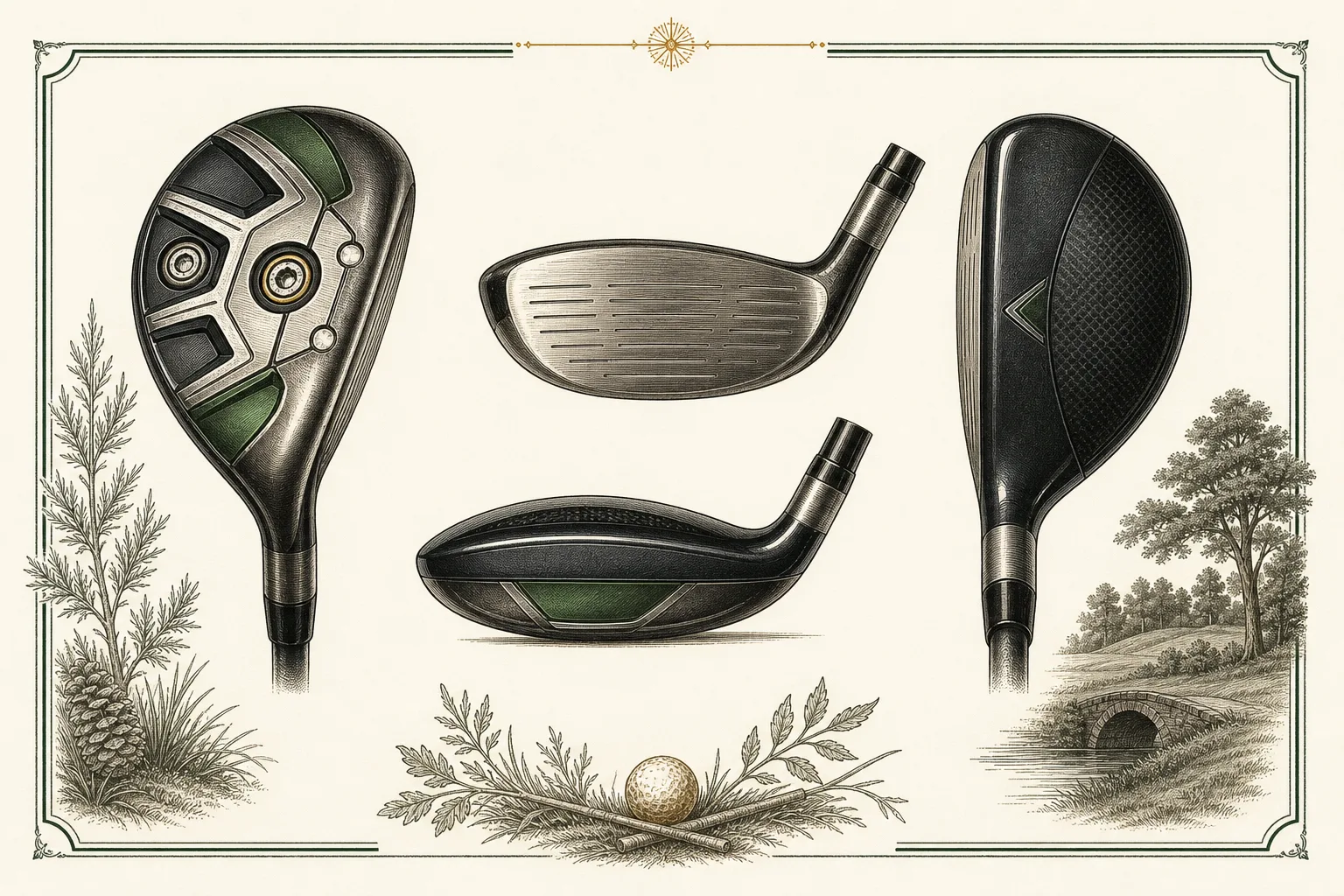
Callaway's Epic Hybrid went on sale June 9, 2017 alongside the new Epic and Epic Pro irons, priced at $280 per The Golf News Net's contemporary launch preview (retailer listings elsewhere cite $250). It borrowed triaxial-carbon crown technology from the Great Big Bertha Epic driver, thinning the crown to just 5 grams and pushing the freed-up weight into a tungsten-loaded 'Standing Wave' plug adapted from the Epic irons for a lower center of gravity; the face was a forged 455-steel 'Hyper Speed Face Cup' with a thinner, more flexible perimeter hinge for ball speed. Reviewers (Golfalot, Plugged In Golf) praised it as long and easy to launch, more compact at address than Callaway's prior Steelhead XR hybrid, and capable of driver-like smash factors. What it is often mistakenly credited with is Jailbreak bar technology and an Exo-Cage: golf.com's coverage of the following year's lineup explicitly credits the 2018 Rogue hybrids as the first Callaway hybrids built with Jailbreak, and the Exo-Cage name Callaway used in 2017 belonged to that year's Epic irons, not the hybrid. It replaced the Steelhead XR hybrid (itself a replacement for the X2 Hot hybrid, which Callaway said had a 46% higher center of gravity and 8% less MOI than the XR) and was superseded in Callaway's own line by the Epic Flash Hybrid in 2019, which did add Jailbreak alongside Flash Face.
Solid, well-reviewed technology (a genuine triaxial-carbon crown, forged Face Cup, tungsten Standing Wave weighting) and a spot in Callaway's most commercially successful modern product family gave it real credibility at launch, but there's no forum scarcity, tour-pro attachment, or lasting collector chatter around this specific hybrid the way there is around, say, the ERC lineage — a well-regarded tool that faded once replaced, not an object of ongoing devotion.
A good fit for mid-to-low handicappers wanting a hybrid that looks and feels closer to a fairway wood than a rescue club, and for anyone re-configuring the top of a set who wants serious ball speed with real forgiveness; less ideal for high-handicap golfers who want the largest, most confidence-inspiring hybrid head Callaway made in this era, since the Epic Hybrid's more compact profile trades some visual forgiveness for a better-player look.
Arrived as the hybrid companion to Callaway's breakout 2017 Epic driver and fairway wood, replacing the Steelhead XR hybrid (which itself had replaced the X2 Hot hybrid a couple of years earlier); it competed against TaylorMade's M1/M2 Rescue and Titleist's 816/818 hybrids, and was itself replaced within the Callaway line by the Epic Flash Hybrid in 2019, which is where Callaway actually introduced Jailbreak bar technology into its hybrids.
The tungsten Standing Wave weighting and thin, flexible Face Cup keep ball speed high and launch consistent even on thin strikes, per Plugged In Golf's testing; Golfalot noted it sits more compact at address than the outgoing Steelhead XR, which trades a touch of outright forgiveness for a shape better players find easier to trust over the ball.
Calibrated across the whole catalog — a tour blade scores low here on purpose; it means control, not ease.
GlobalGolf currently lists a used Epic Hybrid in Very Good condition at $109.99, down from its original $250-$280 retail; realistic private-party sales (Facebook Marketplace, eBay, forum classifieds) for a well-worn example typically land somewhat below that graded-retailer price, roughly $60-$90.
Reading is one thing — hitting is another. Book a bay and see the numbers for yourself before you buy anywhere.
“First hybrid to carry Jailbreak bars — a real technology step over the XR/X2 Hot generation, and still a very buyable standard-rung used club today.”
Callaway's Epic Hybrid went on sale June 9, 2017 alongside the new Epic and Epic Pro irons, priced at $280 per The Golf News Net's contemporary launch preview (retailer listings elsewhere cite $250). It borrowed triaxial-carbon crown technology from the Great Big Bertha Epic driver, thinning the crown to just 5 grams and pushing the freed-up weight into a tungsten-loaded 'Standing Wave' plug adapted from the Epic irons for a lower center of gravity; the face was a forged 455-steel 'Hyper Speed Face Cup' with a thinner, more flexible perimeter hinge for ball speed. Reviewers (Golfalot, Plugged In Golf) praised it as long and easy to launch, more compact at address than Callaway's prior Steelhead XR hybrid, and capable of driver-like smash factors. What it is often mistakenly credited with is Jailbreak bar technology and an Exo-Cage: golf.com's coverage of the following year's lineup explicitly credits the 2018 Rogue hybrids as the first Callaway hybrids built with Jailbreak, and the Exo-Cage name Callaway used in 2017 belonged to that year's Epic irons, not the hybrid. It replaced the Steelhead XR hybrid (itself a replacement for the X2 Hot hybrid, which Callaway said had a 46% higher center of gravity and 8% less MOI than the XR) and was superseded in Callaway's own line by the Epic Flash Hybrid in 2019, which did add Jailbreak alongside Flash Face.
Solid, well-reviewed technology (a genuine triaxial-carbon crown, forged Face Cup, tungsten Standing Wave weighting) and a spot in Callaway's most commercially successful modern product family gave it real credibility at launch, but there's no forum scarcity, tour-pro attachment, or lasting collector chatter around this specific hybrid the way there is around, say, the ERC lineage — a well-regarded tool that faded once replaced, not an object of ongoing devotion.
A good fit for mid-to-low handicappers wanting a hybrid that looks and feels closer to a fairway wood than a rescue club, and for anyone re-configuring the top of a set who wants serious ball speed with real forgiveness; less ideal for high-handicap golfers who want the largest, most confidence-inspiring hybrid head Callaway made in this era, since the Epic Hybrid's more compact profile trades some visual forgiveness for a better-player look.
Arrived as the hybrid companion to Callaway's breakout 2017 Epic driver and fairway wood, replacing the Steelhead XR hybrid (which itself had replaced the X2 Hot hybrid a couple of years earlier); it competed against TaylorMade's M1/M2 Rescue and Titleist's 816/818 hybrids, and was itself replaced within the Callaway line by the Epic Flash Hybrid in 2019, which is where Callaway actually introduced Jailbreak bar technology into its hybrids.
The tungsten Standing Wave weighting and thin, flexible Face Cup keep ball speed high and launch consistent even on thin strikes, per Plugged In Golf's testing; Golfalot noted it sits more compact at address than the outgoing Steelhead XR, which trades a touch of outright forgiveness for a shape better players find easier to trust over the ball.
Calibrated across the whole catalog — a tour blade scores low here on purpose; it means control, not ease.
GlobalGolf currently lists a used Epic Hybrid in Very Good condition at $109.99, down from its original $250-$280 retail; realistic private-party sales (Facebook Marketplace, eBay, forum classifieds) for a well-worn example typically land somewhat below that graded-retailer price, roughly $60-$90.
Reading is one thing — hitting is another. Book a bay and see the numbers for yourself before you buy anywhere.