“Sold as deep as a 9-wood ('Divine Nine') — the DNA of every later Callaway high-lofted fairway family traces back here, but the head and shaft are 20+ years stale now.”
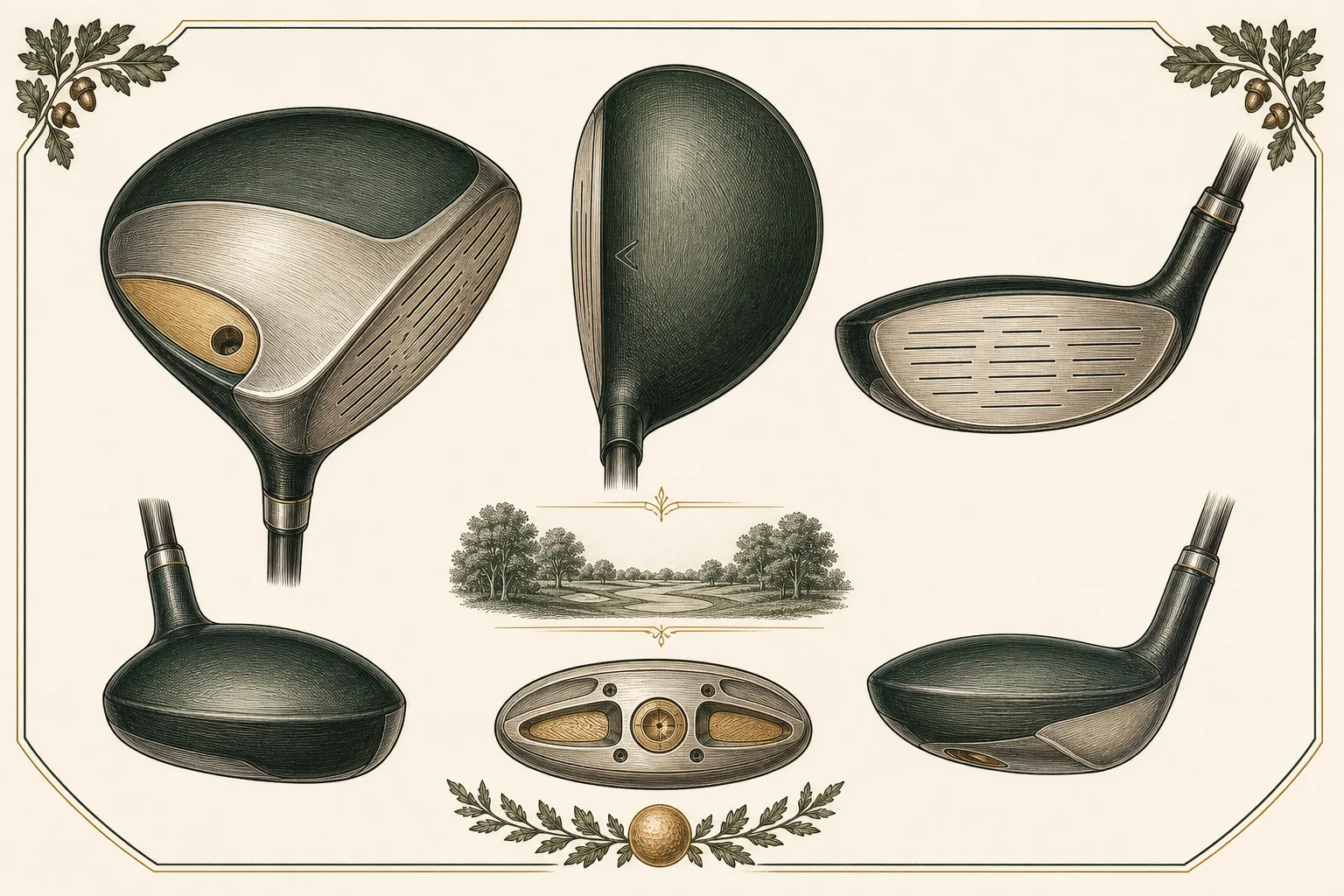
Introduced in October 2000, the Hawk Eye VFT fairway wood paired a cast-titanium head with Callaway's Variable Face Thickness (VFT) technology -- a face that tapers from thickest at the center to thinnest toward the perimeter, engineered to push the Coefficient of Restitution (COR) right up against the USGA's performance limit. Titanium construction let Callaway build a larger, thinner-faced head than the steel Steelhead Plus it succeeded, chasing more ball speed and forgiveness on off-center strikes. A separate Hawk Eye VFT Pro Series, aimed at better players, followed in April 2001 with a more compact profile.
A well-regarded, high-volume Callaway release of its era (3.8/5 across 45 user reviews on golfreview.com) but no lasting cult reputation or scarcity developed; it was one entry in Callaway's rapid titanium-wood product churn of the early 2000s and was replaced within a couple of years.
Fits nostalgic buyers or budget players wanting a cheap, easy-launching titanium fairway wood; its lofts and shaft technology are two-plus decades behind current offerings, so anyone prioritizing modern distance or turf interaction should buy new. Better players of the era were steered instead to the Pro Series version's narrower profile.
Launched into the early-2000s titanium fairway wood arms race against TaylorMade's original Rescue-era woods and Titleist's 975F, and it replaced Callaway's steel Steelhead Plus as the flagship fairway metal. It was itself soon replaced by later Callaway ERC and Great Big Bertha titanium woods; a modern equivalent is the Callaway Paradym fairway wood.
The titanium head and VFT face were built specifically to widen the effective hitting area versus the steel Steelhead line, so mis-hits toward the perimeter retain more ball speed than earlier steel Big Berthas; it is not a max-forgiveness modern design, but it was forgiving for a 2000-era titanium fairway wood.
Calibrated across the whole catalog — a tour blade scores low here on purpose; it means control, not ease.
Holds essentially no collector value in 2026 -- used listings run from roughly $15 up to $150-plus depending on condition and shaft, reflecting a 25-year-old titanium wood bought mainly by budget or nostalgic buyers rather than collectors.
Reading is one thing — hitting is another. Book a bay and see the numbers for yourself before you buy anywhere.
“Sold as deep as a 9-wood ('Divine Nine') — the DNA of every later Callaway high-lofted fairway family traces back here, but the head and shaft are 20+ years stale now.”
Introduced in October 2000, the Hawk Eye VFT fairway wood paired a cast-titanium head with Callaway's Variable Face Thickness (VFT) technology -- a face that tapers from thickest at the center to thinnest toward the perimeter, engineered to push the Coefficient of Restitution (COR) right up against the USGA's performance limit. Titanium construction let Callaway build a larger, thinner-faced head than the steel Steelhead Plus it succeeded, chasing more ball speed and forgiveness on off-center strikes. A separate Hawk Eye VFT Pro Series, aimed at better players, followed in April 2001 with a more compact profile.
A well-regarded, high-volume Callaway release of its era (3.8/5 across 45 user reviews on golfreview.com) but no lasting cult reputation or scarcity developed; it was one entry in Callaway's rapid titanium-wood product churn of the early 2000s and was replaced within a couple of years.
Fits nostalgic buyers or budget players wanting a cheap, easy-launching titanium fairway wood; its lofts and shaft technology are two-plus decades behind current offerings, so anyone prioritizing modern distance or turf interaction should buy new. Better players of the era were steered instead to the Pro Series version's narrower profile.
Launched into the early-2000s titanium fairway wood arms race against TaylorMade's original Rescue-era woods and Titleist's 975F, and it replaced Callaway's steel Steelhead Plus as the flagship fairway metal. It was itself soon replaced by later Callaway ERC and Great Big Bertha titanium woods; a modern equivalent is the Callaway Paradym fairway wood.
The titanium head and VFT face were built specifically to widen the effective hitting area versus the steel Steelhead line, so mis-hits toward the perimeter retain more ball speed than earlier steel Big Berthas; it is not a max-forgiveness modern design, but it was forgiving for a 2000-era titanium fairway wood.
Calibrated across the whole catalog — a tour blade scores low here on purpose; it means control, not ease.
Holds essentially no collector value in 2026 -- used listings run from roughly $15 up to $150-plus depending on condition and shaft, reflecting a 25-year-old titanium wood bought mainly by budget or nostalgic buyers rather than collectors.
Reading is one thing — hitting is another. Book a bay and see the numbers for yourself before you buy anywhere.