“A rung-1 max-forgiveness driver with a Boost Wave Crown that flexes for ball speed and a draw-biased 460cc head to straighten slices. Sensibly priced when new and a bargain used. A friendly stick for the average golfer.”
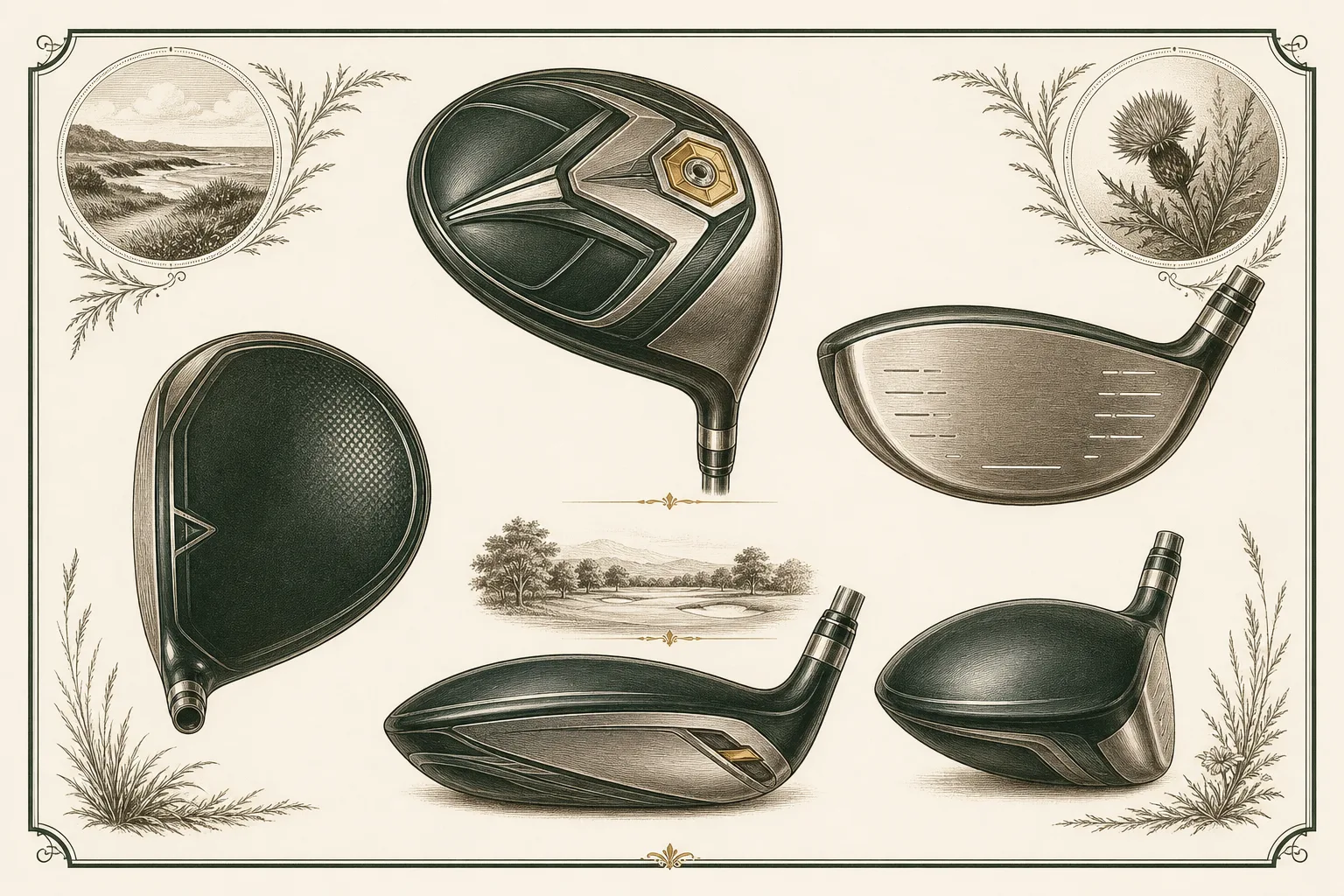
The Tour B JGR driver carried Bridgestone's rebranded, tour-facing badge into its 2018 max-forgiveness driver, built around a Boost Wave Crown that flexes more at impact for higher launch and carry, plus 8 grams of external and 25 grams of internal weighting deliberately biased to fight a fade and produce a controlled draw. Reviewers found a clean, alignment-aid-free black crown at address and a notably quiet, bassy impact sound aimed at appealing to better players despite the forgiving intent underneath. It got an unusual head start on fame: before it was even officially announced, Brandt Snedeker gamed a Tour B JGR prototype to a final-round 59 and the win at the 2018 Wyndham Championship.
The Snedeker 59/Wyndham win is a real, independently documented tour moment tied specifically to this driver (reported by Plugged In Golf and corroborated across golf media at the time) — a genuine claim to fame beyond marketing copy. It stops short of cult status, though: no lasting scarcity, no enthusiast forum mythology, and it was a standard two-year-cycle release superseded without fanfare.
Best for a golfer who fights a slice or fade and wants built-in draw bias plus forgiveness on off-center hits; the deliberate anti-fade weighting means a player who already draws the ball reliably should test carefully, since it can overcook the draw into a hook. A tour-level ball-striker chasing shot-shaping neutrality should look at Bridgestone's more compact Tour B X/JS options instead.
Released in October 2018 against TaylorMade's M3/M4, Callaway's Rogue, and Titleist's TS2/TS3 — all similarly chasing forgiving, high-launch distance that model year. It replaced the 2016 JGR driver as Bridgestone folded its 'Tour B' better-player branding across the whole JGR-derived line.
This DB's own ladder classification calls it a 'rung-1 max-forgiveness driver,' consistent with the reviewed 460cc draw-biased head, heavy perimeter/internal weighting for fight-the-slice stability, and the flexing Boost Wave Crown for high, easy launch — squarely max-GI territory, not a compromise players' driver.
Calibrated across the whole catalog — a tour blade scores low here on purpose; it means control, not ease.
Realistic 2026 private-party pricing is roughly $90–$150; 2nd Swing has listed used units around $119.99 (down from a $399.99 retail), and eBay pricing tracks similarly for average-condition examples with stock UST Mamiya Recoil shafts. The Snedeker story adds a fun footnote but no measurable collector premium.
Reading is one thing — hitting is another. Book a bay and see the numbers for yourself before you buy anywhere.
“A rung-1 max-forgiveness driver with a Boost Wave Crown that flexes for ball speed and a draw-biased 460cc head to straighten slices. Sensibly priced when new and a bargain used. A friendly stick for the average golfer.”
The Tour B JGR driver carried Bridgestone's rebranded, tour-facing badge into its 2018 max-forgiveness driver, built around a Boost Wave Crown that flexes more at impact for higher launch and carry, plus 8 grams of external and 25 grams of internal weighting deliberately biased to fight a fade and produce a controlled draw. Reviewers found a clean, alignment-aid-free black crown at address and a notably quiet, bassy impact sound aimed at appealing to better players despite the forgiving intent underneath. It got an unusual head start on fame: before it was even officially announced, Brandt Snedeker gamed a Tour B JGR prototype to a final-round 59 and the win at the 2018 Wyndham Championship.
The Snedeker 59/Wyndham win is a real, independently documented tour moment tied specifically to this driver (reported by Plugged In Golf and corroborated across golf media at the time) — a genuine claim to fame beyond marketing copy. It stops short of cult status, though: no lasting scarcity, no enthusiast forum mythology, and it was a standard two-year-cycle release superseded without fanfare.
Best for a golfer who fights a slice or fade and wants built-in draw bias plus forgiveness on off-center hits; the deliberate anti-fade weighting means a player who already draws the ball reliably should test carefully, since it can overcook the draw into a hook. A tour-level ball-striker chasing shot-shaping neutrality should look at Bridgestone's more compact Tour B X/JS options instead.
Released in October 2018 against TaylorMade's M3/M4, Callaway's Rogue, and Titleist's TS2/TS3 — all similarly chasing forgiving, high-launch distance that model year. It replaced the 2016 JGR driver as Bridgestone folded its 'Tour B' better-player branding across the whole JGR-derived line.
This DB's own ladder classification calls it a 'rung-1 max-forgiveness driver,' consistent with the reviewed 460cc draw-biased head, heavy perimeter/internal weighting for fight-the-slice stability, and the flexing Boost Wave Crown for high, easy launch — squarely max-GI territory, not a compromise players' driver.
Calibrated across the whole catalog — a tour blade scores low here on purpose; it means control, not ease.
Realistic 2026 private-party pricing is roughly $90–$150; 2nd Swing has listed used units around $119.99 (down from a $399.99 retail), and eBay pricing tracks similarly for average-condition examples with stock UST Mamiya Recoil shafts. The Snedeker story adds a fun footnote but no measurable collector premium.
Reading is one thing — hitting is another. Book a bay and see the numbers for yourself before you buy anywhere.