“A high-launch, anti-slice game-improvement driver -- forward CG plus internal draw weighting to straighten a slice and get the ball up. A great rung-1 slice cure with no downside off the tee.”
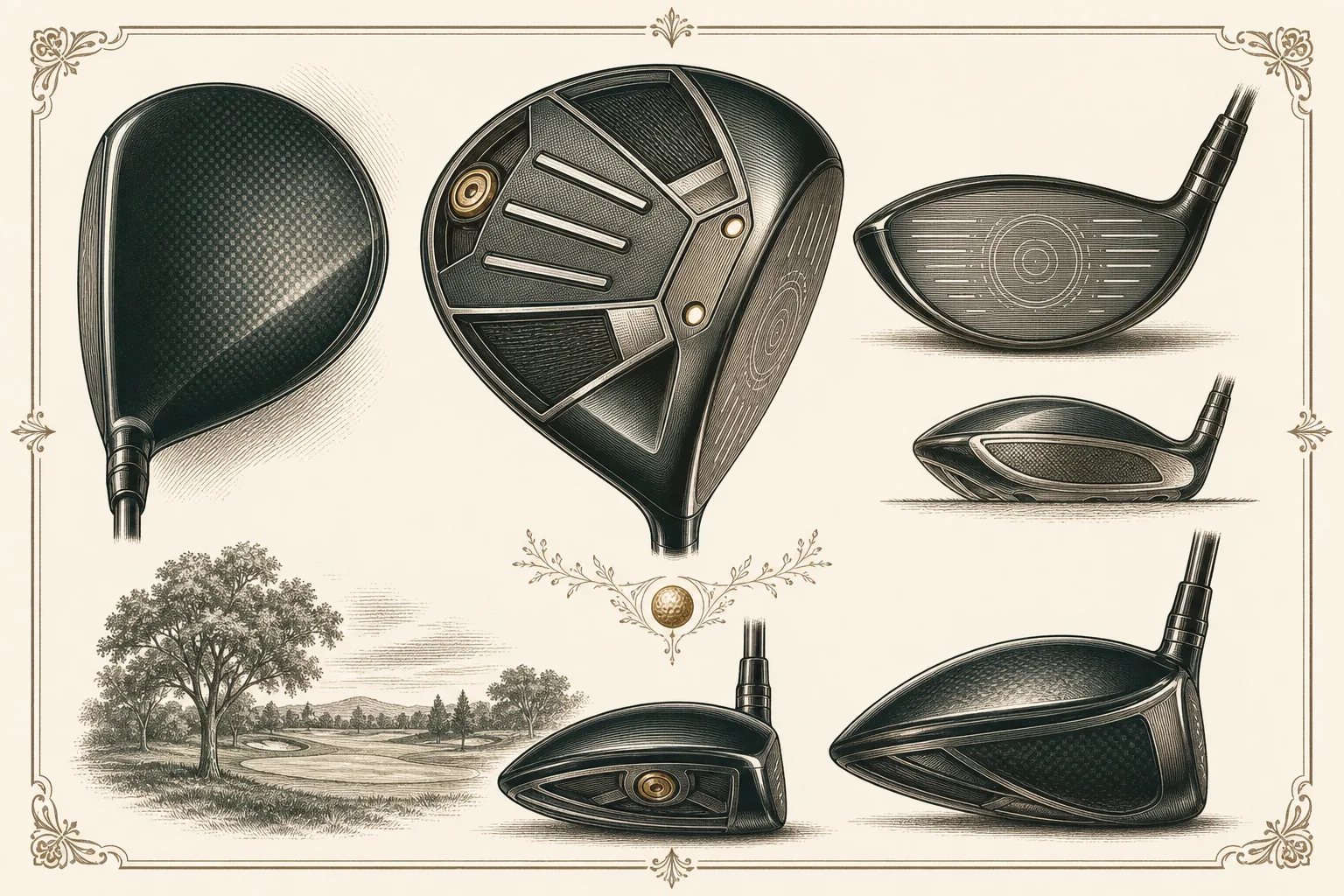
The B21 driver was Callaway's 2021 answer to the golfer who slices and knows it. It combined Flash Face SS21 (Callaway's AI-optimized face), Jailbreak bars, and a T2C carbon crown with an unusually forward, low center of gravity plus internal draw-biased weighting — a deliberate anti-slice package rather than a pure-distance play. Reviewers found it launched high, spun low for a draw-bias head, and felt notably more forgiving off-center than Callaway's own Mavrik from the year before. It sat as the accessible, high-launch counterpart to Callaway's Epic Speed/Max lineup that same season, aimed at recreational golfers rather than better players chasing low spin and workability.
A well-received, high-volume game-improvement driver with strong retail star ratings (near-perfect scores on Callaway.com, PGA Tour Superstore, and Global Golf) but no forum mythology, scarcity, or lasting collector interest — it was one generation in Callaway's annual driver refresh and was replaced the following year without ceremony.
Golfers who consistently miss right with a slice and want a driver that actively fights that shape; less useful for players who already draw the ball or want to shape shots both ways, since the internal draw bias works against an intentional fade.
Released the same year as Callaway's flagship Epic Speed and Epic Max drivers, with B21 positioned as the accessible, high-forgiveness option beneath them. It followed the Big Bertha Diablo (2009) and Big Bertha Fusion (2016) as another periodic revival of the Big Bertha name for a game-improvement audience, and was itself succeeded by later Big Bertha and Rogue ST driver generations.
The forward, low CG plus internal draw weighting is built to straighten the specific miss (a slice from an out-to-in path and downward attack angle) rather than to maximize raw forgiveness in every direction; testers rated it more forgiving on off-center hits than the same-year Mavrik. It is not the most neutral, all-purpose-forgiving driver in Callaway's catalog because the draw bias is a deliberate shot-shape nudge, not a symmetric MOI play.
Calibrated across the whole catalog — a tour blade scores low here on purpose; it means control, not ease.
MSRP was $500. As a 2021 driver with a mid-tier retained-value band, used examples typically sell for roughly $150-$230 in 2026 depending on shaft, headcover, and condition — a normal depreciation curve for a mainstream annual-refresh driver rather than anything collectible.
Reading is one thing — hitting is another. Book a bay and see the numbers for yourself before you buy anywhere.
“A high-launch, anti-slice game-improvement driver -- forward CG plus internal draw weighting to straighten a slice and get the ball up. A great rung-1 slice cure with no downside off the tee.”
The B21 driver was Callaway's 2021 answer to the golfer who slices and knows it. It combined Flash Face SS21 (Callaway's AI-optimized face), Jailbreak bars, and a T2C carbon crown with an unusually forward, low center of gravity plus internal draw-biased weighting — a deliberate anti-slice package rather than a pure-distance play. Reviewers found it launched high, spun low for a draw-bias head, and felt notably more forgiving off-center than Callaway's own Mavrik from the year before. It sat as the accessible, high-launch counterpart to Callaway's Epic Speed/Max lineup that same season, aimed at recreational golfers rather than better players chasing low spin and workability.
A well-received, high-volume game-improvement driver with strong retail star ratings (near-perfect scores on Callaway.com, PGA Tour Superstore, and Global Golf) but no forum mythology, scarcity, or lasting collector interest — it was one generation in Callaway's annual driver refresh and was replaced the following year without ceremony.
Golfers who consistently miss right with a slice and want a driver that actively fights that shape; less useful for players who already draw the ball or want to shape shots both ways, since the internal draw bias works against an intentional fade.
Released the same year as Callaway's flagship Epic Speed and Epic Max drivers, with B21 positioned as the accessible, high-forgiveness option beneath them. It followed the Big Bertha Diablo (2009) and Big Bertha Fusion (2016) as another periodic revival of the Big Bertha name for a game-improvement audience, and was itself succeeded by later Big Bertha and Rogue ST driver generations.
The forward, low CG plus internal draw weighting is built to straighten the specific miss (a slice from an out-to-in path and downward attack angle) rather than to maximize raw forgiveness in every direction; testers rated it more forgiving on off-center hits than the same-year Mavrik. It is not the most neutral, all-purpose-forgiving driver in Callaway's catalog because the draw bias is a deliberate shot-shape nudge, not a symmetric MOI play.
Calibrated across the whole catalog — a tour blade scores low here on purpose; it means control, not ease.
MSRP was $500. As a 2021 driver with a mid-tier retained-value band, used examples typically sell for roughly $150-$230 in 2026 depending on shaft, headcover, and condition — a normal depreciation curve for a mainstream annual-refresh driver rather than anything collectible.
Reading is one thing — hitting is another. Book a bay and see the numbers for yourself before you buy anywhere.