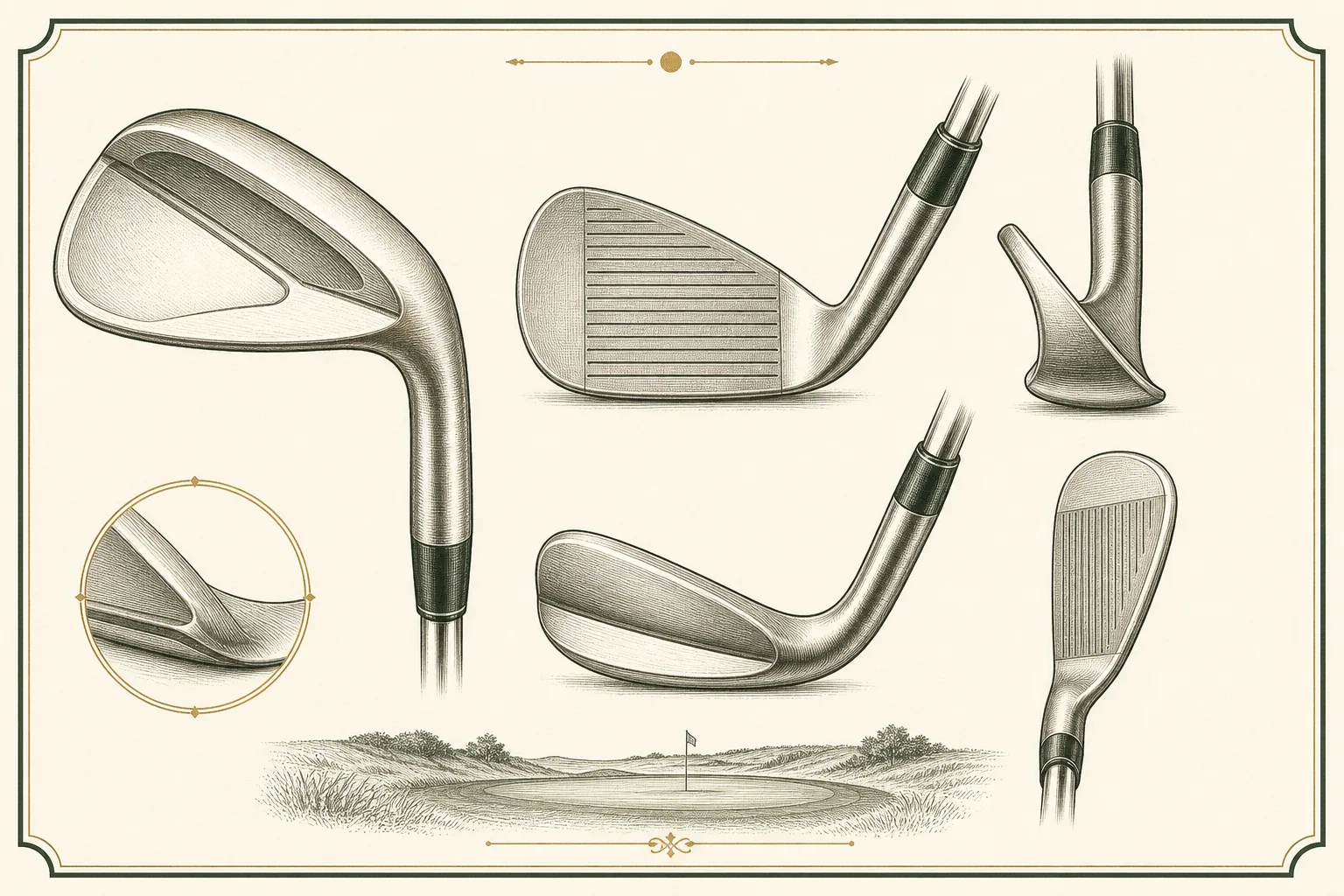
The 900 FormForged arrived in 2001 as Cleveland's mainstream forged wedge for the era right before the Tour Action/CG naming split solidified the brand as THE dedicated wedge maker in golf. 'Form-forged' described a computer-milled, pre-shaped forging process meant to tighten face and groove tolerances beyond what hand-finishing could reliably deliver, sold in Chrome, Gunmetal, and Bronze (BRZ) finish options with a larger, confidence-inspiring head than Cleveland's tour-blade shapes. It was a volume product built to put Cleveland's forging story in front of everyday golfers rather than a tour-driven design, and it was followed within two years by the RTG (Ready-to-Go) version rather than staying in the line long-term.
No lasting reputation of its own: it shows up as a well-liked but unremarkable user-rated product (4.3/5 across 86 reviews on golfreview.com) with no tour-win legend, no lawsuit, and no forum reverence attached specifically to the 900 name — golf media coverage of it is limited to retailer product pages and used-club listings rather than retrospectives.
Fits golfers who want a classic forged wedge feel and are comfortable with a smaller head and traditional grinds; a fine, cheap option today as a beater or backup wedge. Not a fit for a high-handicapper chasing forgiveness — a modern full-face or cavity-back wedge (e.g., Cleveland's own CBX or RTX lines) will be more forgiving and spin better in wet/dirty conditions.
Competed with Titleist Vokey Spin Milled/200 series and Ping's Eye2/Zip wedges of the early 2000s, sitting in Cleveland's line alongside the Tour Action forged blades. It was succeeded by the 900 FormForged RTG (2003) and then the CG-series (CG10, CG12, CG14/15) that carried Cleveland's wedge business through the 2000s. A modern equivalent is the Cleveland RTX ZipCore line.
A players'-style forged wedge with a larger-than-blade head for its category and era, giving moderately more stability on mis-hits than a true tour blade, but it is still a compact forged shape with minimal offset and a thin top-line by modern game-improvement standards — thin and toe strikes still cost real distance and spin compared to a cavity-back GI wedge.
Calibrated across the whole catalog — a tour blade scores low here on purpose; it means control, not ease.
As a 20+ year old wedge with no collector demand, private-party/eBay prices are low — comparable-era Cleveland forged wedges (e.g., the CG10 a few years later) sell used for roughly $15-$45 depending on condition and groove wear; the 900 FormForged, being older and out of Cleveland's fitting/service ecosystem, should be valued at the low end of that band or less.
Reading is one thing — hitting is another. Book a bay and see the numbers for yourself before you buy anywhere.