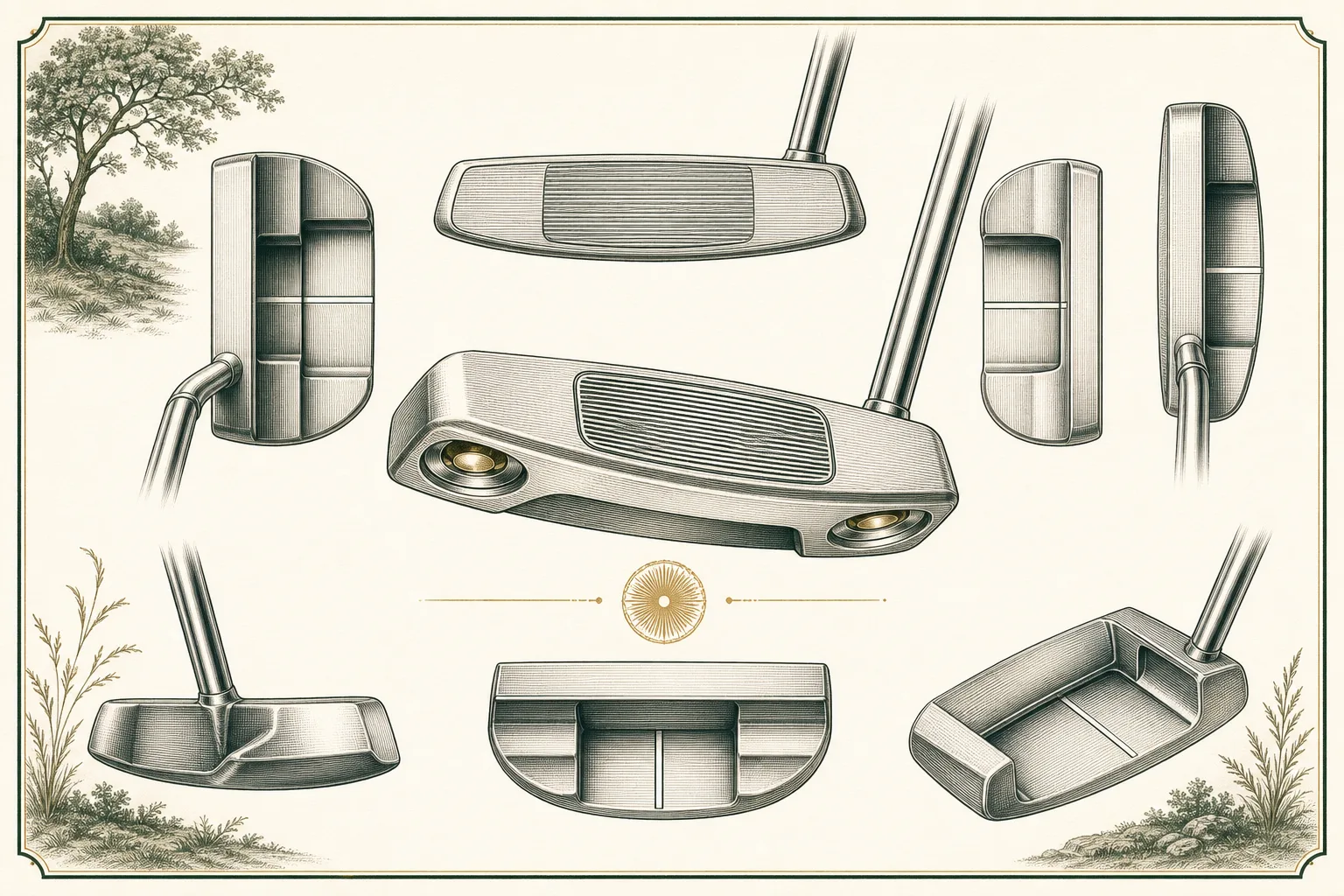
Evnroll introduced the ER3 WingBlade for 2017 as a flare-back alternative to a conventional blade. Milled from 303 stainless steel, it pushed mass into wings at the heel and toe for extra stability while retaining enough toe hang for a rotational release. The head paired that geometry with Evnroll's progressive Sweet Face grooves, which seek to preserve pace and steer small mishits back toward the intended line. Contemporary ClubTest feedback praised its stable, rhythmic stroke and the way heel and toe strikes retained speed. The model then won MyGolfSpy's 2018 Most Wanted blade test, giving this less-famous shape a substantial performance credential.
A 2018 independent test win and its unusual winged blade shape give the ER3 lasting interest, though it never became the defining, repeatedly reissued Evnroll silhouette that the ER2 did.
Best for a golfer who wants a compact, heavier-feeling head with visible heel-toe stability and a moderate arc. The period launch specification of roughly 30 degrees of toe hang favors some face rotation rather than a straight-only stroke.
The ER3 was part of Evnroll's rapid 2017 expansion after its four-head debut. It showed how the company could carry one face-milling platform across unfamiliar shapes, then validated that approach with a major independent blade-test win a year later.
The flare-back wings place mass away from center and the progressive grooves protect pace and direction on moderate misses. It is notably stable for a blade-like head but not as resistant to twisting as Evnroll's large mallets.
Calibrated across the whole catalog — a tour blade scores low here on purpose; it means control, not ease.
Two current 2nd Swing asks observed in July 2026 were about $147 and $170 for average-condition ER3 Wing Blades. Original shaft, non-taper grip, correct length and an included cover can justify the stronger end of that band.
Reading is one thing — hitting is another. Book a bay and see the numbers for yourself before you buy anywhere.
Evnroll introduced the ER3 WingBlade for 2017 as a flare-back alternative to a conventional blade. Milled from 303 stainless steel, it pushed mass into wings at the heel and toe for extra stability while retaining enough toe hang for a rotational release. The head paired that geometry with Evnroll's progressive Sweet Face grooves, which seek to preserve pace and steer small mishits back toward the intended line. Contemporary ClubTest feedback praised its stable, rhythmic stroke and the way heel and toe strikes retained speed. The model then won MyGolfSpy's 2018 Most Wanted blade test, giving this less-famous shape a substantial performance credential.
A 2018 independent test win and its unusual winged blade shape give the ER3 lasting interest, though it never became the defining, repeatedly reissued Evnroll silhouette that the ER2 did.
Best for a golfer who wants a compact, heavier-feeling head with visible heel-toe stability and a moderate arc. The period launch specification of roughly 30 degrees of toe hang favors some face rotation rather than a straight-only stroke.
The ER3 was part of Evnroll's rapid 2017 expansion after its four-head debut. It showed how the company could carry one face-milling platform across unfamiliar shapes, then validated that approach with a major independent blade-test win a year later.
The flare-back wings place mass away from center and the progressive grooves protect pace and direction on moderate misses. It is notably stable for a blade-like head but not as resistant to twisting as Evnroll's large mallets.
Calibrated across the whole catalog — a tour blade scores low here on purpose; it means control, not ease.
Two current 2nd Swing asks observed in July 2026 were about $147 and $170 for average-condition ER3 Wing Blades. Original shaft, non-taper grip, correct length and an included cover can justify the stronger end of that band.
Reading is one thing — hitting is another. Book a bay and see the numbers for yourself before you buy anywhere.