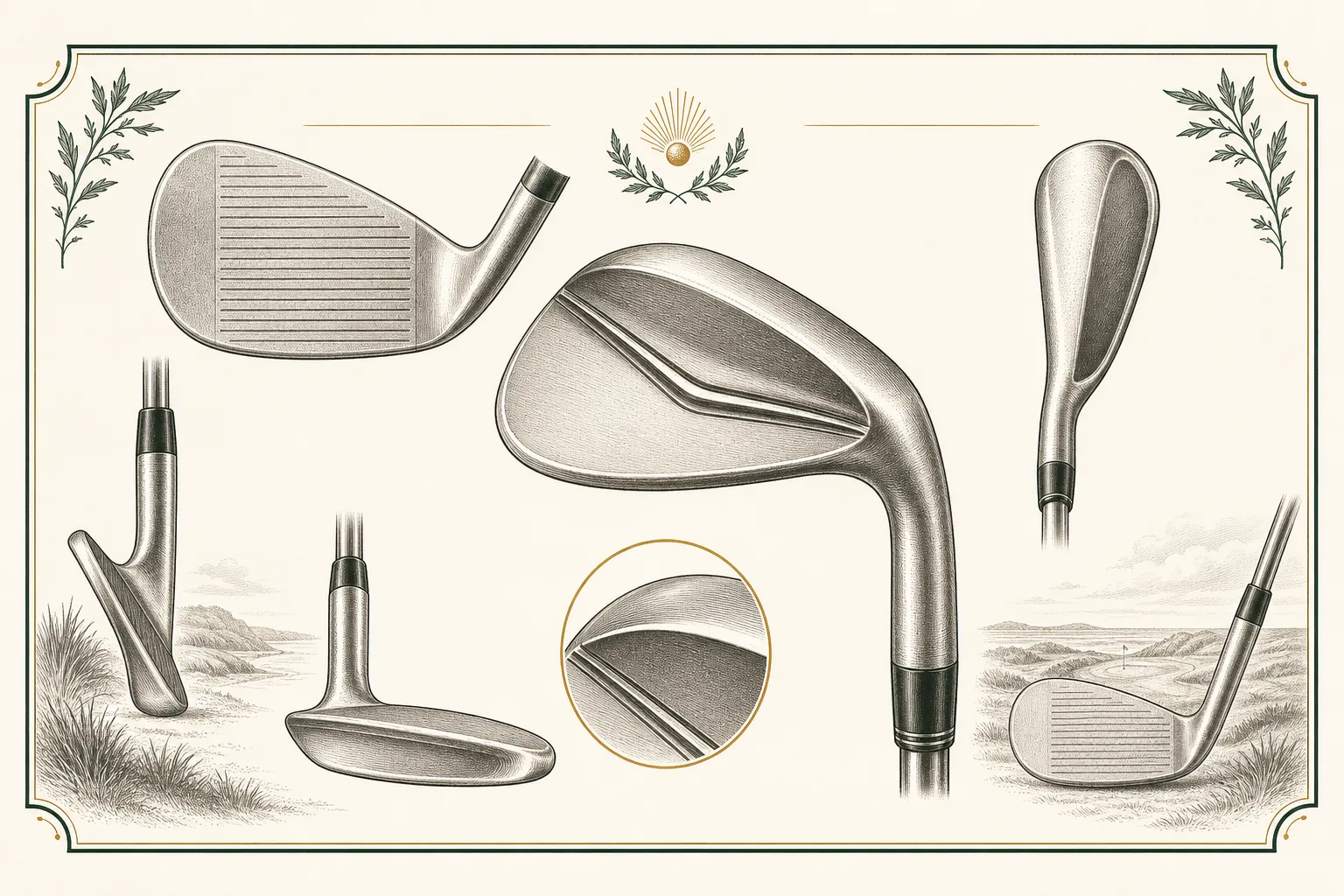
“Lazrus Premium wedge - $40 milled-face wedges in multiple lofts and colors. A cavity-forgiveness wedge; rung game-improvement cavity-back.”
The Premium Wedge was literally how Lazrus began — founder Colton Draper's original single-product idea in 2017 before the company expanded into irons and hybrids. It is a cast, milled-face wedge with extra scoring lines between the grooves to boost spin, sold in a standard 52/56/60-degree short-game spread (bounces of roughly 8, 12 and 10 degrees respectively) at around $40 per wedge — among the cheapest branded, forged-look wedges on the market. Multiple independent reviews, including a mainstream outlet (Golf Monthly), found genuinely competitive launch-monitor spin numbers inside 100 yards, though durability complaints (coating wear, some reported shaft breakage near the grip) recur across user feedback.
A budget commodity wedge that earns its keep on price-to-performance rather than any cult or heritage angle — it is notable mainly because it is the product that started the company, not because of scarcity or enthusiast reverence.
Mid-to-high handicappers and beginners who want an affordable, genuinely spin-capable wedge for practice and casual rounds. Not appropriate for sanctioned competitive play given the non-conforming-adjacent, budget-grade construction and the durability issues noted in reviews.
The wedge that founded the Lazrus DTC model in 2017; it has since drawn coverage from a mainstream equipment outlet (Golf Monthly reviewed it directly), a sign of the brand's growing visibility within the broader 2020s budget-DTC golf equipment wave.
A cast, milled-face wedge with some cavity-style forgiveness relative to a pure forged blade wedge, but wedges as a category are inherently control-oriented rather than forgiveness-oriented — this sits in the middle of the wedge forgiveness range rather than at the game-improvement end.
Calibrated across the whole catalog — a tour blade scores low here on purpose; it means control, not ease.
At a $40 new price, used units rarely list for meaningfully less — typically $15-25 private-party — since the cost and hassle of a secondhand purchase isn't worth it much below the new price point.
Reading is one thing — hitting is another. Book a bay and see the numbers for yourself before you buy anywhere.
“Lazrus Premium wedge - $40 milled-face wedges in multiple lofts and colors. A cavity-forgiveness wedge; rung game-improvement cavity-back.”
The Premium Wedge was literally how Lazrus began — founder Colton Draper's original single-product idea in 2017 before the company expanded into irons and hybrids. It is a cast, milled-face wedge with extra scoring lines between the grooves to boost spin, sold in a standard 52/56/60-degree short-game spread (bounces of roughly 8, 12 and 10 degrees respectively) at around $40 per wedge — among the cheapest branded, forged-look wedges on the market. Multiple independent reviews, including a mainstream outlet (Golf Monthly), found genuinely competitive launch-monitor spin numbers inside 100 yards, though durability complaints (coating wear, some reported shaft breakage near the grip) recur across user feedback.
A budget commodity wedge that earns its keep on price-to-performance rather than any cult or heritage angle — it is notable mainly because it is the product that started the company, not because of scarcity or enthusiast reverence.
Mid-to-high handicappers and beginners who want an affordable, genuinely spin-capable wedge for practice and casual rounds. Not appropriate for sanctioned competitive play given the non-conforming-adjacent, budget-grade construction and the durability issues noted in reviews.
The wedge that founded the Lazrus DTC model in 2017; it has since drawn coverage from a mainstream equipment outlet (Golf Monthly reviewed it directly), a sign of the brand's growing visibility within the broader 2020s budget-DTC golf equipment wave.
A cast, milled-face wedge with some cavity-style forgiveness relative to a pure forged blade wedge, but wedges as a category are inherently control-oriented rather than forgiveness-oriented — this sits in the middle of the wedge forgiveness range rather than at the game-improvement end.
Calibrated across the whole catalog — a tour blade scores low here on purpose; it means control, not ease.
At a $40 new price, used units rarely list for meaningfully less — typically $15-25 private-party — since the cost and hassle of a secondhand purchase isn't worth it much below the new price point.
Reading is one thing — hitting is another. Book a bay and see the numbers for yourself before you buy anywhere.