“Cavity-back, wider-sole Mizuno built for higher launch and forgiveness. Rung-2 GI cavity; Mizuno's honest match for a game-improvement iron player.”
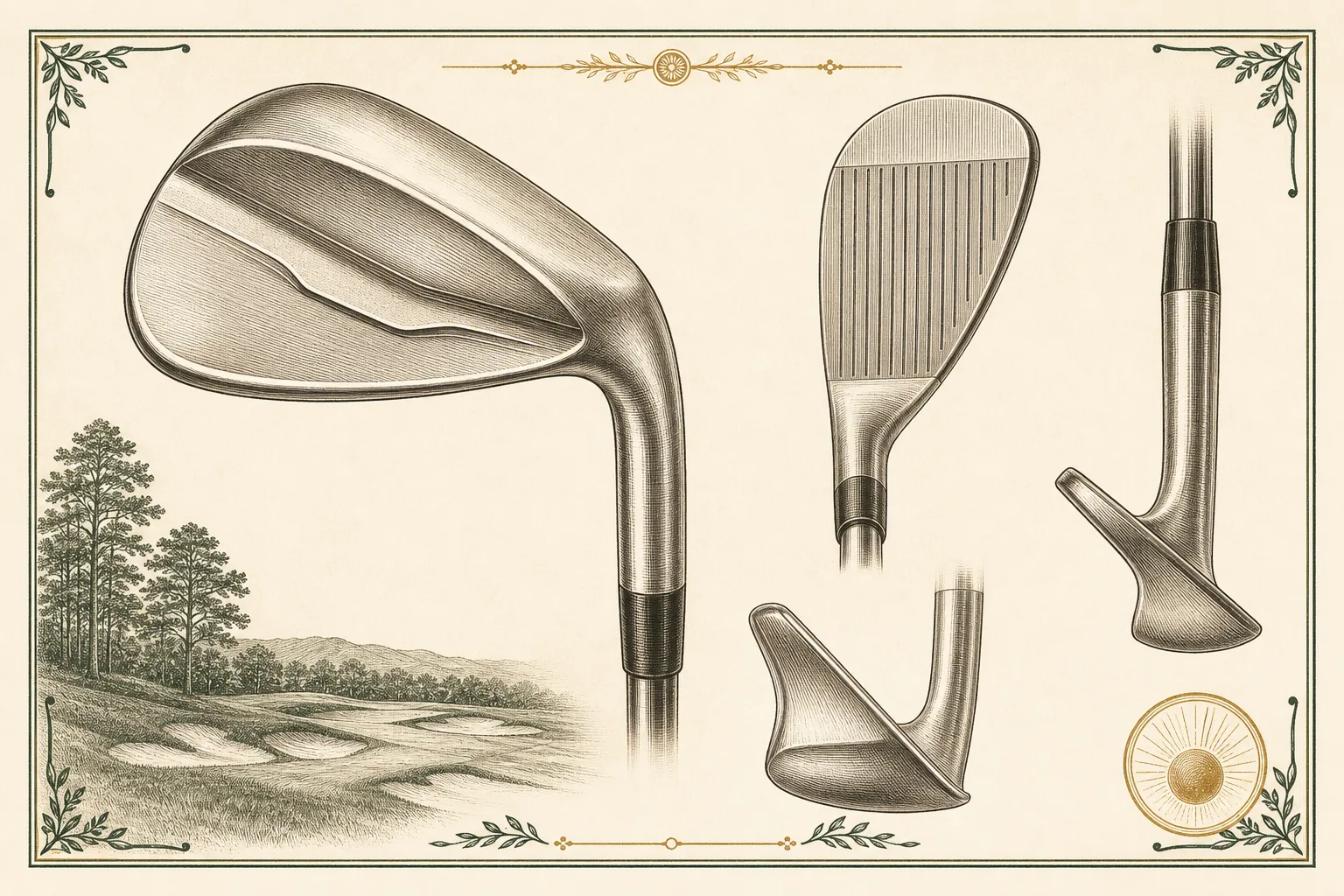
The ES21 was Mizuno's dedicated forgiveness play in wedges: a hollow-body 431 stainless steel construction (rather than a solid forged head) built to push the center of gravity higher and deeper, matching where average golfers actually make contact rather than the center of the face. The strike face itself is forged from boron-infused 1025 carbon steel using Mizuno's Grain Flow Forging process — so despite the game-improvement shape, the hitting surface uses Mizuno's premium feel technology. Quad Cut grooves plus laser-etched 'Hydroflow' micro-grooves target spin, including in wet conditions. It came in two sole widths (standard and wide) across 54-60 degrees, at a premium-for-category $200 per wedge.
A solid, honestly mixed-reception game-improvement wedge with no cult following. Reviews were genuinely divided — one tester called spin 'average to slightly below,' and the oversized, triangular hollow-body shape at address was described as visually divisive. It sold as a functional forgiveness tool at a premium price point, not as a club people seek out or remember fondly years later.
Mid-to-high handicappers who miss the center of the face inconsistently and want carry-distance consistency over shot-shaping versatility. Better players who rely on precise spin control and feel around tight pins may find the bulkier hollow-body shape and average spin numbers a step down from a forged blade wedge like Mizuno's own T-series.
Launched into a 2021 wedge market dominated by Titleist Vokey SM8/SM9 and Cleveland RTX ZipCore, both of which leaned harder into spin technology marketing than pure forgiveness. The ES21's $200 price sat at a premium relative to typical game-improvement wedges of its era, which reviewers flagged directly as notable.
More forgiving than a traditional forged blade wedge thanks to the hollow-body construction raising and deepening the CG to match common off-center strikes, plus the wide-sole option for turf interaction. It is not a max-forgiveness wedge, and reviewers found actual spin performance merely average — the forgiveness is more about consistent carry distance across strikes than about elite green-side spin control.
Calibrated across the whole catalog — a tour blade scores low here on purpose; it means control, not ease.
Realistic private-party price in 2026 is roughly $50-$90 per wedge; retailer 'used' listings citing a ~$200 average retail value against $75-$100 asking prices reflect graded/warrantied store pricing rather than a true peer-to-peer sale, which typically runs lower, especially for wedges with visible groove wear.
Reading is one thing — hitting is another. Book a bay and see the numbers for yourself before you buy anywhere.
“Cavity-back, wider-sole Mizuno built for higher launch and forgiveness. Rung-2 GI cavity; Mizuno's honest match for a game-improvement iron player.”
The ES21 was Mizuno's dedicated forgiveness play in wedges: a hollow-body 431 stainless steel construction (rather than a solid forged head) built to push the center of gravity higher and deeper, matching where average golfers actually make contact rather than the center of the face. The strike face itself is forged from boron-infused 1025 carbon steel using Mizuno's Grain Flow Forging process — so despite the game-improvement shape, the hitting surface uses Mizuno's premium feel technology. Quad Cut grooves plus laser-etched 'Hydroflow' micro-grooves target spin, including in wet conditions. It came in two sole widths (standard and wide) across 54-60 degrees, at a premium-for-category $200 per wedge.
A solid, honestly mixed-reception game-improvement wedge with no cult following. Reviews were genuinely divided — one tester called spin 'average to slightly below,' and the oversized, triangular hollow-body shape at address was described as visually divisive. It sold as a functional forgiveness tool at a premium price point, not as a club people seek out or remember fondly years later.
Mid-to-high handicappers who miss the center of the face inconsistently and want carry-distance consistency over shot-shaping versatility. Better players who rely on precise spin control and feel around tight pins may find the bulkier hollow-body shape and average spin numbers a step down from a forged blade wedge like Mizuno's own T-series.
Launched into a 2021 wedge market dominated by Titleist Vokey SM8/SM9 and Cleveland RTX ZipCore, both of which leaned harder into spin technology marketing than pure forgiveness. The ES21's $200 price sat at a premium relative to typical game-improvement wedges of its era, which reviewers flagged directly as notable.
More forgiving than a traditional forged blade wedge thanks to the hollow-body construction raising and deepening the CG to match common off-center strikes, plus the wide-sole option for turf interaction. It is not a max-forgiveness wedge, and reviewers found actual spin performance merely average — the forgiveness is more about consistent carry distance across strikes than about elite green-side spin control.
Calibrated across the whole catalog — a tour blade scores low here on purpose; it means control, not ease.
Realistic private-party price in 2026 is roughly $50-$90 per wedge; retailer 'used' listings citing a ~$200 average retail value against $75-$100 asking prices reflect graded/warrantied store pricing rather than a true peer-to-peer sale, which typically runs lower, especially for wedges with visible groove wear.
Reading is one thing — hitting is another. Book a bay and see the numbers for yourself before you buy anywhere.