“A fully milled 303 stainless blade from Never Compromise's short-lived premium push, competing with Cameron and Ping Redwood. Toe hang suits a slight-arc stroke. Solid firm feel, no insert.”
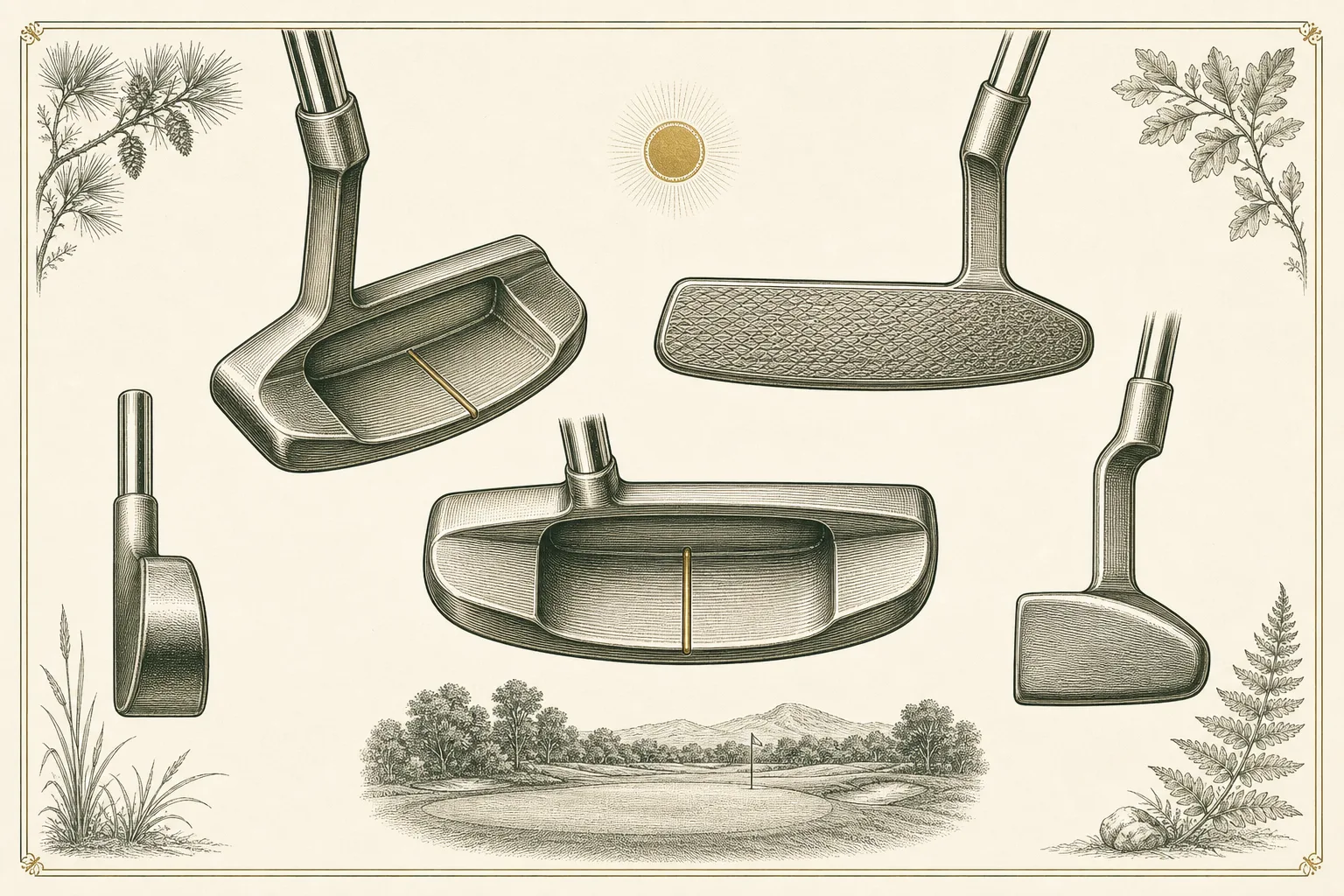
The Milled Series was Never Compromise's premium, no-insert push under Cleveland Golf ownership — 100 percent CNC milled from soft Japanese carbon steel rather than the softer-feel aluminum-insert designs the brand also sold, with a tungsten sole weight pulling the CG to the centerline to improve moment of inertia and keep the head stable through the stroke. It shipped in five traditional shapes, mostly Anser-style blades plus a mallet and a heel-shafted half-mallet, all wearing Never Compromise's signature black-gray-black finish for alignment. It landed on Golf Digest's 2006 Hotlist, real recognition in a crowded category, and its highest-profile use came from Vijay Singh, who gamed a Milled Series putter (after testing an earlier prototype in 2004) during the stretch of tournament wins that broke the PGA Tour's single-season earnings record.
A 2006 Golf Digest Hotlist selection and Vijay Singh's record-breaking season give it real, sourced significance beyond typical mid-2000s mallet putters, but it never developed the sustained secondary-market chase or forum mythology of true cult putters — it is remembered as a well-regarded, well-timed release rather than an object players still actively hunt down.
Fits a player with a slight-arc putting stroke who wants a traditional blade or half-mallet silhouette with soft carbon-steel feel and real alignment help from the black-gray-black finish. A player who mishits often or wants a face-balanced, heavily forgiving mallet should look toward Never Compromise's own Z/i or GM2 Exchange lines instead, which trade feel for more MOI.
Released the same mid-decade window as Never Compromise's insert-based Exchange line, giving Cleveland Golf a firm-feel, no-insert option alongside a soft, customizable one under the same brand. It competed directly against Titleist Scotty Cameron blades and Ping's milled putters for the better-player dollar, and its Golf Digest Hotlist placement and Singh's endorsement came before Cleveland's later 2007 sale to Sumitomo Rubber/Dunlop, after which the brand's fortunes declined.
The tungsten sole weight genuinely centers the CG and raises MOI versus a plain milled blade, which is real forgiveness engineering for the shape, but these are still firm-feedback, all-milled carbon-steel blades and a heel-shafted half-mallet aimed at a slight-arc stroke rather than face-balanced, heavily perimeter-weighted mallets — mis-hits are felt clearly rather than muted, putting it squarely in the middle for its era and category.
Calibrated across the whole catalog — a tour blade scores low here on purpose; it means control, not ease.
Cheap and plentiful today: 2nd Swing lists Milled Series putters (models 1, 4, 7 among others) in the $30-$48 range, marked down from an original retail near $199-$230, with condition (rust on the carbon-steel face, grip wear) driving most of the spread. It is a strong value buy, not a collectible.
Reading is one thing — hitting is another. Book a bay and see the numbers for yourself before you buy anywhere.
“A fully milled 303 stainless blade from Never Compromise's short-lived premium push, competing with Cameron and Ping Redwood. Toe hang suits a slight-arc stroke. Solid firm feel, no insert.”
The Milled Series was Never Compromise's premium, no-insert push under Cleveland Golf ownership — 100 percent CNC milled from soft Japanese carbon steel rather than the softer-feel aluminum-insert designs the brand also sold, with a tungsten sole weight pulling the CG to the centerline to improve moment of inertia and keep the head stable through the stroke. It shipped in five traditional shapes, mostly Anser-style blades plus a mallet and a heel-shafted half-mallet, all wearing Never Compromise's signature black-gray-black finish for alignment. It landed on Golf Digest's 2006 Hotlist, real recognition in a crowded category, and its highest-profile use came from Vijay Singh, who gamed a Milled Series putter (after testing an earlier prototype in 2004) during the stretch of tournament wins that broke the PGA Tour's single-season earnings record.
A 2006 Golf Digest Hotlist selection and Vijay Singh's record-breaking season give it real, sourced significance beyond typical mid-2000s mallet putters, but it never developed the sustained secondary-market chase or forum mythology of true cult putters — it is remembered as a well-regarded, well-timed release rather than an object players still actively hunt down.
Fits a player with a slight-arc putting stroke who wants a traditional blade or half-mallet silhouette with soft carbon-steel feel and real alignment help from the black-gray-black finish. A player who mishits often or wants a face-balanced, heavily forgiving mallet should look toward Never Compromise's own Z/i or GM2 Exchange lines instead, which trade feel for more MOI.
Released the same mid-decade window as Never Compromise's insert-based Exchange line, giving Cleveland Golf a firm-feel, no-insert option alongside a soft, customizable one under the same brand. It competed directly against Titleist Scotty Cameron blades and Ping's milled putters for the better-player dollar, and its Golf Digest Hotlist placement and Singh's endorsement came before Cleveland's later 2007 sale to Sumitomo Rubber/Dunlop, after which the brand's fortunes declined.
The tungsten sole weight genuinely centers the CG and raises MOI versus a plain milled blade, which is real forgiveness engineering for the shape, but these are still firm-feedback, all-milled carbon-steel blades and a heel-shafted half-mallet aimed at a slight-arc stroke rather than face-balanced, heavily perimeter-weighted mallets — mis-hits are felt clearly rather than muted, putting it squarely in the middle for its era and category.
Calibrated across the whole catalog — a tour blade scores low here on purpose; it means control, not ease.
Cheap and plentiful today: 2nd Swing lists Milled Series putters (models 1, 4, 7 among others) in the $30-$48 range, marked down from an original retail near $199-$230, with condition (rust on the carbon-steel face, grip wear) driving most of the spread. It is a strong value buy, not a collectible.
Reading is one thing — hitting is another. Book a bay and see the numbers for yourself before you buy anywhere.