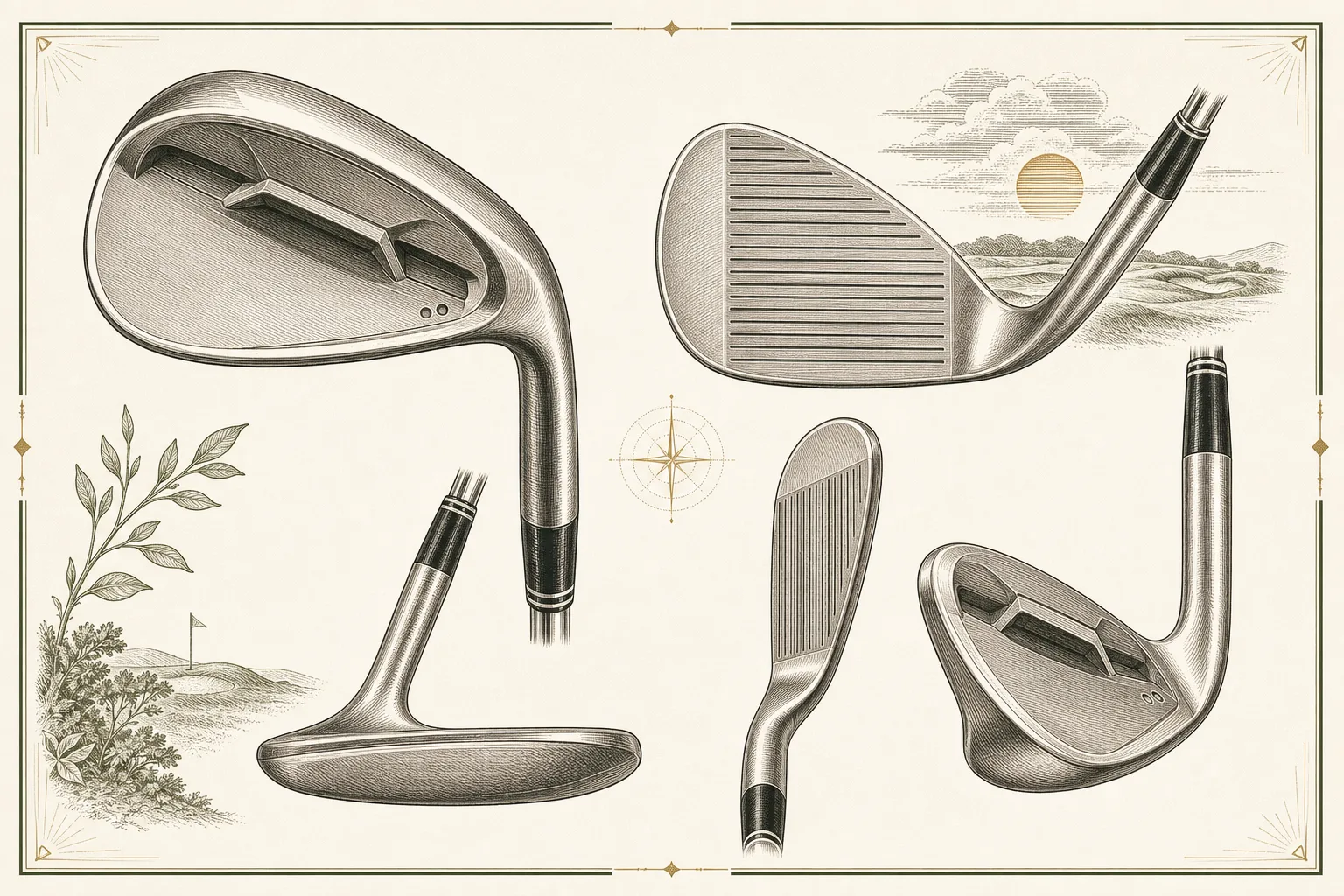
The RTX-3 Cavity Back put Cleveland's 'Feel Balancing Technology' into a larger, higher-MOI cavity-back head shape — shortening the hosel and adding a micro-cavity behind the face to shift the center of gravity roughly 5mm closer to center than its predecessor, aimed at players who wanted RTX-level spin and feel with more mis-hit forgiveness than the standard blade-shaped RTX-3. It paired that with a new V-Sole grind (Low, Mid, and Forgiving/Full options) engineered to cut through-turf resistance by a claimed 23% versus the prior generation, plus Rotex face milling with deeper, narrower Tour Zip grooves. It sat as the forgiveness-focused sibling in the RTX-3 family, offered across an unusually wide 46-64 degree loft range, before Cleveland moved the whole tour-wedge line to ZipCore construction in 2019.
Solidly reviewed across independent outlets (Plugged In Golf, Golfalot, Golf Monthly, MyGolfSpy forum member testing) as a genuinely improved wedge over its predecessor, praised for feel and feedback, but it carries no cult mythology today — it is a well-regarded, superseded generation now valued mainly as an affordable used option.
A good fit for a mid-handicap player who wants tour-level Rotex spin and feel but with extra insurance against mis-hits; low-handicap players wanting maximum workability may prefer the non-cavity RTX-3 blade shape, while very high handicaps chasing maximum forgiveness are better served by a Smart Sole-style wedge.
Competed with Titleist's Vokey SM6/SM7 and Callaway's Mack Daddy 4/PM Grind wedges of 2016-2018. Part of the RTX-3 generation that Cleveland replaced with the ZipCore-equipped RTX ZipCore in 2019, which became the current design language through the RTX 6 ZipCore of 2022.
The cavity-back shape plus 5mm CG shift toward center and higher MOI genuinely retain more ball speed and directional consistency on mis-hits than a standard blade-shaped RTX-3, and the V-Sole's reduced turf resistance helps on fat/heavy strikes; it remains a compact tour-profile wedge, though, so it does not approach the forgiveness ceiling of a dedicated wide-sole game-improvement wedge.
Calibrated across the whole catalog — a tour blade scores low here on purpose; it means control, not ease.
2nd Swing lists used RTX-3 Cavity Back Tour Satin wedges from $35.99-$76.99 against an original ~$129.99 MSRP; a realistic 2026 private-party range is roughly $30-$60 depending on condition and groove wear.
Reading is one thing — hitting is another. Book a bay and see the numbers for yourself before you buy anywhere.
The RTX-3 Cavity Back put Cleveland's 'Feel Balancing Technology' into a larger, higher-MOI cavity-back head shape — shortening the hosel and adding a micro-cavity behind the face to shift the center of gravity roughly 5mm closer to center than its predecessor, aimed at players who wanted RTX-level spin and feel with more mis-hit forgiveness than the standard blade-shaped RTX-3. It paired that with a new V-Sole grind (Low, Mid, and Forgiving/Full options) engineered to cut through-turf resistance by a claimed 23% versus the prior generation, plus Rotex face milling with deeper, narrower Tour Zip grooves. It sat as the forgiveness-focused sibling in the RTX-3 family, offered across an unusually wide 46-64 degree loft range, before Cleveland moved the whole tour-wedge line to ZipCore construction in 2019.
Solidly reviewed across independent outlets (Plugged In Golf, Golfalot, Golf Monthly, MyGolfSpy forum member testing) as a genuinely improved wedge over its predecessor, praised for feel and feedback, but it carries no cult mythology today — it is a well-regarded, superseded generation now valued mainly as an affordable used option.
A good fit for a mid-handicap player who wants tour-level Rotex spin and feel but with extra insurance against mis-hits; low-handicap players wanting maximum workability may prefer the non-cavity RTX-3 blade shape, while very high handicaps chasing maximum forgiveness are better served by a Smart Sole-style wedge.
Competed with Titleist's Vokey SM6/SM7 and Callaway's Mack Daddy 4/PM Grind wedges of 2016-2018. Part of the RTX-3 generation that Cleveland replaced with the ZipCore-equipped RTX ZipCore in 2019, which became the current design language through the RTX 6 ZipCore of 2022.
The cavity-back shape plus 5mm CG shift toward center and higher MOI genuinely retain more ball speed and directional consistency on mis-hits than a standard blade-shaped RTX-3, and the V-Sole's reduced turf resistance helps on fat/heavy strikes; it remains a compact tour-profile wedge, though, so it does not approach the forgiveness ceiling of a dedicated wide-sole game-improvement wedge.
Calibrated across the whole catalog — a tour blade scores low here on purpose; it means control, not ease.
2nd Swing lists used RTX-3 Cavity Back Tour Satin wedges from $35.99-$76.99 against an original ~$129.99 MSRP; a realistic 2026 private-party range is roughly $30-$60 depending on condition and groove wear.
Reading is one thing — hitting is another. Book a bay and see the numbers for yourself before you buy anywhere.