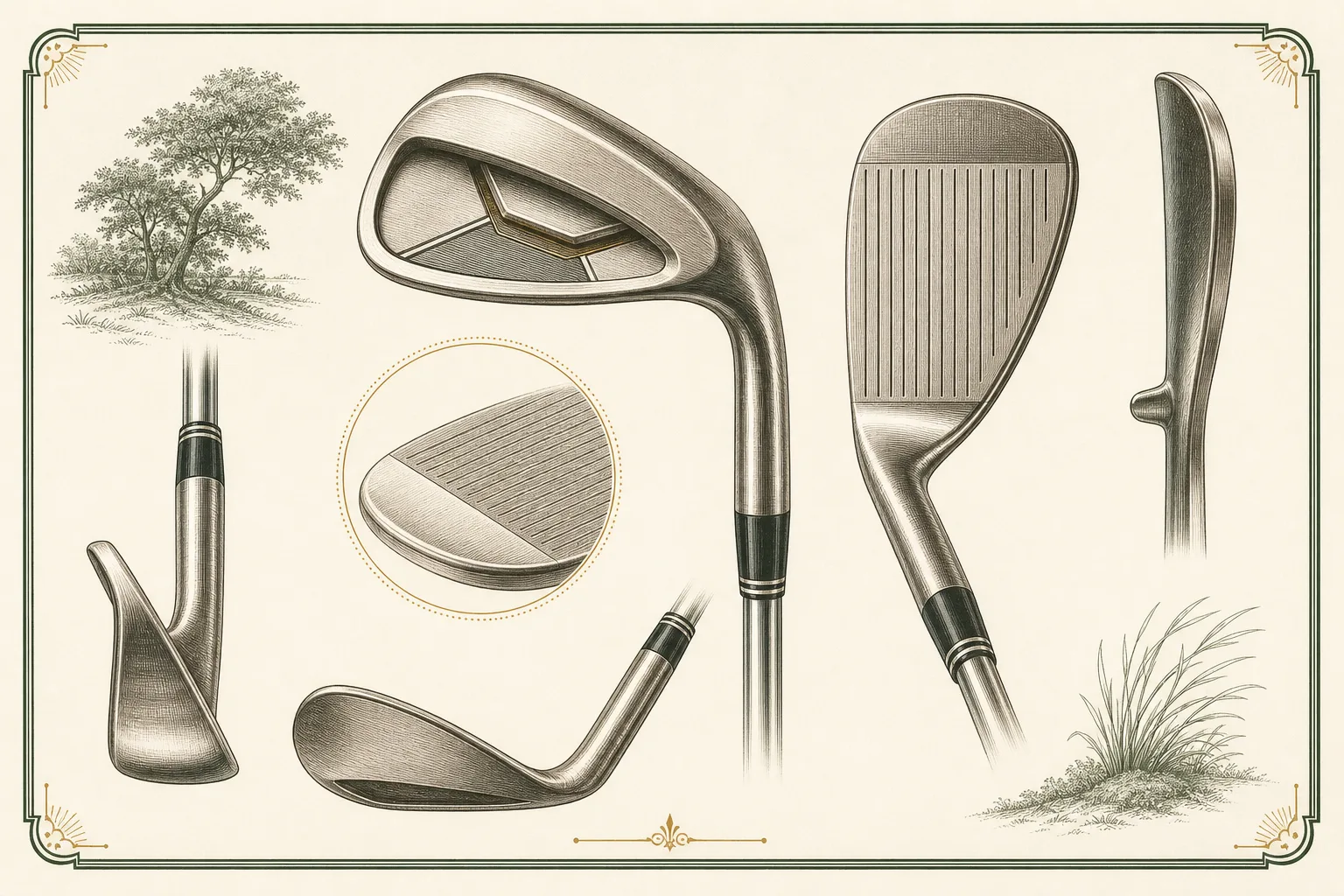
The 2013 588 RTX 2.0 married the classic 588 head shape to a cavity-back construction Cleveland had previously used on its CG14/CG16 game-improvement wedges — combining the 588's tour-proven profile with an undercut cavity for perimeter weighting and a Reverse-C sole for wider lie-angle versatility. It paired that forgiving shape with a new Rotex face design and U-grooves 16% larger than the prior generation, aimed especially at improving spin on open-face toe strikes, where a traditional wedge loses the most consistency.
Reviewed positively across GolfWRX, Golfalot, Golf Monthly and Independent Golf Reviews as an effective forgiveness-focused option within the well-regarded 588/RTX family, but it is a functional line extension (adding a cavity-back option to an existing platform) rather than a club that generated its own independent legend.
A strong fit for mid-to-high handicap players who want the 588 family's respected turf interaction and spin without the thin-topline demands of the standard blade-style RTX. Lower-handicap players who value a compact look and maximum shot-shaping control may prefer the non-cavity RTX 2.0 instead.
Released alongside the standard-shape 588 RTX 2.0 in 2013, competing with Titleist's Vokey SM5 and Callaway's Mack Daddy 2 in the broader premium wedge market, but specifically targeting the cavity-back/forgiveness niche that Vokey did not address as directly at the time. It succeeded Cleveland's earlier CG14/CG16 cavity-back wedges and was followed by later RTX generations (RTX-3, RTX-4) that continued to offer both blade and cavity-back options.
A genuinely more forgiving wedge than the standard 588/RTX blade-style models: the undercut cavity and perimeter weighting are explicitly aimed at moving mis-hit performance closer to a game-improvement iron's, and reviewers specifically praised its softness and spin retention on off-center, toe-biased strikes and shots out of the rough. It trades some of the compact-blade workability of the standard RTX for that added margin.
Calibrated across the whole catalog — a tour blade scores low here on purpose; it means control, not ease.
2026 private-party pricing is broadly in line with other early-2010s premium wedges, roughly $40-$80 depending on condition and shaft, reflecting more than a decade of depreciation from its original premium-wedge retail price.
Reading is one thing — hitting is another. Book a bay and see the numbers for yourself before you buy anywhere.
The 2013 588 RTX 2.0 married the classic 588 head shape to a cavity-back construction Cleveland had previously used on its CG14/CG16 game-improvement wedges — combining the 588's tour-proven profile with an undercut cavity for perimeter weighting and a Reverse-C sole for wider lie-angle versatility. It paired that forgiving shape with a new Rotex face design and U-grooves 16% larger than the prior generation, aimed especially at improving spin on open-face toe strikes, where a traditional wedge loses the most consistency.
Reviewed positively across GolfWRX, Golfalot, Golf Monthly and Independent Golf Reviews as an effective forgiveness-focused option within the well-regarded 588/RTX family, but it is a functional line extension (adding a cavity-back option to an existing platform) rather than a club that generated its own independent legend.
A strong fit for mid-to-high handicap players who want the 588 family's respected turf interaction and spin without the thin-topline demands of the standard blade-style RTX. Lower-handicap players who value a compact look and maximum shot-shaping control may prefer the non-cavity RTX 2.0 instead.
Released alongside the standard-shape 588 RTX 2.0 in 2013, competing with Titleist's Vokey SM5 and Callaway's Mack Daddy 2 in the broader premium wedge market, but specifically targeting the cavity-back/forgiveness niche that Vokey did not address as directly at the time. It succeeded Cleveland's earlier CG14/CG16 cavity-back wedges and was followed by later RTX generations (RTX-3, RTX-4) that continued to offer both blade and cavity-back options.
A genuinely more forgiving wedge than the standard 588/RTX blade-style models: the undercut cavity and perimeter weighting are explicitly aimed at moving mis-hit performance closer to a game-improvement iron's, and reviewers specifically praised its softness and spin retention on off-center, toe-biased strikes and shots out of the rough. It trades some of the compact-blade workability of the standard RTX for that added margin.
Calibrated across the whole catalog — a tour blade scores low here on purpose; it means control, not ease.
2026 private-party pricing is broadly in line with other early-2010s premium wedges, roughly $40-$80 depending on condition and shaft, reflecting more than a decade of depreciation from its original premium-wedge retail price.
Reading is one thing — hitting is another. Book a bay and see the numbers for yourself before you buy anywhere.