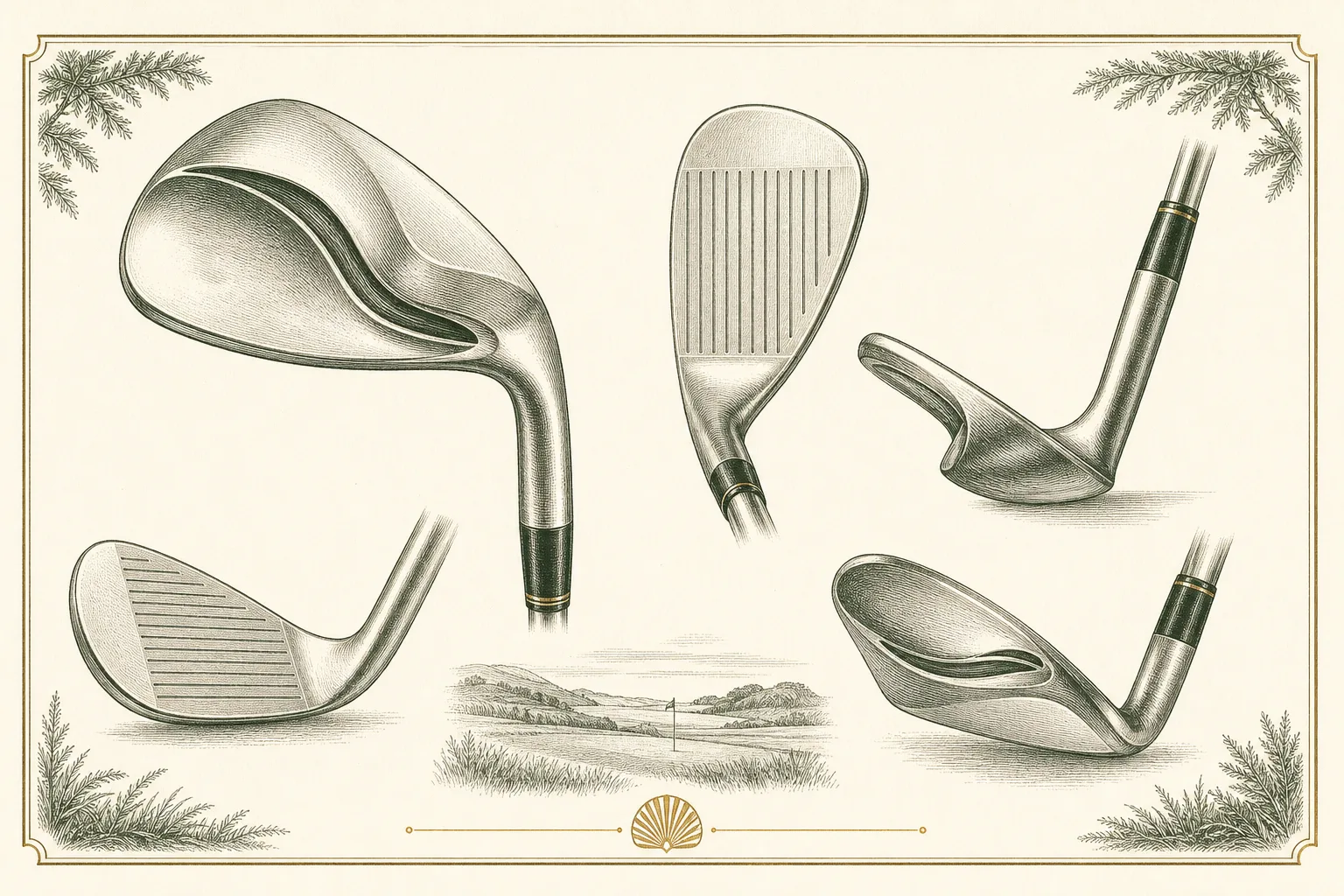
“A more refined Dolphin with a milled face for added spin while keeping the signature forgiving high-bounce sole. A game-improvement cavity-back for the mid-handicap who wants a little more bite without giving up anti-dig help.”
Released in Japan on October 7, 2016, the DW-116 is a direct successor to Kasco's original Dolphin Wedge, a model that had sold over 100,000 units by Kasco's own account and helped define the brand's 'easy sand wedge' category for Japanese golfers. The DW-116 was built to add operability, spin, and softer feel on top of the original's forgiveness, using a soft-iron S25C forged head and Kasco's signature Dolphin Sole — a triple-bounce design that varies bounce angle from toe to heel so the whole sole works through varied turf and sand conditions. Lofts run 50°/52° (7° center bounce) and 56°/58° (9° center bounce), sold with either an N.S.PRO 950GH steel shaft (¥20,000 tax-excl.) or a premium Dolphin DP-151 shaft (¥24,000 tax-excl.).
The Dolphin Wedge lineage is a genuinely popular, long-running Japanese golf category — the original model's 100,000+ units sold (per Kasco) gives the DW-116 real commercial pedigree as 'the sequel to a big hit,' as Japanese gear press described it — but there is no evidence of forum cult status, tour wins, or scarcity/collector demand specific to the DW-116 itself; it is a well-regarded mainstream entry in a popular category rather than an underground favorite.
Fits Japanese-market recreational-to-mid-handicap golfers seeking an easy-to-use, forgiving sand/gap wedge with a soft forged feel, especially those upgrading from the original Dolphin Wedge for better spin and touch. Less relevant for U.S. golfers, since it is a Japan-domestic release not widely stocked through mainstream American retail — sourcing requires a Japan-import specialist.
Released October 2016 into Kasco's own crowded Dolphin Wedge family (later followed by DW-117, DW-118, DW-120G, DW-125G models), competing with other Japan-market 'easy wedge' designs and, more broadly, with mainstream forgiving sand wedges like Cleveland's own Smart Sole/CBX lines. Its direct descendants within Kasco's own lineup are the subsequent DW-11x/DW-12x generations.
The triple-bounce Dolphin Sole varies bounce angle across the sole (7° center on 50/52°, 9° on 56/58°) specifically so the club resists digging from a range of lies and swing types, continuing the forgiveness focus of the original Dolphin Wedge that made it a 100,000-unit seller. It is not a wide-sole game-improvement wedge, however — the soft-iron forged head and moderate sole width mean a strong or steep mis-hit will still cost more than on an extreme-forgiveness design.
Calibrated across the whole catalog — a tour blade scores low here on purpose; it means control, not ease.
As a Japan-domestic release, used DW-116 clubs are mainly found via Japan-import retailers and eBay; realistic used pricing runs roughly $60–$110 against an original ¥20,000–¥24,000 (~$180–$220 at 2016 exchange rates) retail price, with U.S. resale liquidity limited by its non-U.S.-market status.
Reading is one thing — hitting is another. Book a bay and see the numbers for yourself before you buy anywhere.
“A more refined Dolphin with a milled face for added spin while keeping the signature forgiving high-bounce sole. A game-improvement cavity-back for the mid-handicap who wants a little more bite without giving up anti-dig help.”
Released in Japan on October 7, 2016, the DW-116 is a direct successor to Kasco's original Dolphin Wedge, a model that had sold over 100,000 units by Kasco's own account and helped define the brand's 'easy sand wedge' category for Japanese golfers. The DW-116 was built to add operability, spin, and softer feel on top of the original's forgiveness, using a soft-iron S25C forged head and Kasco's signature Dolphin Sole — a triple-bounce design that varies bounce angle from toe to heel so the whole sole works through varied turf and sand conditions. Lofts run 50°/52° (7° center bounce) and 56°/58° (9° center bounce), sold with either an N.S.PRO 950GH steel shaft (¥20,000 tax-excl.) or a premium Dolphin DP-151 shaft (¥24,000 tax-excl.).
The Dolphin Wedge lineage is a genuinely popular, long-running Japanese golf category — the original model's 100,000+ units sold (per Kasco) gives the DW-116 real commercial pedigree as 'the sequel to a big hit,' as Japanese gear press described it — but there is no evidence of forum cult status, tour wins, or scarcity/collector demand specific to the DW-116 itself; it is a well-regarded mainstream entry in a popular category rather than an underground favorite.
Fits Japanese-market recreational-to-mid-handicap golfers seeking an easy-to-use, forgiving sand/gap wedge with a soft forged feel, especially those upgrading from the original Dolphin Wedge for better spin and touch. Less relevant for U.S. golfers, since it is a Japan-domestic release not widely stocked through mainstream American retail — sourcing requires a Japan-import specialist.
Released October 2016 into Kasco's own crowded Dolphin Wedge family (later followed by DW-117, DW-118, DW-120G, DW-125G models), competing with other Japan-market 'easy wedge' designs and, more broadly, with mainstream forgiving sand wedges like Cleveland's own Smart Sole/CBX lines. Its direct descendants within Kasco's own lineup are the subsequent DW-11x/DW-12x generations.
The triple-bounce Dolphin Sole varies bounce angle across the sole (7° center on 50/52°, 9° on 56/58°) specifically so the club resists digging from a range of lies and swing types, continuing the forgiveness focus of the original Dolphin Wedge that made it a 100,000-unit seller. It is not a wide-sole game-improvement wedge, however — the soft-iron forged head and moderate sole width mean a strong or steep mis-hit will still cost more than on an extreme-forgiveness design.
Calibrated across the whole catalog — a tour blade scores low here on purpose; it means control, not ease.
As a Japan-domestic release, used DW-116 clubs are mainly found via Japan-import retailers and eBay; realistic used pricing runs roughly $60–$110 against an original ¥20,000–¥24,000 (~$180–$220 at 2016 exchange rates) retail price, with U.S. resale liquidity limited by its non-U.S.-market status.
Reading is one thing — hitting is another. Book a bay and see the numbers for yourself before you buy anywhere.